Finding Language Courses in Belgium: Dutch, French and German
A comprehensive guide to learning Dutch, French and German in Belgium, covering regional language differences, language schools, government-supported and free courses, online learning platforms, mobile apps, practical ways to practise, and recognised language examinations.
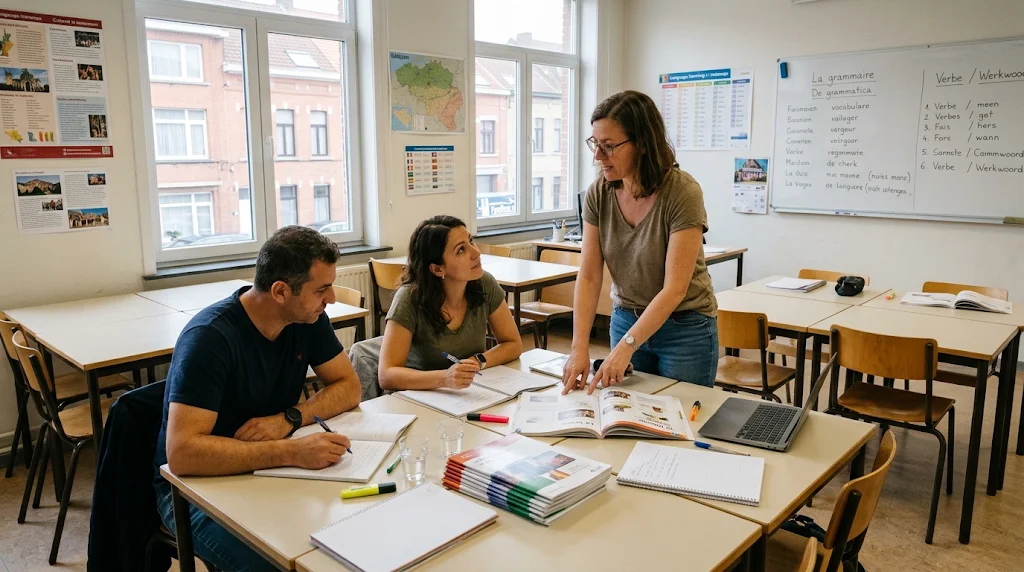
From established language academies and online lessons to mobile apps and publicly funded programmes, Belgium offers many ways to learn Dutch, French or German. This guide explores where and how you can study the country's official languages after relocating.
Belgium recognises three official languages: Dutch, French and German. If you arrive speaking only English, you will probably still find it relatively easy to communicate, as many Belgians speak English fluently.
Nevertheless, learning one or more of the official languages can make everyday activities much more straightforward. Tasks such as visiting the bank, finding employment and using public transport become easier when you can communicate locally. Even a small amount of vocabulary can help you explain a health problem to your doctor or talk to your child's teacher about their progress.
Whether your goal is to learn Dutch, French or German, this guide introduces the language-learning opportunities available in Belgium, including:
- Reasons to study one of Belgium's official languages.
- Choosing the language most useful for your location.
- Preparing before moving to Belgium.
- International language schools and local learning centres.
- Publicly supported and free language lessons.
- Online courses, websites and mobile applications.
- Ways to practise with local residents.
- Official language examinations and qualifications.
The advantages of studying Dutch, French or German
Learning another language can improve memory and cognitive abilities while helping you become more involved in your new community.
Belgium, known as België in Dutch, Belgique in French and Belgien in German, has three official languages: Dutch, French and German. Consequently, a considerable number of people living in the country speak more than one language.
The Brussels-Capital Region is particularly interesting for newcomers because it is officially bilingual. Its 19 communes, or municipalities, operate in both Dutch and French. This is also the region where many international residents choose to settle.
Although English is not an official Belgian language, it is widely understood, particularly in Brussels. The capital is home to the headquarters of the European Union (EU) and the North Atlantic Treaty Organization (NATO), and many residents are comfortable speaking English.
Even so, local people may prefer to communicate in French, Dutch or German rather than English. Learning at least one of the country's official languages can therefore make socialising easier and help you understand Belgian customs, culture and everyday etiquette.
Knowing the local language can also improve your employment opportunities. It may make it easier to access educational programmes at schools and universities, as well as communicate confidently in professional settings.
Choosing the right language to study
Your choice of language will largely depend on the part of Belgium where you intend to live.
The country is divided into three main language areas:
- Flanders: The Dutch-speaking region in northern Belgium, close to the Netherlands. Its names include Vlaanderen in Dutch, Flandre in French and Flandern in German.
- Wallonia: The French-speaking region in the south, bordering France. It is called Wallonië in Dutch, Wallonie in French and Wallonien in German.
- The German-speaking Community: A smaller community, known as Ostbelgien, located mainly in eastern Belgium along the German border.
Whichever language you decide to learn, you should be able to find a suitable course. Options include face-to-face classes and online lessons for different ability levels and budgets.
Reasons to learn Dutch
Approximately 6.5 million of Belgium's 11 million inhabitants speak Dutch as their first language. This represents slightly more than 60% of the population, making Dutch the country's most widely spoken language.
Dutch is also spoken internationally, with more than 23 million native speakers around the world.
It is worth noting that Belgian Dutch has some differences from the variety spoken in the Netherlands. These distinctions can be heard in the accent and found in certain expressions, idioms and everyday vocabulary.
Flanders is Belgium's Dutch-speaking region and shares a border with the Netherlands. The Brussels-Capital Region is officially bilingual, which means that public information, including road signs, is generally displayed in both Dutch and French.
If you live in Antwerp (Antwerpen in Dutch and Anvers in French), Bruges (Brugge in Dutch, Bruges in French and Brügge in German), Ghent (Gent in Dutch and Gand in French), or another part of Flanders, learning Dutch is a particularly practical decision.
Reasons to study French
A little more than 4.5 million people in Belgium speak French as their native language, making it the country's second most common language.
French is mainly spoken in Wallonia, in the southern part of Belgium bordering France. Beyond Belgium, it is used by more than 321 million people worldwide, making it the fifth most widely spoken language globally.
French is likely to be the most useful choice if you settle in Namur, the regional capital, known as Namen in Dutch. It is also widely used in other Walloon cities, including:
- Liège (Luik in Dutch).
- Mons (Bergen in Dutch).
- Dinant.
Reasons to learn German
German is spoken as a first or second language by almost 130 million people worldwide. In Belgium, however, fewer than 1% of the population speak it.
Despite its relatively small number of speakers in the country, German is one of Belgium's official languages. It is a sensible language to consider if you plan to settle in the eastern provinces, particularly in communities close to the German border.
Studying Dutch, French or German before relocating
You do not have to wait until you arrive in Belgium to begin learning a local language. Starting before your move can give you a useful foundation and make the first stages of settling in less difficult.
Even basic language knowledge can help with practical arrangements such as searching for accommodation, opening a bank account and registering for healthcare. Being able to explain what you need in the local language can make these processes easier.
International language institutions in Belgium
Some language-learning organisations operate in several countries. This means you may be able to start lessons in your current location and continue studying after moving to Belgium.
Look for an institution that offers courses both in your present country and in Belgium, so that you can maintain your progress when you relocate.
You can consider the following international language organisations:
- Alliance Française: An organisation dedicated to promoting French language and culture. It has centres in many countries and provides a broad selection of French courses.
- Berlitz: An established international language school offering different programmes, including Dutch, French and German.
- Goethe-Institut: A worldwide institution where students can explore German language and culture through its programmes at locations around the world.
Learning Dutch, French and German after arriving in Belgium
Once you are living in Belgium, you will have more opportunities to develop your language skills because you will be surrounded by the language and culture.
A pedestrian walking past outdoor fresh-produce stalls near Fruit Palace, a supermarket in West Flanders.
There is a wide range of local language schools to choose from. You can also continue practising beyond formal lessons by using the language in everyday situations. Shopping for groceries, using language-learning apps, watching television or visiting the dentist can all become opportunities to put your new vocabulary into practice.
Language schools and learning centres across Belgium
Although Brussels has a particularly large concentration of language schools, learning centres can also be found in other parts of Belgium. Online courses provide another option for people who cannot attend lessons in person.
The following institutions are among the options you can contact when looking for a suitable course.
Language schools based only in Brussels
- Amira Language School – Brussels: Provides small, face-to-face classes in Dutch, French and German. It is a government partner of Actiris and offers free language lessons to job-seekers registered with the city.
- Alliance Française – Brussels: Offers private and group lessons, both in person and online. Classes are available during the day and in the evening. Students can also choose intensive programmes, examination preparation and formal language tests.
- Centre de Perfectionnement Academique de Bruxelles (CPAB) – Brussels: This non-profit organisation provides French and Dutch courses, including conversation classes. Lessons are available during daytime and evening hours.
- Europa Language School – Brussels: Provides Dutch and French lessons for individual students. It also works with companies to organise language programmes for employees.
- F9 Languages – Brussels: Offers Dutch, French and German instruction to both private learners and businesses.
Language schools with centres in other Belgian locations
- Berlitz – Antwerp, Bastogne, Brussels and Liège: Provides language programmes for children, adults and businesses. Students can choose between classroom-based and online learning.
- Call International – Brussels, Liège and Waterloo: Offers practical workshops designed to develop specific communication skills, including telephone conversations, job interviews and CV preparation. Its programmes are available to young people and adults, during the day and in the evening. Lessons can take place in person or online, with private, semi-private and group formats.
- CLL Language Centres – Brussels and Louvain-la-Neuve: Provides courses accredited by the European association EAQUALS (Excellence in Language Education). Its programmes cater to children, teenagers and adults, with classroom and online options. Examination preparation courses are also available.
- CVO Encora (in Dutch) – Antwerp: Provides adult language education in Dutch as a second language (NT2), French and German.
- Eurospeak – Antwerp, Brussels and Ghent: Offers instruction in several languages. Its Ghent centre also provides an intensive Dutch programme lasting three weeks.
- Forma Lingua (in French) – Liège: Organises Dutch, French and German courses for both companies and individual learners.
- Hello Languages – Antwerp: Provides language training in Dutch and French.
- Language Center ISLV – Liège: The language-learning centre of the University of Liège, offering courses and language assessments.
- Lerian – Brussels, Ghent, Antwerp, Liège and Tervuren: Delivers tailored language programmes for individuals and companies, including immersion courses. Some employees may qualify for discounted or free lessons.
- Linguapolis – Antwerp: Provides language courses through the University of Antwerp.
- Wiams – Bree: Runs one-week French immersion programmes for children from the age of six. Courses take place during the spring and summer holidays.
Publicly funded language courses in Belgium
Several cities and communes within the Brussels-Capital Region provide government-subsidised language lessons through established educational institutions.
Examples include:
- Etablissement d’enseignement pour adulte et de formation continue – Uccle.
- Institut Auderghemois de Promotion sociale.
These programmes, along with many similar courses, generally follow the Belgian academic calendar. Applicants must complete a placement assessment before joining a class so that they can be assigned to an appropriate level.
There are two main registration periods:
- January registration: For the semester running from February until June.
- August registration: For courses beginning in September and continuing until January.
Fees depend on how frequently lessons take place. As a general indication, expect to pay between €80 and €200 for a three-hour class that runs two to four times per week.
Certain applicants may be eligible for reduced course fees, including:
- Immigrants.
- Students.
- People with disabilities.
- Unemployed individuals.
The availability and administration of government-supported language lessons depend on the particular commune or municipality. Classes may only run when enough people have registered, so the number of available courses can change.
Anyone holding a Belgian identity card can enrol in these programmes. Contact your local commune to find out which courses are available and what conditions apply.
Other publicly supported learning opportunities include:
- Vrije Universiteit Brussel (VUB): Through its Academic Center for Language Education, the university offers programmes in English, Academic Dutch and German.
- CVO Semper: The adult and continuing education institution associated with the Brussels Chamber of Commerce, known as Kamer van Koophandel in Dutch and Les Chambres de Commerce in French. It offers adult education in several languages, including conversational courses for people preparing to travel. It also provides Flemish Sign Language, known as Vlaamse Gebarentaal (VGT).
Ways to learn Dutch, French and German without paying
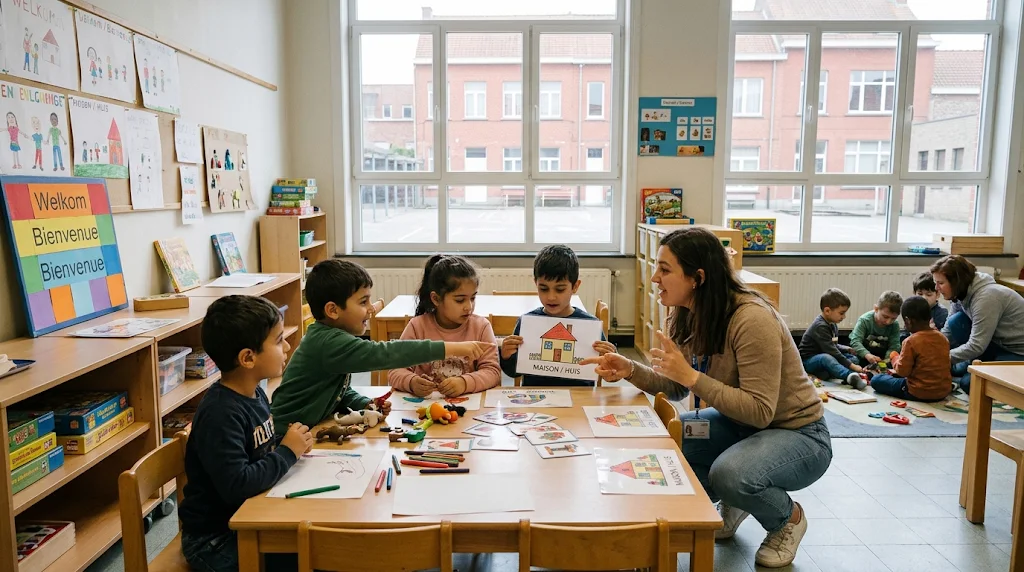
Children moving to Belgium may be able to join language-support programmes at their local public school before starting their regular lessons. The type of assistance available depends on the child's age and the school they attend.
Adults can also find free lessons through community centres and certain local religious organisations. These classes often concentrate on conversational ability and the vocabulary needed for everyday activities.
People registered as job-seekers in the Brussels-Capital Region may qualify for free or discounted language education. Depending on their circumstances, support may cover private tuition or group classes.
For further details about available assistance, contact the employment office responsible for your region.
Online programmes for learning Dutch, French and German
Online education has made language learning more accessible than ever. There are many courses available, making it possible to choose a programme that fits your learning objectives, timetable and budget.
You might prefer to attend a group lesson once a week, arrange individual practice with a private tutor or study independently at a pace that works for you.
Online language-learning programmes
- Berlitz: Provides online Dutch, French and German courses. Learners can combine independent study with individual instruction. One programme includes a live two-hour lesson every week for 20 weeks and costs approximately €560. Private packages include 40 learning units delivered across 30 sessions, costing around €2,075. Its self-directed option includes a placement assessment and 20 personalised lessons.
- italki: Connects students with native speakers for individual language practice. Trial lessons are available from approximately €5. You can also arrange one-hour conversation sessions based on your interests and availability, generally costing around €7–15.
- LanguaTalk: Offers online tutoring in several languages. Students begin with a 30-minute trial session with a tutor. If the arrangement suits them, they can establish a timetable based on their learning goals. Prices start at approximately €9 per hour.
- Lingoda: Provides online French and German classes, either individually or in small groups. Lessons are conducted live, and students can change teachers or class times to suit their schedules.
- LSI Education: Offers intensive online French and German programmes involving between 10 and 25 hours of tuition each week. It also provides preparation courses for language certification examinations.
- Preply: Matches students with online tutors for live, personalised language lessons.
- Skype Language School: Provides packages of 10 or 20 lessons, each lasting 45 minutes. Prices are approximately €425–850. Its beginner courses are designed to help learners progress from A0 to A2.
- University of Groningen: Offers a free introductory Dutch course lasting three weeks. The programme is designed to help participants introduce themselves and discuss topics such as family, employment and education. It is free of charge and takes place several times each year.
Additional online dictionaries and translation tools
As you progress, you may occasionally need help understanding unfamiliar words or checking translations. Several free online dictionaries and translation services can help you build your vocabulary.
- Cambridge Dictionary: Provides Dutch-to-English and German-to-English dictionary resources.
- Collins Dictionary: Offers French-to-English and German-to-English dictionary services.
- DeepL Translator: Identifies the source language and translates text into the language you select.
- Google Translate: Detects the language of the text and converts it into your chosen language.
Studying Dutch, French and German with computer and mobile applications
If you prefer to learn from home and organise your own study schedule, you can use established language-learning software and applications.
These programmes generally require a computer or smartphone, an internet connection and enough time to practise regularly.
Established language-learning programmes
- Brainscape: Uses digital flashcards to help learners practise vocabulary and common expressions in French or German.
- Fluenz: Combines computer software with a mobile application. It provides French and German courses for different ability levels and includes pronunciation and comprehension assessments.
- Instant Immersion: Offers a 2.5-hour introductory audio course in Dutch, French or German, as well as more comprehensive language programmes.
- News in Slow: Helps learners improve their French or German by listening to and reading current news at adjustable difficulty levels. Users can select unfamiliar words to view their translations.
- Pimsleur: Provides Dutch, French and German lessons, alongside courses in 51 languages. Its learning materials include 30-minute lessons, flashcards and voice coaching.
- RocketLanguages: Offers French and German programmes containing more than 350 hours of lessons.
- Rosetta Stone: Provides Dutch, French and German learning through short lessons that can be accessed online and offline.
- Transparent Language: Creates personalised study plans based on each learner's current ability and interests.
For people who want to practise while travelling to work or going about their daily routines, mobile language applications can be particularly convenient.
Widely used language-learning apps
- Babbel: Offers app-based lessons and conversation exercises. Babbel Live, available for French and German, provides live classes with certified teachers. Lessons take place in small groups, are organised around specific subjects and cater to different ability levels.
- Duolingo: A popular free application with engaging language exercises. It offers Dutch, French and German, among other languages.
- Mondly: Designed to make language learning more enjoyable. It provides Dutch, French and German courses and also has a version intended for children.
Practising Dutch, French and German beyond formal lessons
One of the best ways to strengthen the skills you develop in a classroom or online course is to communicate with people who speak the language locally.
In Belgium, opportunities to practise Dutch and French are easy to find simply by going about your everyday activities. German can also be practised, although you may find more opportunities to use it in the eastern part of the country.
Here are several practical ways to build confidence using your new language:
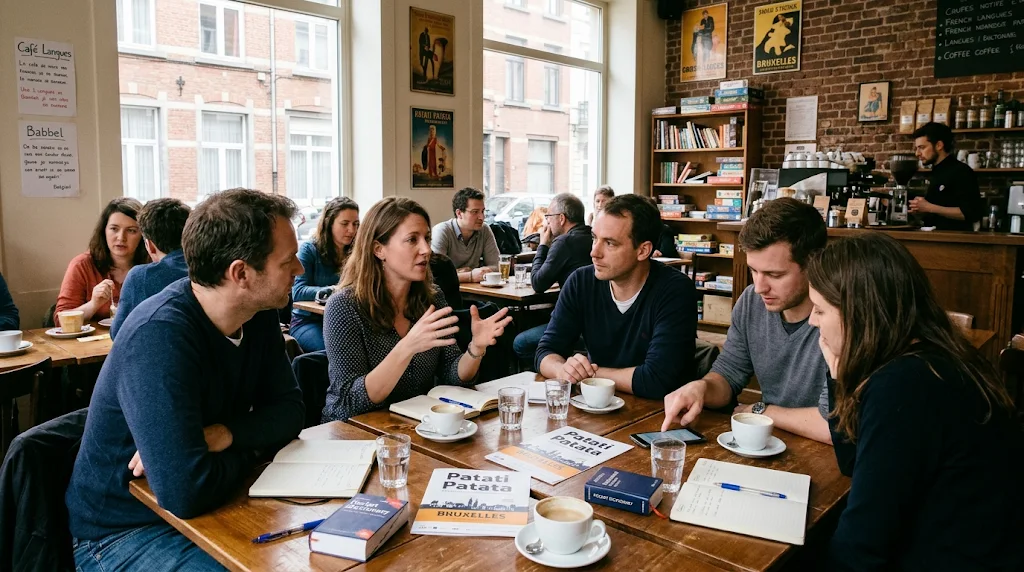
- Join Patati Patata: This free language-exchange initiative in Brussels brings people together to meet others and practise speaking Dutch and other languages.
- Attend Polyglot Club gatherings: In Antwerp, you can meet a group of new people for a drink each month. You can also look through its event calendar for activities in Brussels.
- Find local conversation groups: Facebook and Meetup have various groups that organise regular, often weekly, gatherings where participants can practise speaking different languages.
- Use the language when shopping: Many Belgian shopkeepers speak two languages. When a shop is not too busy, try ordering vegetables in French or having a conversation with the cheesemonger in Dutch.
- Practise with your neighbours: Ask people living nearby for help with everyday language. You could learn useful expressions while asking about local childcare options or how to sort and dispose of household waste.
- Arrange children's playdates: If you have young children, invite other families over to play. Your children can enjoy the activity while you naturally pick up new words and expressions through conversation.
- Join a sports club or local association: Taking part in a community activity is a good way to stay active, meet people and improve your language skills at the same time.
- Continue speaking the language with new friends: Make a deliberate effort to use Dutch or French during conversations. Keep trying even if people switch to English because they feel it may be easier for you.
- Watch films and television: Choose programmes in Dutch or French, with or without subtitles. Listening regularly can help you become more familiar with pronunciation and the natural rhythm of the language.
- Read and listen to local media: Try reading Belgian newspapers, tuning in to local radio stations and borrowing books from the library.
Official language tests and recognised qualifications in Belgium
Attending language classes can make everyday life in Belgium easier. Achieving proficiency in a new language can also bring a sense of confidence and personal accomplishment.
Taking an officially recognised language examination can provide further advantages. Employers and university programmes may ask applicants to demonstrate their language ability as part of the admissions or recruitment process.
The main sections of an official language examination
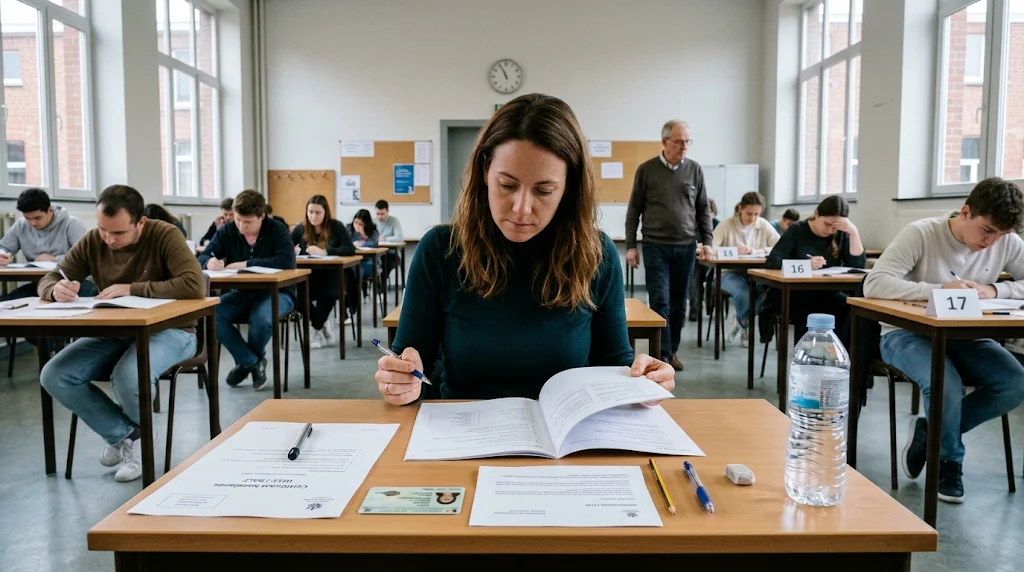
Formal language assessments generally test three areas:
- Reading and writing: Your ability to understand written material and communicate through written text.
- Listening and comprehension: Your ability to understand spoken language.
- Speaking: Your ability to communicate verbally.
These examinations can take several hours to complete.
Some online language programmes also provide certificates. Certain organisations allow candidates to register for examinations online, while some schools offer discounted test fees or include the examination cost in their course packages.
If you are already attending a language course, or are planning to enrol in one, ask your teacher or course provider whether it includes certification or examination preparation.
Language examinations and certificates to consider
- Berlitz: Provides Dutch, French and German tests that assess listening and reading skills in accordance with the Common European Framework of Reference for Languages (CEFR).
- Certificaat Nederlands als Vreemde Taal (CNaVT): This internationally recognised qualification certifies Dutch-language ability. A placement test can be arranged through the Catholic University of Leuven.
- DELF/DALF: The Diplôme d’Étude en Langue Française and Diplôme Approfondi de Langue Française, together with the Test de Connaissance en Français (TCF), are internationally recognised French-language qualifications. The certificates have indefinite validity. In Brussels, Alliance Française provides examinations at all levels, while the University of Liège offers intermediate and advanced examinations.
- Dutch as a Second Language (NT2): From September 2023, standard Dutch-language examinations for learners in Belgium include assessments in reading, writing and speaking.
- Goethe-Institut: Organises German examinations for children and adults, covering beginner through advanced levels. Examinations are held in February, June and October.
- The European Language Certificates (TELC): A non-profit organisation providing internationally recognised language qualifications. It schedules French and German examinations twice a year, covering levels A1 to B2.