Moving to France: What to Do During Your First Week
Moving to France involves more than just finding a place to live. This guide walks you through the practical steps to take during your first week, including securing accommodation, completing necessary registrations, arranging health insurance, opening a French bank account, getting a mobile number, finding work, organising transport and setting up essential home services. It also covers enrolling your children in school and getting familiar with French culture, helping you navigate the early stages of your move with greater confidence.
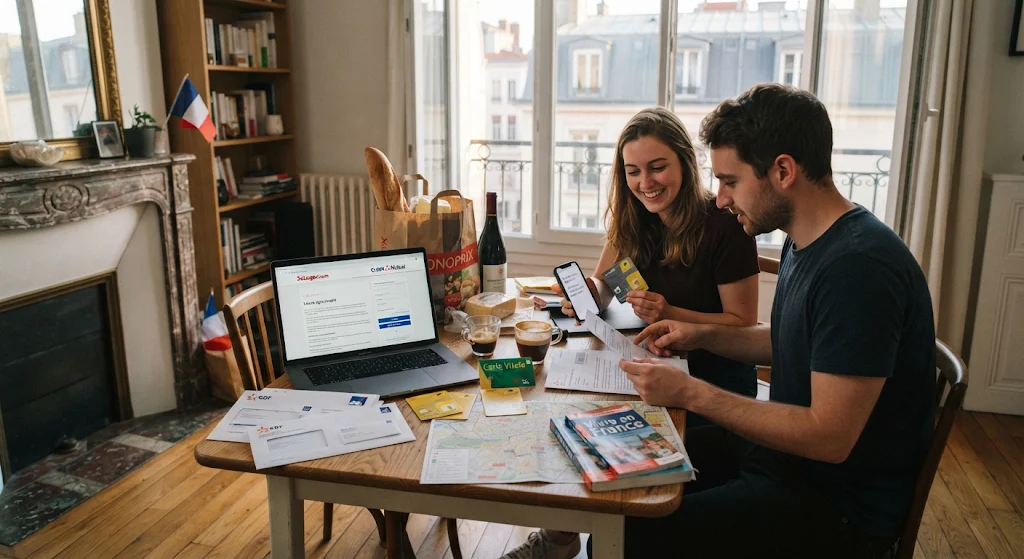
From securing your first home to stopping by a neighbourhood bakery for a freshly baked baguette, here are the important things to take care of during your first seven days in France.
Whether you are drawn to the breathtaking mountain landscapes of the Alps and Pyrenees, the fashionable avenues of Paris, or the many charming destinations in between, France offers something for almost everyone. Now that you have made the move, you can begin building a new life anywhere in l’Hexagone.
However, the first few days in a new country can be overwhelming, even for people who have moved abroad before. Getting used to unfamiliar systems, understanding local procedures and communicating in another language can take some time. Fortunately, settling into France becomes easier once you know what to prioritise. To help you begin your new chapter smoothly, here are ten important tasks to complete during your first week.
1. Secure a Place to Live in France
One of your first priorities after arriving in France should be finding somewhere to stay. Some newcomers may have accommodation arranged by their French employers, either temporarily or permanently. However, most international arrivals will need to organise their own housing, even if they initially choose somewhere short-term while searching for a more permanent property.
Fortunately, France offers several accommodation options. If you need somewhere to stay while looking for a long-term home, serviced apartments and extended-stay holiday rentals can be practical choices.
If you would rather settle into a more permanent arrangement from the beginning, renting a property is a common starting point for newcomers to France.
Rental costs vary considerably depending on the location. As expected, properties in central city neighbourhoods and certain coastal destinations generally command higher prices.
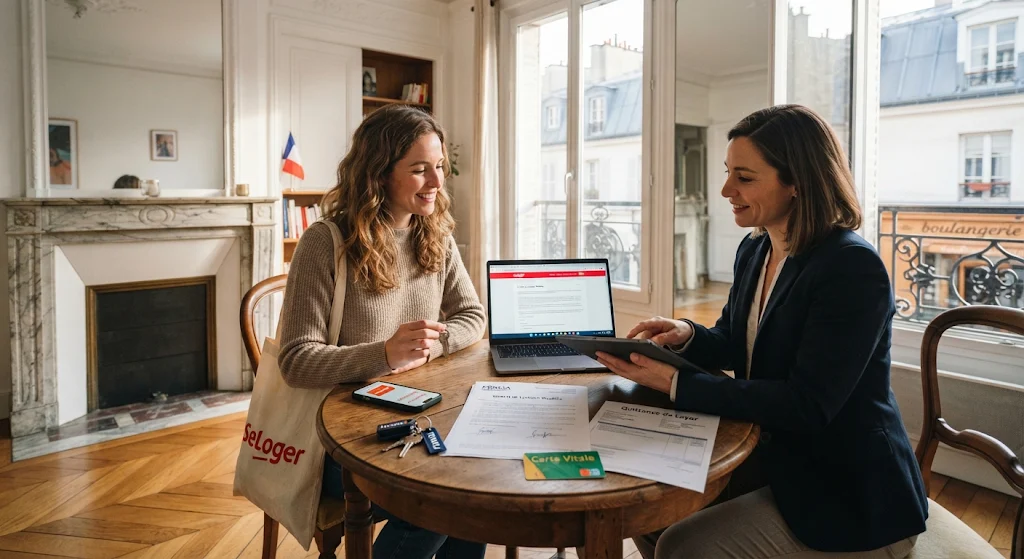
If you are considering purchasing a home or need professional assistance with your property search, working with a local estate agent may be worthwhile.
To compare available properties and get an idea of typical rental and purchase prices, browse French property websites such as:
- SeLoger
- Leboncoin
2. Complete Any Required Registration with French Authorities
As in several other European countries, certain people moving to France must register with the relevant local authorities.
This registration requirement does not generally apply to people relocating from other EU member states or neighbouring Switzerland. Nevertheless, EU citizens can choose to apply for a residence permit (carte de séjour) through their local town hall (mairie).
Although this document is not compulsory for EU nationals, having one may make some administrative procedures and interactions with French authorities more straightforward.
For people arriving from countries outside the EU, the process is different. Non-EU nationals are required to visit their local prefecture and complete the necessary registration procedures to obtain a carte de séjour.
According to the original guide, this registration must be completed within the first two months of living in France. Since the application process can take time, it is advisable to begin as early as possible.
Remember that obtaining a residence permit is separate from meeting the visa conditions that apply to your particular circumstances. This makes checking your immigration requirements one of the most important tasks to prioritise during your first week.
British nationals relocating to France after Brexit must also apply for a carte de séjour.
For current application procedures and official requirements, consult the French government's Service-Public website.
3. Arrange Your Health Insurance Cover
French regulations require residents to have health insurance, including people who have recently moved to the country.
Most expats living in France can qualify for the country's universal public healthcare scheme, known as Protection Maladie Universelle (PUMA).
However, if you do not meet the eligibility requirements for public coverage, or you want additional protection beyond what it provides, you can consider purchasing private health insurance.
Some recognised international health insurance providers available to expats include:
- Allianz Care
- Cigna Global
For a better understanding of medical services in your new country, explore our guides to the French healthcare system and hospitals in France.
Health insurance is not the only type of protection worth arranging after your arrival. Depending on your circumstances, you may need several other policies.
For instance:
- Car insurance: If you intend to drive in France, you must arrange the appropriate vehicle insurance before using the roads.
- Home insurance: When moving into a property, you may need building insurance and protection for your household belongings.
To understand the different policies you may need after relocating, read our guide to insurance in France.
4. Set Up a Bank Account in France
Opening a local bank account is one of the practical steps that can help you feel more established in France.
Having French banking details makes it easier to organise recurring payments for services such as home internet, television subscriptions and household utilities.
It is also convenient for everyday spending, whether you are paying for lunch at a local brasserie or shopping for groceries at a French supermarket.
France has a large banking sector, giving newcomers plenty of institutions to consider. Some of the country's major traditional banks include:
- BNP Paribas
- Société Générale
- La Banque Postale
One straightforward way to open an account with a traditional French bank is to visit a branch. However, you should be prepared to communicate in French during the process.
Another option that has become increasingly popular is mobile banking. Digital banking services often provide simpler registration procedures for international residents, with less paperwork and the convenience of managing your account through an app.
Some popular mobile banking providers available to expats include:
- bunq
- N26
- Revolut
If you need to move money from your previous bank accounts to France, international transfer platforms can also be useful. Some providers to consider include:
- CurrencyFair
- Wise
- XE
Freelancers and other business owners who need a business account may also find it easier to arrange their banking through an online provider such as Sogexia.
5. Get a French Mobile Number and SIM Card
Whether you want to stay connected with friends and relatives back home or need a local number for professional activities, getting a French SIM card is an important part of settling in.
This is particularly useful if you are moving from a country outside the EU where your existing mobile network may not provide free roaming services in France.
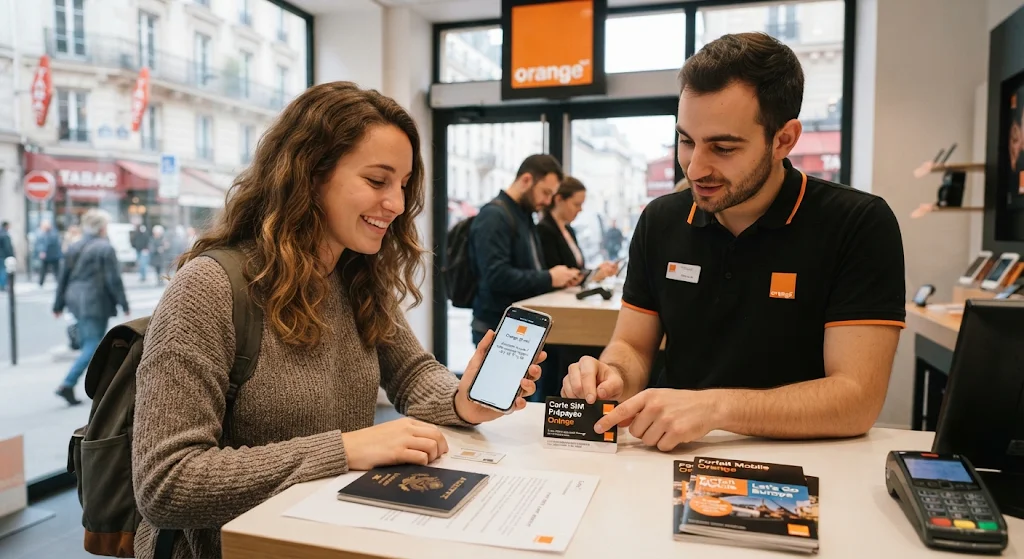
There are two main ways to obtain a French mobile number:
- Prepaid SIM card: You pay in advance for credit or a chosen allowance, without necessarily committing to a monthly contract.
- Mobile phone plan: You subscribe to a package that provides services such as calls, text messages and mobile data, usually for a recurring fee.
The best option will depend on your communication habits, data requirements and budget.
France has a wide range of mobile network operators, which can initially make choosing a provider seem complicated. However, the available packages are generally straightforward and comparable to those in other countries.
Before signing up, compare the different offers to ensure you select a plan that suits your needs.
Some of the mobile operators available in France include:
- Coriolis
- Lebara
- Lycamobile
- Orange
- Prixtel
- SFR
Whichever provider you choose, remember to check out our selection of the top 10 essential French apps to download during your first week in the country.
6. Begin Your Job Search
Unless you have already secured employment before arriving in France, finding work may be one of your main priorities during your first week.
Employment opportunities and average salaries can differ significantly between French regions. Although requirements vary depending on the role and industry, many employers expect applicants to have some knowledge of French.
Nevertheless, there are still opportunities for international candidates who are learning the language or have not yet reached an advanced level.
It is worth starting your job search as soon as possible after arriving. There are several ways to prepare yourself for the French employment market.
For example, you could:
- Adapt your CV: Review and update your résumé so that it meets the expectations of employers in France.
- Contact recruitment agencies: Look for local employment agencies that specialise in your preferred profession or industry.
- Explore online vacancies: Search French job websites and employment platforms for suitable opportunities.
You can also browse vacancies through the Expatica jobs portal.
7. Decide How You Will Travel Around France
Working out how you will move around your new surroundings is another important task to consider during your first week.
The most suitable transport option will depend largely on where you decide to live.
In major urban centres such as Paris, Marseille and Lyon, getting around is relatively easy using public transport, including buses and metro services. Many smaller French cities also have reliable public transportation networks.
Cycling is another increasingly popular way to travel in French cities. Paris, in particular, has invested considerably in expanding its cycling infrastructure, making bicycles a more attractive option for everyday journeys.
However, driving may be the most convenient solution for some newcomers, especially those settling in rural communities where public transport services are more limited.
If you are over 18 and moving to France with a driving licence issued by another EU or EEA country, or Switzerland, you can generally use your existing licence.
Drivers arriving from other countries may need to obtain an International Driving Permit, depending on their circumstances and the rules applicable to their licence.
For more information about driving requirements and exchanging or obtaining a French licence, consult our guide to getting a French driving licence.
If you also need to compare car insurance policies, the following websites can help:
- AutoMotoCompare
- Le Comparateur Assurance
8. Arrange Electricity, Water, Gas and Internet at Home
Once you have found somewhere to live, the next step is making sure your new property has all the essential connections.
This includes arranging household utilities and telecommunications services so that your accommodation is comfortable and ready for everyday use.
Some serviced apartments and rental properties already include utility and internet costs in their monthly charges. This is also common in certain shared accommodation arrangements, where the expenses are divided among the tenants.
However, many rental homes require occupants to organise their own connections. The same applies to properties you purchase.
Although arranging these services may seem like another complicated task, signing up for internet and television in France is generally straightforward.
It is still important to compare providers and available packages to find an arrangement that works for your household.
Some of the main companies providing internet and television services in France include:
- Orange
- La Poste Mobile
- SFR
Water services are managed through your local municipality (commune) or a group of neighbouring municipalities.
Gas and electricity, on the other hand, can be purchased from different suppliers, giving households a choice of providers.
Some French energy companies include:
- EDF
- Engie
- OHM Energie
9. Register Your Children for School
Relocating to another country with children who are already of school age can make the moving process more challenging.
However, researching the available education options before relocating can help make the transition easier for the whole family.
During your first week in France, consider contacting the education department of your local municipality to find out about school registration and available places.
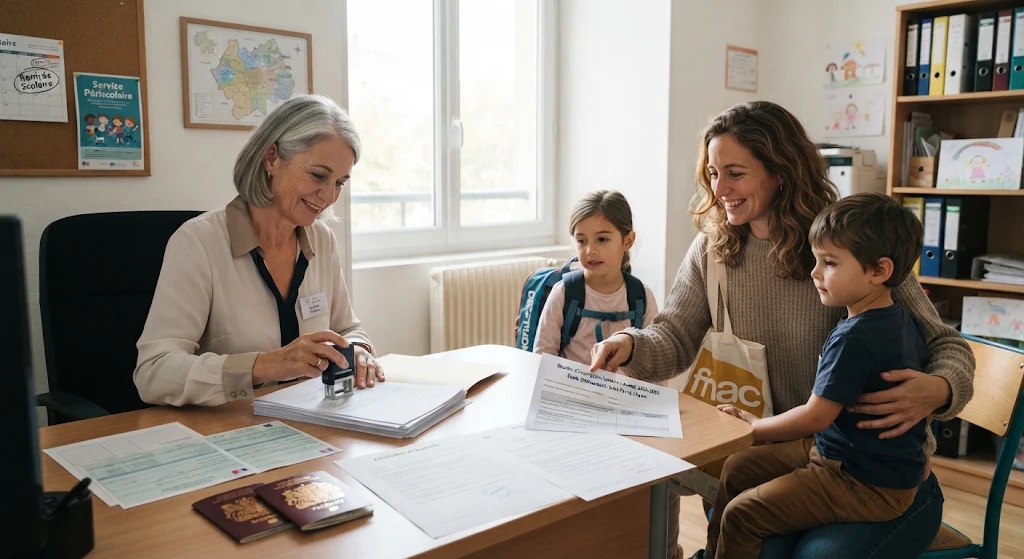
Some expat parents choose to enrol their children in local public schools. This is often one of the most affordable and straightforward options. It can also help children become familiar with French culture, improve their language skills and integrate into their new community.
Other families may prefer an international school, particularly if they want their children to follow an internationally recognised curriculum such as the International Baccalaureate (IB).
If your children are still too young for formal schooling, you will need to make suitable childcare arrangements.
It is advisable to begin searching for childcare during your first week because available places can be limited and fill up quickly. This is especially important if you need an English-speaking childcare provider.
Once your children's education and care arrangements are in place, you may also want to invest in your own learning. Enrolling in a French language course at a local language school can help you become more comfortable communicating and managing everyday life in the country.
10. Get Out and Experience French Life (La Vie Française)
Your first week in France is a special experience, so remember to make time to enjoy it.
Although the tasks in this guide may seem like a long list for someone who has just arrived, most are manageable once you approach them one at a time. They should not prevent you from exploring your new surroundings and enjoying everything your new home has to offer.
France is among Europe's most diverse countries, with plenty of attractions, landscapes and activities to discover. So, in between arranging insurance, contacting utility companies and organising other administrative matters, give yourself time to relax and explore.
Make the Most of Your First Days in France
No matter which part of France you decide to call home, there are countless ways to enjoy your free time.
You could:
- Go hiking in the spectacular French Alps or Pyrenees.
- Spend a relaxing day on the beach near La Rochelle.
- Explore the picturesque streets and neighbourhoods of Paris.
- Discover local cafés and find your favourite place to enjoy a coffee or glass of wine.
- Try traditional French food, such as a croque-monsieur, and sample freshly baked croissants from a nearby boulangerie.
You do not have to plan an elaborate trip to start enjoying your new surroundings. Even taking a leisurely walk around your neighbourhood can help you discover useful local shops, welcoming cafés and interesting places to visit.
Take the time to settle in, meet people and enjoy the little experiences that make everyday life in France special. After all, this is the beginning of your new adventure.