Germany’s Workplace Practices and Professional Standards
A practical overview of German workplace culture, covering professional conduct, business communication, workplace etiquette, employee expectations, and workers’ rights.
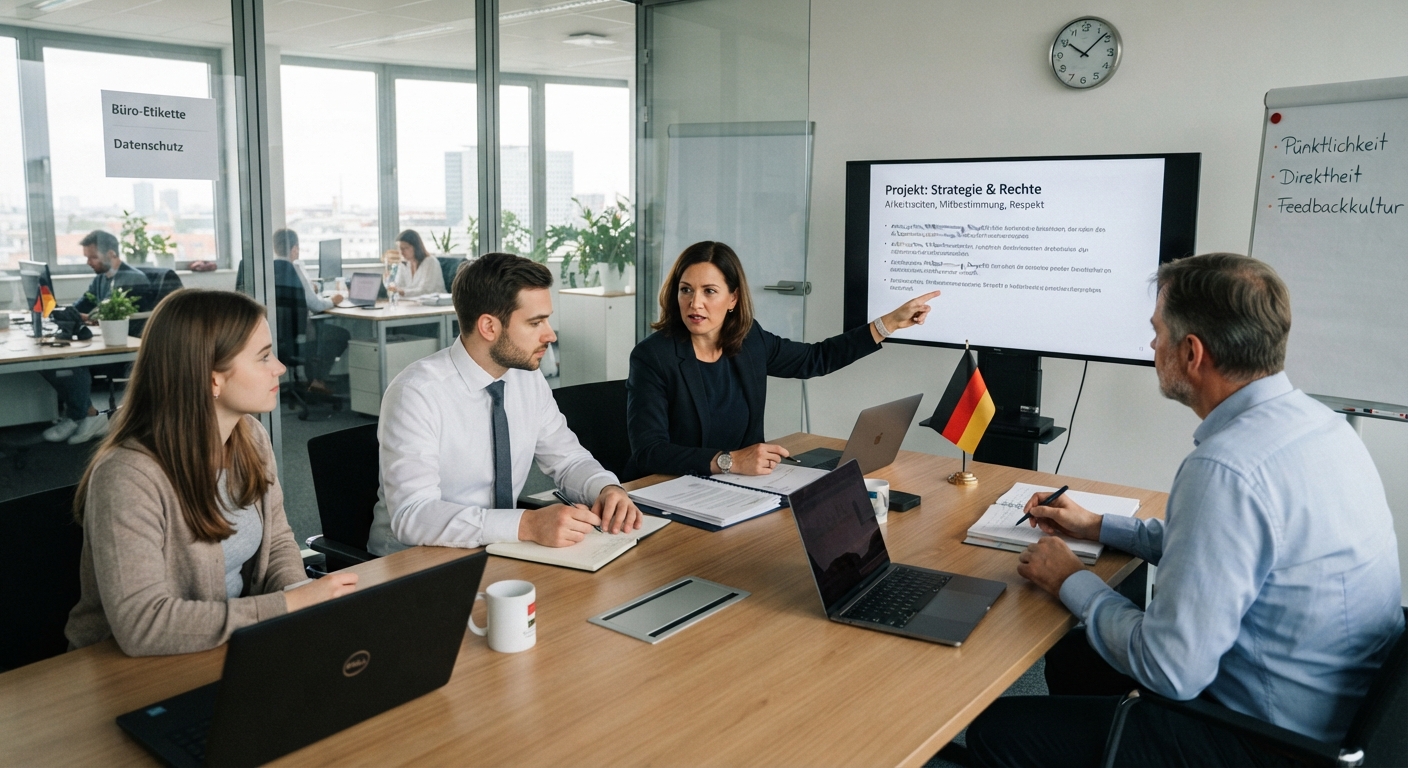
Working in Germany involves more than having the right qualifications and professional experience. Understanding the country's workplace culture, business expectations, and professional communication standards is equally important for building a successful career.
German workplaces are often associated with punctuality, professionalism, discipline, and structured business practices. Some international employees may initially interpret German colleagues as unfriendly or overly formal. However, this perception is often connected to the country's preference for straightforward communication, efficiency, and completing professional responsibilities rather than engaging in unnecessary conversations during working hours.
Understanding these cultural differences can help international professionals establish better relationships with colleagues, communicate effectively with clients, and adapt more comfortably to German working environments.
This guide examines the following areas:
- The German business environment and major industries.
- Common characteristics of German workplace culture.
- Work-life balance and working arrangements.
- Time management and professional expectations.
- Organizational structures and management hierarchy.
- Diversity and inclusion in German workplaces.
- Women's participation and treatment at work.
- Business planning, meetings, and negotiations.
- Professional networking and workplace relationships.
- Business etiquette and communication standards.
- Employee social security and welfare benefits.
- Corporate social responsibility.
- Business corruption, fraud, and legal consequences.
An Overview of the German Business Environment
Germany attracts professionals from different parts of the world because of its strong economy, progressive social policies, and relatively high standard of living. It is also recognized as having the largest economy in the European Union.
Despite its economic strength, German employees generally work fewer hours annually than workers in some neighbouring European countries, including France and Italy, according to OECD working-hours statistics.
One of the country's major economic and demographic challenges is its declining birth rate. To address the resulting shortage of workers, the German government has introduced initiatives aimed at attracting qualified international professionals.
An example is Make it in Germany, a government-supported initiative that encourages skilled workers from other countries to relocate to Germany and contribute to its labour market.
Major Industries Driving Germany's Economy
Germany has several well-developed industries that contribute significantly to its economic growth and international competitiveness.
Some of the country's leading economic sectors include:
- Automotive Industry: Germany has a globally recognized automobile manufacturing sector, supported by companies involved in vehicle production, engineering, and automotive technology.
- Chemical and Pharmaceutical Industry: This sector focuses on chemical manufacturing, pharmaceutical research, medical products, and industrial materials.
- Electrical Engineering and Electronics: Companies in this industry develop electrical equipment, electronic components, and advanced technological systems.
- Healthcare: Healthcare services, medical research, pharmaceutical production, and healthcare technology play important roles in the economy.
- Information Technology and Telecommunications: This sector covers software development, digital services, telecommunications infrastructure, and other technological innovations.
- Mechanical and Plant Engineering: Germany is particularly strong in industrial machinery, manufacturing equipment, engineering systems, and factory technology.
For more information about these economic sectors, consult Germany's Economic Overview.
Employment Opportunities in Small and Medium-Sized Businesses
Although Germany is internationally associated with major corporations such as BMW, a significant proportion of its workforce is employed by small and medium-sized enterprises (SMEs).
According to the European Employment Services (EURES) labour market report, more than half of the country's total workforce works in these smaller and medium-sized businesses.
This creates employment opportunities for international professionals beyond major multinational corporations.
People interested in establishing their own businesses or working independently may also explore self-employment and freelance residence permits, which can provide long-term opportunities to live and work in Germany.
Germany's Economic Performance and Employment Conditions
In 2023, Germany experienced an economic recession following several economic pressures, including rising inflation and the consequences of Russia's invasion of Ukraine.
The recession was officially reported in May 2023 by Reuters.
However, the German Bundesbank anticipated a gradual recovery, with modest economic growth expected as the country worked through these challenges.
Despite the economic difficulties, Germany maintained a relatively strong employment position.
According to the figures provided in the original guide:
- Approximately 77% of the population participated in employment.
- The unemployment rate stood at approximately 3% in 2023.
- Germany's unemployment level was lower than that of many other European Union countries.
Further information can be found through the OECD Employment Rate Statistics and Eurostat's European Labour Market Report.
Living Costs and Minimum Wage in Germany
Germany also offers a relatively favourable cost of living compared with some other major European economies.
The general cost of living is lower than in countries such as the United Kingdom and France, although actual expenses depend on the city, accommodation, and individual lifestyle.
Another important consideration for employees is the country's minimum wage.
As stated in the original guide, Germany had the second-highest minimum wage in the European Union in 2023, at approximately €12 per hour.
For further information about minimum wage regulations, visit the German Federal Statistical Office's Minimum Wage Information.
Understanding the Characteristics of German Workplace Culture
German business environments are generally known for their preference for formal procedures, clearly defined responsibilities, and structured management systems.
Organizational hierarchies often determine who has the authority to make important decisions. Senior managers and executives usually exercise considerable influence over business direction and major operational matters.
Another common characteristic is the preference for professional titles and surnames when addressing colleagues, particularly in formal workplaces.
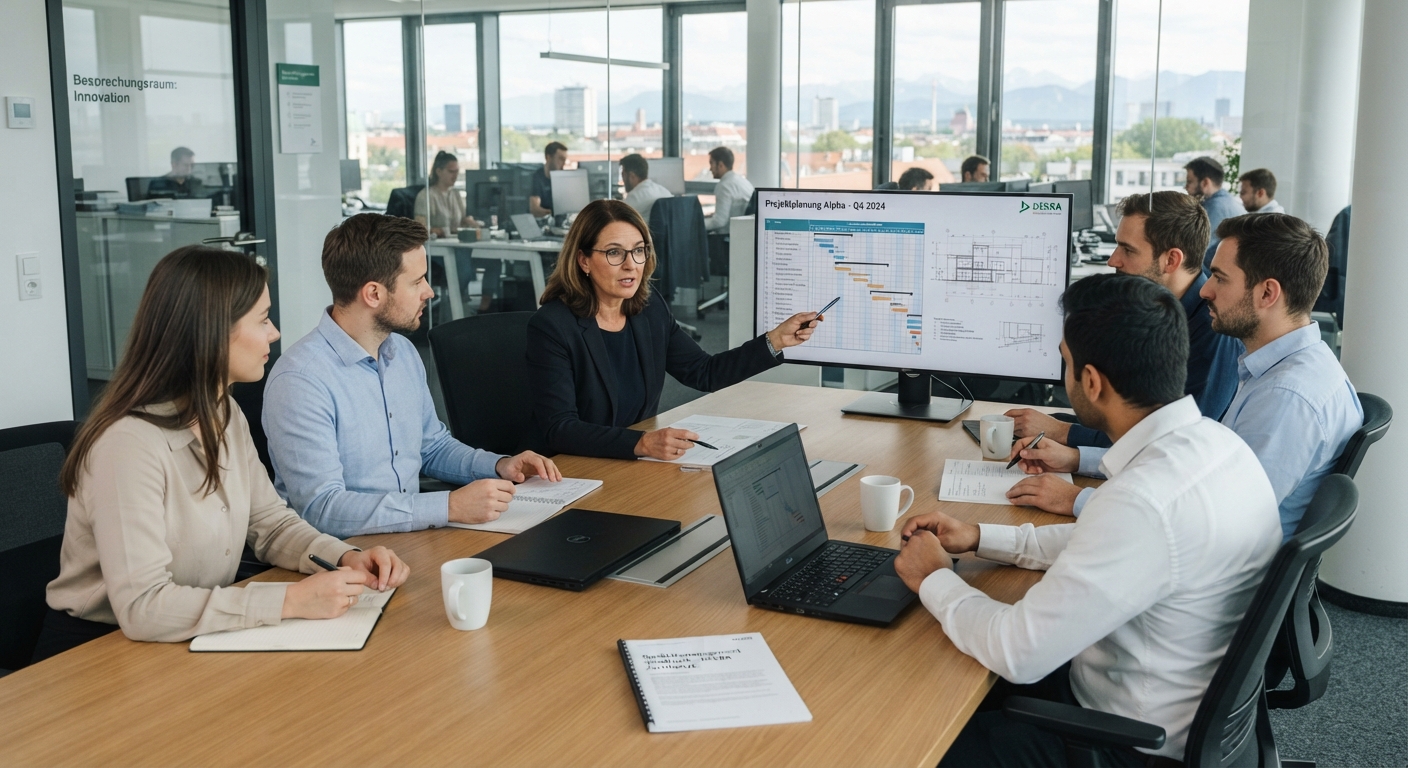
Formality and Professional Relationships
In many German organizations, professional relationships are kept separate from employees' personal lives.
Unlike some other countries, where workplace conversations frequently include discussions about family, personal interests, and social activities, German colleagues may prefer to concentrate on work-related matters.
For example:
- Meetings generally begin with little or no casual conversation.
- Employees may avoid discussing personal plans during working hours.
- Professional titles and surnames are commonly used when addressing colleagues.
- Meetings usually follow an established agenda.
- Employees are expected to respect agreed schedules and deadlines.
Punctuality is another important feature of German business culture. Arriving on time is regarded as a basic demonstration of professionalism and respect.
Structured Project Management and Planning
German organizations often approach projects through detailed planning and formal documentation.
Before a project begins, companies generally establish clear objectives, responsibilities, timelines, and procedures for managing possible challenges.
Contingency arrangements are also considered to prepare the organization for unexpected developments.
Unlike some business environments where plans can be changed frequently, German companies may prefer to follow the original arrangements once they have been approved.
Even when circumstances suggest that a change would be beneficial, employees may be expected to follow the established procedures before adjustments are made.
Differences Between Industries and Organizations
Although German business culture is generally formal, workplace expectations are not identical across every organization.
The level of formality can vary depending on the company's size, industry, management approach, and organizational history.
For example, a technology startup in Berlin may encourage informal communication, flexible working arrangements, and relaxed office clothing.
A traditional financial institution in Munich, on the other hand, may maintain stricter professional standards, formal reporting structures, and established management procedures.
Therefore, employees should understand the culture of their particular organization rather than assuming that every German workplace operates in exactly the same way.
Generally, businesses with more traditional structures are more likely to maintain conventional professional practices.
Work-Life Balance and Employee Well-Being in Germany
Although Germany is known for its disciplined approach to work, employees also place considerable importance on personal time, relaxation, and family responsibilities.
One cultural concept that demonstrates this is Feierabend, which describes the period after completing one's daily work when an individual can disconnect from professional responsibilities and enjoy personal activities.
This tradition reflects the importance many Germans attach to maintaining boundaries between employment and private life.
Learn more about this concept through the BBC article, How Feierabend Helps Germans Disconnect from the Workday.
Workplace Policies Supporting Personal Time
Several large German employers have introduced policies that discourage employees from responding to work-related emails outside their normal working hours.
These arrangements are commonly described as the right to disconnect.
The intention is to prevent employees from feeling permanently available to their employers and to encourage healthier boundaries between work and personal responsibilities.
Further reading: The Right to Disconnect.
Do German Employees Have Enough Leisure Time?
Despite the country's reputation for supporting work-life balance, research suggests that German employees do not always enjoy as much free time as people might assume.
A survey commissioned by Novotel found that Germans had less leisure time than people in Britain and Poland.
The findings were discussed in Myth-Busting: Do Germans Really Have a Perfect Work-Life Balance?.
The COVID-19 pandemic also changed how many Germans organized their working lives.
Remote working became more common, but some employees began using time that would previously have been spent commuting or relaxing to complete additional work responsibilities.
This development blurred the traditional distinction between professional and personal time.
Nevertheless, Germany ranked 16th among 41 countries for work-life balance in the OECD Better Life Index.
Working Hours and Daily Office Schedules
According to statistics from 2021, the average full-time employee in Germany worked approximately 41 hours per week.
Most office workers generally begin their day between 08:00 and 09:00 and finish between 17:00 and 18:00.
However, actual schedules depend on the employer, industry, and employment contract.
German employment regulations also restrict Sunday working in many industries, although certain occupations and sectors operate under exceptions.
For more information, consult the Federal Statistical Office's Weekly Working Hours Report.
Remote Working Arrangements in Germany
Working from home has become increasingly accepted in Germany, particularly following the COVID-19 pandemic.
The government previously considered introducing legislation that would establish remote working as an employee right. However, the decision was ultimately left largely to individual employers.
Even without a general legal entitlement, approximately one-quarter of German employees continued working from home according to the figures cited in the original guide.
Read more: Nearly a Quarter of Employees in Germany Continue to Work from Home.
Whether employees work remotely or attend the office, punctuality remains an essential professional expectation.
Important practices include:
- Joining meetings at the agreed time.
- Arriving a few minutes before scheduled appointments where possible.
- Respecting deadlines and working schedules.
- Avoiding repeated lateness, which may be interpreted as disrespectful or unprofessional.
Annual Leave and Public Holidays
Public holidays in Germany are not entirely uniform because individual federal states determine some of their own holiday arrangements.
Employees working a five-day week are legally entitled to at least 20 days of paid annual leave.
However, many employers provide more generous arrangements, with some offering 25 days or more of paid vacation annually.
Opportunities for Freelancers and Digital Nomads
Germany also provides opportunities for international professionals who prefer working independently rather than entering traditional employment.
Self-employment and freelance residence permits can allow eligible foreign nationals to live and conduct business in Germany without requiring sponsorship from a local employer.
Digital nomads may also be able to establish themselves in the country if they satisfy the relevant immigration and residence requirements.
Organizational Structures and Management Hierarchy in German Companies
Many German organizations operate through a vertical management structure, where responsibilities and authority are distributed across clearly defined levels.
Under this arrangement, employees understand who supervises their work, who approves important decisions, and which managers are responsible for different organizational functions.
Senior management generally has substantial authority over strategic planning, business policies, and major operational decisions.
Leadership and Employee Participation
Although German companies often maintain formal management hierarchies, their leadership approaches also place considerable importance on teamwork and employee contributions.
Employees are generally encouraged to provide useful suggestions and participate in discussions relating to their responsibilities.
Teams may also develop a shared sense of responsibility for achieving organizational objectives and completing projects successfully.
Managing Remote Teams and Changing Workplace Structures
The increasing popularity of remote employment has introduced new management challenges for German organizations.
Companies must now find ways to supervise employees who are not physically present in the office while maintaining communication, productivity, and team participation.
Traditional organizations generally continue to follow established hierarchical management systems.
Newer businesses, particularly startups, are more likely to adopt flatter organizational structures.
In such companies, decision-making responsibilities may be shared among different employees rather than being concentrated entirely within senior management.
Workplace Diversity and Inclusion in Germany
Germany has become increasingly multicultural, with people from different nationalities and backgrounds contributing to its population and labour market.
According to figures published in 2022, approximately one-quarter of Germany's population had an immigration history.
This diversity is also reflected in the workplace, where employees from different backgrounds participate in different industries and professional occupations.
The country's laws also provide protections intended to promote equality and prevent discrimination.
For the original population statistics, consult the German Federal Statistical Office's 2023 Population Report.
Government Policies Supporting Skilled International Workers
The German government continues to introduce measures intended to attract qualified professionals from abroad.
One important development was the reform of the Skilled Immigration Act in 2023.
These changes expanded the definition of qualified professionals and introduced additional opportunities to simplify and accelerate certain immigration procedures.
The reforms were intended to make Germany more attractive to skilled international workers and address labour shortages across different industries.
For further information, visit the Skilled Immigration Act Information Portal.
Corporate Interest in Workplace Diversity
A 2021 survey conducted by Randstad and the ifo Institute identified diversity as an important subject for German businesses.
However, the study also found that many organizations experienced difficulties when attempting to measure the results of their diversity initiatives.
One of the major challenges is Germany's strict data protection framework, which limits the types of personal and demographic information employers can collect about their workers.
Consequently, businesses may find it difficult to evaluate workplace diversity using certain conventional statistical methods.
Read the Randstad-ifo Survey on Diversity in German Corpora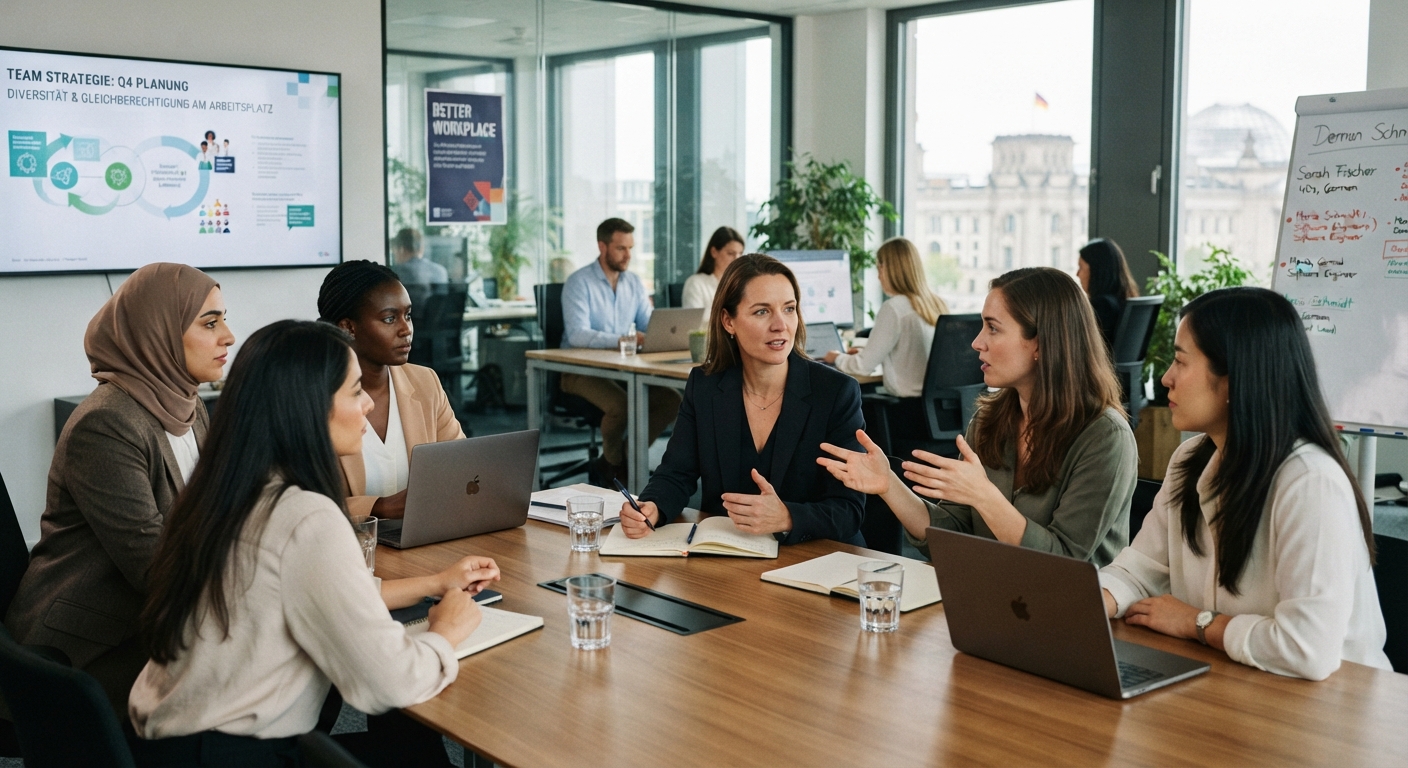 te Culture.
Employment Opportunities for People with Disabilities and LGBTQIA+ Inclusion
Germany's workplace diversity can also be examined by looking at the participation of specific groups within the labour market.
For example, the country ranked 11th in the European Union for the employment rate of people with disabilities, according to the figures referenced in the original guide.
The relevant Eurostat infographic is available here: Disability Employment Statistics (PDF).
Germany's performance regarding the rights of LGBTQIA+ individuals is also assessed through international equality rankings.
The annual Rainbow Europe assessment cited in the original guide placed Germany 15th out of 49 countries for LGBTQIA+ human rights protections.
Further information is available through the Rainbow Europe Country Review.
Government Efforts to Improve LGBTQIA+ Equality
The German government has introduced several measures aimed at strengthening the rights and inclusion of LGBTQIA+ individuals.
According to the original guide, Germany received an overall score of 84 out of 100 on the Equality Index, reflecting its performance in different areas of equality.
You can explore the Germany Equality Index for further details.
In 2022, the government also announced plans to make the administrative procedures involved in legally changing one's gender simpler.
Women's Rights and Professional Treatment in German Workplaces
Germany's legal framework recognizes equal rights for men and women.
The country's constitution provides a foundation for gender equality, while government policies and employment regulations are designed to protect women against discrimination.
Germany has also performed relatively well in international gender equality assessments.
For example, the country ranked 10th among 146 countries in the World Economic Forum's Global Gender Gap Report referenced in the original guide.
Further information is available in the Global Gender Gap Report 2022 (PDF).
Gender Equality and Family Responsibilities
Despite its legal commitment to equality, traditional family responsibilities continue to influence women's professional experiences in Germany.
Women generally undertake a larger share of childcare and household duties than men.
This imbalance became particularly visible during the COVID-19 pandemic, when women spent considerably more time caring for children than their male counterparts.
The country's score on the 2022 Gender Equality Index was 68.7 out of 100, placing it slightly above the European Union average of 68.6.
Germany's workplace equality performance was also marginally higher than the EU average.
For additional statistics, see the 2022 Gender Equality Index – Germany.
Gender Equality in Government and International Policy
Gender equality is reflected in Germany's legal framework and public policy decisions.
In 2023, the German Foreign Minister introduced guidelines known as Feminist Foreign Policy.
These guidelines were designed to make women's rights and gender equality important considerations when the country develops and implements its international relations policies.
For more information, read Germany's New Feminist Foreign Policy: What Does It Mean in Practice?.
Women's Employment and Representation in Management
Although women participate actively in Germany's labour market, their employment rate remains below that of men.
Approximately 73% of working-age women are employed, compared with around 80% of working-age men.
These figures do not distinguish between full-time and part-time employment. Nevertheless, they help demonstrate the differences in employment patterns between the two groups.
Germany also has one of the highest proportions of women working part-time compared with men.
For further information, consult:
Despite women's participation in the labour market, their representation in senior management remains relatively limited.
In 2021, women occupied only approximately 29% of executive positions in Germany.
Further details are available through the German Federal Statistical Office's Report on Women in Executive Positions.
One notable area of progress has been women's participation in political leadership.
For example, Angela Merkel served as Germany's Chancellor for more than 16 years, making her one of the longest-serving female national leaders in modern political history.
Read more: Countries with Women in the Highest Executive Positions Since 1960.
Differences Between Men's and Women's Earnings in Germany
Although Germany has laws supporting equal treatment, differences in earnings between men and women remain an important labour market issue.
Government statistics cited in the original guide indicate that women earn approximately 18% less per hour than men on average.
However, the size of the gender pay gap varies between different parts of the country.
The reported differences include:
- Western Germany and Berlin: approximately 19%.
- Eastern Germany: approximately 7%.
Some industries also record particularly significant differences in average earnings between male and female employees.
The sectors identified in the original report include:
- Financial and insurance activities: 27% gender pay gap.
- Human health and social work: 21% gender pay gap.
- Information and communication: 22% gender pay gap.
For additional information, see the German Gender Pay Gap Statistics.
Germany's Pay Transparency Legislation
Germany introduced the Pay Transparency Act, known in German as Entgelttransparenzgesetz, in 2021.
This legislation provides employees with an individual right to request information about certain aspects of their remuneration.
When an eligible employee submits a valid request, the employer is required to provide relevant information, including:
- Comparative remuneration information for the relevant employee group.
- The statistical median of the average monthly gross salary received by employees of the opposite gender performing comparable work.
- The criteria and procedures used to determine the employee's remuneration.
The purpose of this legislation is to improve transparency and help address unjustified differences in pay.
Read the official legislation: German Pay Transparency Act.
Workplace Attitudes and Challenges Experienced by Women
Although Germany is generally regarded as a country with progressive gender equality policies, some traditional attitudes about women's responsibilities remain present.
Women are still more likely than men to take primary responsibility for household activities and childcare.
These expectations can affect their professional development, particularly when family responsibilities interfere with career advancement.
As a result, women are considerably more likely to work part-time than men.
Sexual harassment is also a concern despite being prohibited under German law.
A 2020 survey conducted by YouGov found that approximately 54% of participating German women had experienced sexual harassment at some point in their lives.
The survey is available here: YouGov Sexual Harassment Survey 2020 (PDF).
Reporting Workplace Harassment and Seeking Assistance
Employees who experience harassment in a German workplace can report the incident to their employer or an appropriate trade union representative.
Where the incident involves sexual assault or violence, additional support is available through the national Helpline for Violence Against Women.
The service offers assistance online and by telephone, with counselling available in 18 languages.
Official resource: Helpline for Violence Against Women.
7. How Companies Conduct Business in Germany
Business activities in Germany are generally guided by formal procedures, careful planning, and established organizational systems.
The country's administrative environment can involve considerable paperwork and regulatory requirements, and these characteristics are also reflected in how many companies operate.
Most organizations rely on detailed business plans, operational guidelines, and clearly documented procedures to manage their activities.
Decision-making is often hierarchical, especially in traditional industries such as banking and finance.
Business Planning, Strategy and Management Decisions
German companies generally prefer to establish a detailed plan before beginning major business activities.
Management teams may spend considerable time examining objectives, financial considerations, operational requirements, and possible risks before approving a project.
This approach can sometimes slow down business operations because managers may be reluctant to proceed until all major aspects of the project have been properly considered.
The preference for detailed planning is largely connected to the desire to reduce uncertainty and prevent avoidable mistakes.
Consequently, employees working in German organizations should be prepared for structured planning processes and formal approval procedures.
Conducting Professional Meetings and Business Negotiations
Business meetings in Germany are usually formal, carefully organized, and guided by predetermined objectives.
Employees and international business partners should generally expect the following:
- Clearly prepared agendas: Meetings normally follow an established programme, with limited deviation from the planned topics.
- Minimal casual conversation: Discussions often move quickly towards the main business objectives instead of beginning with lengthy personal conversations.
- Respect for schedules: Meetings are expected to start and finish at the agreed times.
- Strict punctuality: Arriving late is generally considered unprofessional.
- Expert-led discussions: Decision-makers often depend on information and recommendations from professionals with relevant technical or subject knowledge.
Although publicly criticizing senior business leaders may be uncommon, German organizations generally welcome constructive feedback about project objectives, proposed strategies, and operational plans.
Negotiation Practices and Business Agreements
Business negotiations in Germany can take considerable time because companies often conduct extensive research and fact-checking before reaching an agreement.
Rather than making decisions based solely on personal relationships or verbal assurances, business representatives usually prefer to examine the relevant information carefully.
Written documentation is also highly important.
Many professional arrangements, including employment agreements and commercial contracts, are formally recorded in writing to establish clear responsibilities and expectations.
Professional Networking and Career Development in Germany
Building professional connections is an important part of career advancement in Germany, just as it is in other countries.
Although German professionals generally value direct and task-focused communication, personal connections can still create opportunities for employment, partnerships, and career development.
International professionals can expand their networks through industry events, career fairs, professional associations, and online platforms.
Some useful networking resources include:
1. Business Network International (BNI) – Germany: An international business networking organization with professional chapters and branches in different locations.
2. LinkedIn: A widely used professional platform for establishing business relationships, connecting with recruiters, and discovering career opportunities in Germany and other countries.
3. Make it in Germany: A German government information portal that provides resources for international professionals searching for employment.
4. Tech Open Air: A technology-focused conference based in Berlin that brings together professionals, entrepreneurs, and people interested in innovation.
5. Xing: A professional networking platform that competes with LinkedIn and is used by many people in Germany to connect with employers and discover job opportunities.
Social Relationships and Workplace Interaction
Professional relationships in Germany are generally centred on work responsibilities rather than employees' personal lives.
Although it is possible to develop friendships with colleagues, workplace social relationships may be less informal than those found in some other countries.
Many Germans prefer to maintain a clear distinction between professional duties and personal leisure time.
Consequently, business-related discussions do not always extend into social gatherings outside working hours.
When colleagues attend business lunches or dinners, the occasions are often connected to specific professional objectives.
These may include:
- Completing or finalizing negotiations.
- Discussing business arrangements.
- Celebrating successful projects or company achievements.
Essential Business Etiquette and Professional Behaviour in Germany
Understanding professional etiquette can help international employees avoid misunderstandings and establish positive relationships with German colleagues, clients, and business partners.
German workplace etiquette places considerable importance on respectful communication, appropriate clothing, punctuality, and professional boundaries.
Professional Greetings and Communication Styles
A short but firm handshake is a common way to introduce yourself when meeting someone professionally for the first time in Germany.
It is also customary to accompany the handshake with a verbal greeting, such as Guten Tag, which means good day.
German professional titles are commonly used when addressing colleagues.
For example:
- Herr is used when addressing a man, similar to Mr.
- Frau is used when addressing a woman, similar to Ms.
- Professional academic titles may also be included when appropriate.
A woman who holds a doctoral qualification, for instance, may be formally addressed as Frau Doktor.
In less formal environments, employees may simply use Herr or Frau together with the person's surname.
Using first names is more common in relaxed workplaces, multinational companies, and newer businesses such as startups.
Understanding Direct Communication in German Workplaces
German communication is generally characterized by clarity, honesty, and direct expression.
Professionals often communicate their opinions and expectations openly rather than relying on indirect language or subtle suggestions.
People from cultures where indirect communication is more common may initially interpret this approach as rude or unfriendly.
However, direct statements are not necessarily intended to offend or disrespect the person receiving them.
German professionals may also be less likely to recognize subtle verbal hints, indirect messages, or non-verbal suggestions that require someone to interpret what is being implied.
For this reason, international employees should communicate their questions, concerns, and expectations clearly rather than assuming that colleagues will automatically understand unspoken messages.
Appropriate Office Clothing and Professional Appearance
German workplace dress standards are generally conservative in traditional professional sectors, particularly finance and insurance.
Employees attending job interviews or formal business meetings are usually expected to wear appropriate business clothing.
For both men and women, a well-fitted suit is a common choice for formal professional occasions.
Ties may include brighter colours or patterns, but the overall appearance is usually expected to remain neat and relatively understated.
Everyday office clothing can be more relaxed, depending on the organization's internal culture.
For example:
- Multinational corporations may allow employees to wear jeans and smart casual shirts.
- Technology startups may adopt more flexible clothing policies.
- Traditional companies may continue to require formal business attire.
It is therefore advisable to understand an organization's dress expectations before attending an interview or starting a new job.
Gift-Giving Practices in German Business Environments
Exchanging gifts is not an essential part of professional meetings in Germany.
Unlike some cultures where business gifts are commonly used to establish relationships, German organizations generally regard presents as personal gestures rather than standard workplace practices.
However, bringing a small gift may be acceptable in certain circumstances.
If you decide to present something to a professional contact, it is advisable to choose an inexpensive and appropriate item.
Examples include:
- Quality writing pens.
- Professional stationery.
- Small business-related souvenirs.
Expensive presents should generally be avoided.
Exchanging Business Cards with Professional Contacts
Business cards remain a recognized method of sharing professional contact information in Germany.
It is common for people meeting professionally for the first time to exchange cards, although this is not compulsory in every business environment.
The main purpose is to provide the contact information needed for future communication and professional cooperation.
Business cards should therefore be shared when there is a genuine reason to maintain contact or continue discussions relating to a project or business opportunity.
Social Security and Employee Benefits in Germany
Germany operates a social security system funded through contributions from employers and employees.
These payments help finance important social protection programmes designed to support workers during retirement, illness, and periods of unemployment.
The main benefits supported through the system include:
- Retirement pensions: Financial support for eligible individuals after they reach retirement age.
- Public healthcare: Access to medical treatment and healthcare services through the statutory health insurance system.
- Unemployment insurance: Financial assistance for eligible workers who lose their employment.
Social Security Arrangements for Self-Employed Professionals
People who work independently or operate freelance businesses do not necessarily contribute to Germany's social security system in the same way as regular employees.
Their contribution obligations and eligibility for certain benefits depend on their individual circumstances and insurance arrangements.
Some self-employed professionals may also have more limited access to particular employment-related benefits.
Health Insurance Requirements
Health insurance is compulsory in Germany.
Most employees participate in statutory health insurance, which gives them access to the country's public healthcare system.
However, some individuals choose to obtain additional private health insurance to cover services or expenses that may not be fully included in their existing arrangements.
Self-employed and freelance professionals are also required to arrange appropriate health insurance coverage.
Eligibility for German Retirement Benefits
International professionals who work and make the required contributions in Germany may become eligible for benefits under the country's pension system.
According to the original guide, expatriates who have worked in Germany for at least five years may qualify for national pension benefits, subject to the applicable eligibility conditions.
Individuals who have worked in another European Union country may also have certain pension entitlements taken into account.
Similarly, eligible British citizens with qualifying retirement arrangements may be able to access pension benefits under the applicable rules.
Additional Pension Arrangements Provided by Employers
Apart from the national pension system, some German employers provide additional retirement savings arrangements.
These supplementary pension plans are designed to increase employees' retirement resources beyond the benefits provided through statutory pension contributions.
Depending on the employer's scheme, these arrangements can help employees build additional financial security for retirement.
Corporate Social Responsibility and Contributions to German Society
Social responsibility is an important part of the German business environment.
Many companies recognize that their responsibilities extend beyond generating profits and providing employment. They are also expected to consider how their activities affect employees, communities, the environment, and society.
Consumer attitudes contribute to this development, as many German customers are willing to pay higher prices for products that are environmentally sustainable.
For additional information, see Consumer Willingness to Pay More for Green Products in Germany.
Government Policies Promoting Corporate Responsibility
The German government has introduced various measures in line with European Union and United Nations initiatives to strengthen sustainability and responsible business practices.
These policies encourage companies to consider environmental protection, human rights, and ethical conduct throughout their business operations.
One significant development was the introduction of the Act on Corporate Due Diligence Obligations in Supply Chains in 2021.
Its German name is Gesetz über die unternehmerischen Sorgfaltspflichten in Lieferketten.
The legislation established formal expectations concerning corporate responsibility and the management of human rights and environmental risks within business supply chains.
Further information is available through:
Germany's Position in Global Sustainable Development
Germany has also demonstrated a strong commitment to international sustainability objectives.
According to the 2022 Sustainable Development Report, the country ranked fourth among all United Nations member states.
The assessment examines national progress towards the 17 Sustainable Development Goals (SDGs) established by the United Nations.
For additional details, consult the 2022 Sustainable Development Report – Germany.
How Businesses Support Their Local Communities
At the community level, German companies also participate in different social development activities.
Many organizations contribute to charitable institutions, community programmes, and local development initiatives.
Their contributions may include:
- Financial donations to charitable organizations.
- Supporting community development projects.
- Providing employees with opportunities to participate in voluntary activities.
- Supporting initiatives that address social and environmental challenges.
These activities demonstrate how businesses can contribute to the well-being of communities beyond their normal commercial operations.
Business Fraud, Corruption and Legal Accountability in Germany
Germany generally performs relatively well in international assessments of business integrity and corruption prevention.
Compared with many other countries, it has a lower reported level of business corruption and maintains legal provisions intended to discourage bribery and fraudulent activities.
According to Transparency International's 2022 Corruption Perceptions Index, Germany ranked ninth out of 180 countries.
For more information, explore:
- Germany Business Integrity and Corruption Profile.
- Transparency International – Corruption Perceptions Index 2022.
Legal Consequences of Bribery and Corrupt Practices
German criminal legislation prohibits individuals from participating in corrupt activities.
Both offering and accepting bribes can result in criminal liability under the country's legal framework.
These restrictions are intended to protect the integrity of commercial transactions, public institutions, and professional relationships.
Businesses can also face legal consequences when their representatives engage in corrupt practices on their behalf.
Depending on the circumstances, organizations may be subjected to criminal or administrative proceedings, financial penalties, and civil claims relating to fraudulent conduct.
For a more detailed explanation of the applicable legal framework, consult Bribery and Corruption Laws and Regulations in Germany.