Getting to Know Germany: An Introduction for Expats
A comprehensive introduction to Germany for expats and newcomers, covering the country’s geography, federal states, major cities, quality of life, economy, history, culture, food, politics, rights and freedoms, safety, healthcare, education, employment opportunities, climate, tourist attractions, public holidays and common stereotypes about German society.
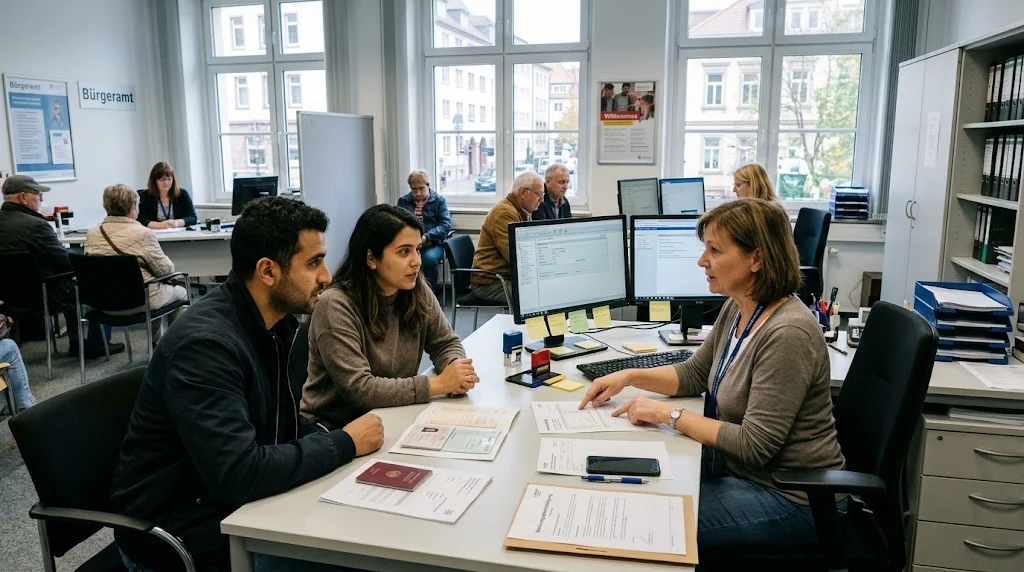
A powerful economy, forward-thinking social values and an excellent standard of living are just some of the reasons people consider relocating to Germany. Before making the move, here is an overview of what you should know.
Germany has a significant influence on the international stage. Its economic strength is one reason: it is among the world's largest economies by gross domestic product (GDP). The country has also made an important contribution to Western culture through centuries of artistic, philosophical and intellectual achievements.
Alongside its cultural heritage, Germany offers varied natural scenery, an extensive social security system and a wide range of employment opportunities. These are among the many reasons why people consider relocating to Germany.
Everyday Life in Germany
What makes Germany appealing to people moving from abroad? Its advantages include a robust economy, excellent healthcare and a strong emphasis on maintaining a healthy balance between professional and personal life. Those who settle in the country for the required period may also have the opportunity to obtain a German passport, which is regarded as one of the most powerful passports worldwide.
There are also challenges to consider. Learning German is particularly important. Although Germany achieved a high position, ranking 10th in the 2022 English Proficiency Index, newcomers who make little effort to learn the German language may find everyday life and integration more difficult.
Despite its complicated compound words and four definite articles, the language has not discouraged large numbers of international residents from settling in the country. Germany is home to approximately 13.4 million foreign residents, representing slightly more than 16% of its population.
Germany occupied 28th position in the 2021 HSBC Expat Explorer rankings. This assessment compares countries based on their present quality of life, future prospects and people's ambitions.
The Standard of Living in Germany
Germany performs well in several areas of life satisfaction, personal safety and work-life balance, according to the Organisation for Economic Co-operation and Development (OECD) Better Life Index. Its weaker results are in areas such as income, community and participation in civic life.
For international residents, however, settling into everyday life can be challenging. In the 2022 Expat Insider Survey, Germany was identified as the most difficult country for expats when it comes to managing the basic requirements of establishing themselves in a new destination.
Several factors contribute to this experience, including the language barrier, difficulties securing accommodation and the limited availability of online services. On the more positive side, Germany performs well in areas such as employment, personal security, environmental sustainability and infrastructure.
Even with some of these difficulties, the possibility of obtaining a new passport may make the adjustment worthwhile for some people. Germany's traditional bureaucracy and distinctive cultural habits can take time to get used to, as explained in this guide to living and integrating in Germany.
The German passport shared second place globally in the 2022 Global Passport Index. However, obtaining one requires applicants to satisfy the relevant conditions for German citizenship.
Germany's Location and Physical Geography
Germany covers approximately 357,588 km², making it the seventh-largest country in Europe.
It has land borders with nine neighbouring countries:
- To the west: The Netherlands, Belgium and Luxembourg.
- To the north: Denmark.
- To the east: Poland and Czechia.
- To the south: Switzerland and Austria.
- To the southwest: France.
Germany also has maritime borders with Sweden to the north and the United Kingdom to the northwest.
Following Brexit, the small Bavarian village of Gadheim was identified as the European Union's new geographical centre.
Germany's geography includes a wide range of landscapes, making it possible to experience very different surroundings without travelling particularly far.
- Mountains and skiing: The Zugspitze, at 2,962 metres, is Germany's highest mountain and a popular destination for skiing in the Alps.
- Forests and nature: Woodland covers approximately one-third of the country. Visitors and residents can find spas, walking trails and trekking opportunities at nature resorts throughout Germany.
- Northern cycling routes: The north contains extensive, relatively flat and marshy areas crossed by cycling routes.
- The country's lowest point: Neuendorf-Sachsenbande lies 3.5 metres below sea level.
- Major rivers: The Rhine, Elbe, Mosel and Danube provide opportunities for boating, wine tasting and excursions to historic castles and towns.
Germany's road network, including its high-speed Autobahn, also makes it possible to explore different parts of the country within a day.
Germany's 16 Federal States and Their Differences
The Federal Republic of Germany consists of 16 partly federated states. Each has its own identity, traditions and regional characteristics.
- Bavaria (Bayern): Germany's largest state. It includes popular destinations for international residents such as Munich (München) and Nuremberg (Nürnberg).
- Baden-Württemberg: The country's wealthiest state, with Stuttgart as its capital. Stuttgart is particularly associated with the automotive industry.
- North Rhine-Westphalia (Nordrhein-Westfalen): Germany's most populated state. Its major cities include Cologne (Köln), Bonn and Düsseldorf.
- Hesse (Hessen): International residents working in banking and finance may find opportunities in Frankfurt, one of the state's major cities.
- Berlin: Germany's creative and cultural capital is also one of the country's three city-states.
- Hamburg and Bremen: These are the other two city-states.
For further information about the country and its federal structure, see the introduction to Germany.
Germany's Major Cities
Berlin
Berlin is a large, relaxed and lively city with a reputation for its nightlife and diverse cultural attractions. Many of Germany's leading museums and artistic institutions are located here, while its international atmosphere gives it a distinctive character compared with other European capitals.
Several factors have contributed to Berlin's appeal. Following German reunification, relatively affordable rents and the availability of studio and creative working spaces attracted artists and other professionals. The city's open-minded, independent and accepting social culture has also helped shape its identity.
International residents can explore employment opportunities in several industries, including:
- Creative and cultural businesses.
- Healthcare.
- Energy.
- Higher education.
- The city's growing start-up and business community.
Munich (München)
Munich is internationally recognised for hosting Oktoberfest and is sometimes described as the northernmost city of Italy. As the capital of Bavaria, it has a lively lifestyle and a reputation for enjoying the finer things in life.
Beyond its cultural appeal, Munich offers well-developed infrastructure and high-quality education, healthcare and sporting facilities. In Numbeo's 2023 European City Quality of Life Index, it was ranked as Germany's leading city for quality of life. Its overall position was 13th, behind cities including Vienna, Edinburgh and Amsterdam.
Munich is also highly international. More than 28% of its residents were born outside Germany, and people from 191 countries live in the city.
The service industry represents 78% of local employment. Other opportunities for expats can be found in manufacturing, particularly in:
- Automobile production.
- Electronics.
- Advanced technology.
However, living in Munich comes with a considerable financial commitment. Property prices and general living expenses are high. According to the 2022 ECA Cost of Living Report, Munich was Germany's most expensive city for international residents.
Frankfurt
Frankfurt is Germany's fifth-largest city and serves as an important centre for business and finance. Its nickname, Mainhattan, comes from its position along the River Main and its impressive collection of high-rise buildings.
The city offers a broad range of professional opportunities. Although financial services are particularly prominent, expats can also explore careers in:
- Information technology.
- Logistics.
- Media.
- Research.
Close to one-third of Frankfurt's residents are foreign nationals (source in German). Its multicultural population, use of different languages and welcoming outlook make it an attractive place for international residents seeking both professional opportunities and an active social life.
People relocating from the United Kingdom to Germany may also need to decide which household belongings to take with them. Kanguro provides removal services along this route, including shared-load arrangements for people moving smaller quantities of belongings. When organising a delivery, make sure the expected arrival date matches the date you will be able to access your new accommodation.
Germany: Essential Facts and Figures
Here is a quick overview of some important information about Germany:
- Climate: Temperate.
- Official language: German.
- Minority and regional languages: These include Turkish, Sorbian and North Frisian.
- Religious affiliation: Christian 53% (Roman Catholic 27.1%, Protestant 24.9%, other Christian groups 1%); Muslim 5.2%; Orthodox 2%; other religions 1%; no religious affiliation 38.8% (2019 estimate).
- President: Frank-Walter Steinmeier, in office since 2017.
- Chancellor: Olaf Scholz, in office since 2021.
- Currency: Euro.
- Population: 84.3 million.
- Emergency telephone number: 112.
Important Moments in German History
Germany has played a major role in shaping the history of Europe and the wider world. However, the modern German state was established relatively recently, in 1871.
That year, Otto von Bismarck, Germany's first Chancellor, oversaw the unification of the country and the formation of the German state.
The name Germany itself has a much longer history. For thousands of years, it was used to describe the changing political and cultural communities of Germanic-speaking peoples across large parts of western Europe.
A Timeline of Modern German History
The following dates highlight important events in Germany's more recent past:
- 1871: The German Empire is established, with Otto von Bismarck becoming its first Chancellor.
- 1914: The First World War begins. The German Empire joins the Central Powers.
- 1918: The First World War ends. The Weimar Republic is established as a representative democracy, and voting rights are extended to citizens over the age of 20, subject to certain exceptions.
- 1919: Germany holds its first democratic national elections.
- 1933: Adolf Hitler becomes Chancellor. The following year, he announces the establishment of the Third Reich.
- 1939: Germany's invasion of Poland triggers the beginning of the Second World War.
- 1945: The Second World War ends with Germany's defeat. The country is divided into four occupation zones.
- 1949: Germany becomes two separate states: the Federal Republic of Germany, commonly known as West Germany, and the German Democratic Republic, known as East Germany.
- 1950s: West Germany experiences rapid economic expansion. This period, known as the Wirtschaftswunder or economic miracle, helps the country develop into a major industrial power.
- 1955: Cold War alliances become more established. West Germany joins NATO, while East Germany becomes a member of the Warsaw Pact.
- 1957: West Germany signs the Treaty of Rome alongside five other countries, creating the European Economic Community (EEC), also known as the Common Market.
- 1961: Construction of the Berlin Wall begins.
- 1989: The Berlin Wall falls.
- 1990: East Germany becomes part of the Federal Republic of Germany, bringing the country back together.
- 2002: The euro replaces the German Deutsche Mark.
- 2005: Angela Merkel becomes Chancellor, making history as the first woman to hold the position.
- 2009 onwards: The Eurozone experiences a prolonged sovereign debt crisis affecting several EU member states.
- 2014: Germany introduces its first national minimum wage, set at €8.50 per hour.
- 2017: Same-sex marriage becomes legal in Germany.
- 2021: Olaf Scholz takes over from Angela Merkel as Chancellor.
Germany's Economy and General Living Standards
Germany is a highly developed country with one of the world's largest and strongest economies. Its industrial capacity and international trading activity make it the fourth-largest economy globally by nominal GDP, with an annual value of approximately $4.26 trillion. It is also the biggest economy within the European Union.
Based on 2021 figures, Germany ranked 17th worldwide in GDP per capita, with a reported value of $51,204.
The country performs better than the OECD average in several areas, including:
- Employment.
- Work-life balance.
- Education.
- Environmental quality.
- Personal safety.
- Life satisfaction.
Average annual household net-adjusted disposable income per person is $38,971, exceeding the OECD average of $30,490.
Living costs are another important consideration for people planning to relocate. In 2022, German households spent an average of €2,623 each month. Accommodation and energy represented 37% of that expenditure.
The OECD forecast that Germany's GDP would grow by 1.3% in 2024, although the overall balance was expected to be -1% after government spending was taken into account.
Despite the country's economic strength, financial hardship remains a concern for part of the population. Approximately 14.7% of residents are considered at risk of poverty, while slightly more than one-fifth, or 20.9%, face the risk of poverty or social exclusion. The poverty threshold in Germany is currently €15,000.
Germany combines a high standard of living with modern infrastructure and a wide range of regional cultures. These qualities make it an attractive destination for skilled professionals and families.
Once you have decided to move, planning your arrival and the transportation of your belongings becomes an important part of the process. International removal companies such as AnyVan can help organise the safe transportation of personal possessions into Germany, making the move more straightforward.
Population and Society in Germany
Germany had a population of slightly more than 84.3 million in 2023. Its population has grown at a relatively steady pace in recent years.
More than 16% of residents were born abroad, and over one-quarter of the population has a migration background.
The largest immigrant communities in Germany in 2022 came from:
- Turkey: 1.49 million people.
- Ukraine: 1.16 million people.
- Syria: 923,805 people.
- Romania: 883,670 people.
Languages Spoken in Germany
Standard High German (Standardhochdeutsch) is the country's official language. It is commonly used in formal settings and provides a shared means of communication between people who speak different regional dialects.
The number of German dialects varies depending on how they are classified. Some researchers identify as many as 250, although these are generally organised into 16 broader groups.
Germany also recognises several minority languages, including:
- Romani.
- Danish.
- North Frisian.
- Saterland Frisian.
- Upper Sorbian.
- Lower Sorbian.
Each of these minority languages is spoken by approximately 0.08% to 0.1% of the population.
Languages brought to Germany through immigration are also widely used. Turkish is spoken by around 2% of the population, while Arabic is spoken by approximately 1%.
Understanding German Social Culture
German society has historical connections to conservative Christian traditions, but modern German culture is also widely associated with liberal, progressive and inclusive attitudes.
Family relationships and community life are important. Germans are also commonly associated with organisation, structure and respect for rules.
Punctuality is one cultural feature that newcomers are likely to notice. When an appointment is arranged, both parties are expected to respect the agreed time. Arriving late is generally considered discourteous.
Germany also places considerable importance on remembering and understanding its past. This approach is known as Erinnerungskultur, or the culture of remembrance. It involves acknowledging the country's historical experiences, including the Second World War and the reunification of East and West Germany.
The country's historical awareness has helped reinforce values such as social solidarity and respect for different backgrounds.
In professional environments, workplace hierarchy is generally recognised, and business communication tends to follow relatively formal conventions.
Although Germans are sometimes stereotyped as lacking a sense of humour, many expats discover that people are friendly, enjoy social activities and know how to have a good time.
German Traditions, Arts and Everyday Culture
Germany's cultural influence stretches back more than a thousand years, encompassing periods such as the Holy Roman Empire, the Reformation and Romanticism.
Historian Hagen Schulze observed that Germany's celebrated figures, unlike those traditionally associated with France and England, were often poets and philosophers rather than military commanders or princes.
This history helps explain the country's familiar description as the land of poets and thinkers (Das Land der Dichter und Denker).
German cultural influence also extends beyond the country's present-day borders. Its wider tradition includes Czech novelist Franz Kafka, Austrian composer Gustav Mahler and Romanian poet Paul Celan.
Activities and Attractions Across Germany
Government investment and support for the arts have helped Germany maintain an active cultural environment. People living in different parts of the country can access a broad range of cultural venues, events and activities.
Germany has:
- More than 6,000 museums.
- Over 10,000 festivals.
- Thousands of theatres.
- Numerous art galleries.
- A large selection of cinemas.
Munich's Oktoberfest is probably the country's best-known festival. Berlin, meanwhile, hosts the internationally recognised annual film event Berlinale and has a thriving music and nightlife scene.
Moienapp can also find cinemas that screen films in English. Beyond the major cities, Germany has attractive small towns, scenic destinations and family-friendly attractions that are suitable for day trips or short breaks.
Sport is another important part of German life. The country has a strong international sporting reputation, offering opportunities to watch or participate in many activities.
Football (Fußball) is the most popular sport, but other widely enjoyed activities include:
- Tennis.
- Handball.
- Winter sports.
- Motor racing and other motorsports.
For people who enjoy speed and automobiles, Germany offers plenty of opportunities to explore its famous automotive culture.
German Cuisine and Drinks
Oktoberfest may create the impression that German food consists mainly of sausages and beer, but the country's culinary traditions are much more varied. Its food culture also extends to dishes such as döner kebab.
Bread is particularly important in Germany and has developed into a culinary tradition of its own. UNESCO recognised German bread as intangible cultural heritage in 2014. Across the country, there are more than 3,000 different varieties.
German cooking also places considerable importance on seasonal ingredients. The dishes available can therefore change depending on the time of year.
Examples include:
- Grünkohl: A kale-based stew commonly eaten during winter.
- Rote Grütze: A red-berry dessert or sauce often enjoyed in summer.
People with larger dining budgets can explore Germany's 330 Michelin-starred restaurants. Alternatively, newcomers can discover the country's traditional dishes by trying some of the best-known German foods at home or in local restaurants.
Germany is also well known for its beer. With approximately 7,000 varieties, sampling every type would be a considerable undertaking, potentially requiring 20 years of living in the country.
Beer is widely available, whether in a Berlin pub or a small shop in Cologne. However, Germany's drinks culture is not limited to beer. Wine production is also well established, with vineyards spread across 13 wine-growing regions. Many international visitors will also recognise Jägermeister, a well-known German herbal liqueur.
Germany's Political System, Government and Public Administration
Germany is organised as a federal state and operates as a representative democracy. Under the German Basic Law, the authority of government comes from the people.
Government responsibilities are distributed between national and state-level institutions. Elected parliaments exercise these powers for defined legislative periods.
At federal level, two parliamentary bodies are responsible for legislation:
- Bundestag: The national parliament, representing the people.
- Bundesrat: The body through which Germany's 16 federal states (Länder) participate in national legislation.
The German President is the formal head of state, although the position is largely ceremonial. Frank-Walter Steinmeier, who previously served as Foreign Minister, has held the presidency since 2017. A German President may serve a maximum of two terms, each lasting five years.
The federal parliament, the Bundestag, elects the Chancellor, who leads the government.
In 2021, former Finance Minister Olaf Scholz was elected Chancellor, replacing Angela Merkel, who had served longer than any other Chancellor since German reunification.
Germany holds four main categories of elections:
- Federal parliamentary elections.
- State elections.
- Municipal elections.
- European elections.
German citizens aged over 18 can vote in all four types. In certain federal states, voting is permitted from the age of 16.
People who do not hold German citizenship are generally unable to vote in German elections. However, citizens of other EU member states are permitted to participate in local or municipal elections (Kommunalwahl) and European Parliament elections (Europawahl).
Civil Liberties and Individual Rights in Germany
Germany is widely recognised as one of the world's established democracies. In the 2022 Democracy Index published by the Economist Intelligence Unit (EIU), the country ranked 14th globally. It also occupied 18th place in the 2022 Human Freedom Index.
The constitutional protections introduced after the Second World War and adopted by the unified country in 1990 were designed to prevent a return to authoritarian government.
Political rights and civil liberties are generally protected through both legislation and its implementation. Freedom House, a US-based non-profit organisation, awarded Germany a global freedom score of 94 out of 100.
The Basic Law protects human dignity and recognises human rights as inviolable and inalienable. It also establishes an obligation for the country to support the protection of human dignity and fundamental freedoms internationally.
Freedom of expression and freedom of the press are also guaranteed by the German Constitution. In the 2023 Reporters Without Borders press freedom ranking, Germany placed 21st among 180 countries.
Germany is also considered one of the more socially liberal countries in the world. According to Lust Magazine, Cologne was ranked the world's most sexually liberal city, while Berlin placed fifth.
Gender Equality and Women's Rights
German law formally guarantees equal rights for women and men. Nevertheless, equality in everyday life has not been fully achieved, and women continue to experience disadvantages in several areas.
Germany ranked 11th among EU member states in the 2022 Gender Equality Index. Its result was stronger in the World Economic Forum's (WEF) 2022 Global Gender Gap Report, where it placed 10th worldwide.
Violence against women, including sexual and domestic abuse, remains a serious concern. UN figures indicate that approximately 22% of women in Germany have experienced physical and/or sexual violence during their lifetime.
LGBT+ Equality and Legal Protections
Same-sex relationships were decriminalised in East Germany in 1968 and in West Germany in 1969. Following reunification, Germany legalised same-sex marriage in 2017.
Married same-sex couples have the same full marital and adoption rights as other married couples. However, legal equality and protection are not yet complete in every area.
Germany ranked 15th out of 49 countries in the 2023 ILGA-Europe Rainbow Map. Identified gaps included shortcomings in anti-discrimination protections relating to sexual orientation and gender identity.
Since 2011, changing one's legal gender has been permitted in Germany. Official documents, including driving licences, can also recognise the gender category divers, meaning other.
Crime, Public Safety and Policing in Germany
Germany's crime rate is broadly comparable with the overall European Union average.
EU statistics recorded approximately 1,400 cases of robbery, burglary and theft for every 100,000 residents in Germany in 2021.
In Numbeo's 2023 Crime Index, Germany ranked 100th out of 142 countries, where first place represented the highest crime level. Its recorded crime score was lower than that of countries such as France, the United States and the United Kingdom, but higher than Spain, the Netherlands and Japan.
Responsibility for policing and law enforcement rests with Germany's 16 federal states (Länder). As a result, the organisation and availability of certain services may differ depending on the state where you live.
German police services are generally organised into two main branches:
- Kriminalpolizei (Kripo): This division investigates serious offences, including murder, assault, rape and major theft.
- Schutzpolizei (Schupo): This branch deals with traffic violations and less serious disturbances or incidents.
Residents should consult the website of their local police authority for information about the services available in their area. It is also useful to identify the appropriate emergency contact details in advance in case a serious incident occurs.
According to the 2019 Criminal Justice in Germany report (PDF), most recorded offences are property-related crimes ranging from minor to moderately serious incidents. Theft, street crime and fraud are among the offences most frequently reported.
Healthcare, Social Protection and Welfare in Germany
Germany has a high-quality healthcare system that performs strongly in international comparisons. It ranked eighth among 195 countries in the Global Healthcare Security Index.
Its healthcare performance is particularly strong in areas such as disease detection, compliance with international standards and the overall risk environment.
Germany allocated 12.8% of its GDP to healthcare in 2020, the highest proportion among EU member states at the time.
Life expectancy was 81 years in Germany, compared with an EU average of 80 and a worldwide average of 71, according to World Bank figures for 2021. Average life expectancy was 83.4 years for women and 78.5 years for men.
Although the COVID-19 pandemic affected Germany's population and healthcare services, its impact was less severe than in many other EU countries.
Accessing Medical Care in Germany
Germany operates a healthcare system that combines public and private provision. It is the oldest healthcare system in Europe, with its origins dating back to the 1880s.
The system is financed through statutory health insurance contributions, providing residents with access to healthcare services. Publicly funded or covered services include:
- General practitioner appointments.
- Hospital treatment.
- Emergency medical care.
- Standard dental treatment.
- Certain mental healthcare services.
- Free vaccinations.
- Some women's healthcare and sexual health services.
German medical professionals and healthcare facilities are generally regarded as being among the best in the world. Nevertheless, the system has some shortcomings.
One area where progress has been slower is digital healthcare delivery. During the pandemic, approximately 23% of German adults reported using teleconsultations. This was considerably below the average of 45% recorded across 22 OECD countries.
Health Insurance Requirements for Expats in Germany
People who live or work in Germany must complete their local residence registration at the town hall, known as the Einwohnermeldeamt.
Following registration, they receive a German social insurance number (Sozialversicherungsnummer) and are required to make the relevant national insurance contributions.
These contributions provide access to state healthcare and other social protection benefits, including the German state pension, under the applicable conditions. Eligible international residents can therefore access these benefits in the same way as German nationals.
People who are not resident in Germany generally face higher healthcare charges than those who live there.
For people who have recently arrived or are staying temporarily as digital nomads, international health insurance can provide financial protection against unexpected medical emergencies. Two providers mentioned for this purpose are:
These insurance policies may help cover periods when someone is transitioning between healthcare arrangements or spending a limited amount of time in Germany.
However, people intending to establish long-term residence may need to obtain health insurance through a regulated German provider, depending on their circumstances and legal requirements.
The PKV maintains a comprehensive directory of private health insurance providers operating in Germany.
The German Education System
Germany's education structure differs from the systems used in many other countries. This can make it difficult for international families to understand how schools are organised.
One important feature is that each federal state (Land) operates its own education programme. Germany also has five different types of secondary school.
School attendance is generally compulsory from the age of six until 15, although many young people continue their education until they are 18.
Public primary and secondary education is free for children of expats. Students who meet the relevant academic requirements can continue studying through to university, regardless of their family's financial circumstances.
The main challenge for international families is the language of instruction. Most lessons in state schools are delivered in German.
Public schools provide additional language assistance for children who are not yet fluent in German. However, families whose children find it difficult to adapt to German-language teaching may prefer to consider a private international school, although these institutions charge fees.
Germany performs well in international education assessments. In the 2018 OECD Programme for International Student Assessment (PISA) survey (PDF), German students scored above the OECD average in all three assessed subjects:
- Reading: 498 points.
- Mathematics: 500 points.
- Science: 503 points.
The PISA assessment takes place every three years and evaluates the knowledge and abilities of 15-year-old students, particularly the skills they need to participate fully in society.
Germany consequently has one of the most highly educated workforces among OECD countries. In the OECD Better Life rankings, it placed 16th out of 41 countries for education.
Approximately 86% of German adults have completed upper secondary education, compared with the OECD average of 79%.
However, strong overall results do not mean that every student benefits equally from the education system.
The difference in reading performance between students from more advantaged and less advantaged backgrounds is greater in Germany than across the OECD as a whole.
In particular, the top 25% of students in terms of socioeconomic advantage achieved results 113 points higher than those of the bottom 25%. This difference is approximately 24 points wider than the OECD average gap of 89 points.
Employment and Business Opportunities in Germany
People from EU or European Free Trade Association (EFTA) countries can work in Germany under the applicable freedom-of-movement arrangements. People from other countries generally need an appropriate German work visa or permit.
Germany's strong economy and large number of international businesses make it an attractive destination for expats looking for employment.
The country had one of the lowest unemployment rates in the EU in April 2023, at 2.9%. This was considerably below the EU-wide average of 6%.
Some of Germany's strongest industries include:
- Automobile manufacturing.
- Pharmaceuticals.
- Electronics.
There is also a shortage of workers in certain parts of the country in science, technology, engineering and mathematics (STEM) occupations.
German workplaces are generally associated with formal communication, structured company arrangements and long-term planning. However, working environments can differ considerably between businesses and industries.
Starting a business or working independently is another option for people who do not want to take up conventional employment.
Germany has a substantial community of freelancers and self-employed business owners, although its self-employment rate is below the international average.
According to World Bank figures for 2021:
- Germany: 8.3% of the workforce was self-employed.
- European Union average: 14.4%.
- Global average: 46.6%.
Entrepreneurs can choose from several legal business structures when establishing an operation in Germany.
However, setting up a business also involves administrative responsibilities. These include completing the necessary registrations and ensuring that the business complies with German tax rules.
Germany's Climate and Environmental Conditions
Germany has a temperate climate, so extremely hot or cold conditions are relatively uncommon. Weather patterns nevertheless differ depending on the region.
In general, residents can expect:
- Summer: Warm weather, although sunshine is not guaranteed, with average temperatures of approximately 23–26°C.
- Winter: Cold conditions, with temperatures around 0°C or sometimes below.
The country's climate can be unpredictable because of changing air and ocean currents. Global warming has made weather patterns even less predictable than they were in the past.
For example, snowfall may occur in April, while unusually heavy rainstorms can happen at different times of the year.
The northern cities and areas around Bremen, Hamburg and Kiel generally have milder weather. They also experience more rainfall and stronger winds.
Snowfall is more common in Bavaria and eastern Germany. Residents in these areas may have convenient access to the German Alps, where skiing and other winter activities are popular.
Germany is relatively densely populated, with approximately 230 inhabitants per square metre according to the figures provided in the source. Around 77% of the population lives in cities and urban areas, while approximately 15% resides in villages with fewer than 5,000 inhabitants.
The country has also taken several steps to improve environmental protection. OECD reports note that Germany has maintained a National Strategy for Sustainable Development since 2002.
This approach contributed to its 13th-place position in the 2022 Environmental Performance Index.
Major cities, including Berlin and Hamburg, achieve good results in the Air Quality Index. However, Germany's performance varies across different environmental indicators. It ranked 103rd for biodiversity and 112th for annual rainfall.
Popular Destinations and Things to See in Germany
Germany welcomes approximately 37 million tourists each year. Well-known attractions include the Black Forest, Berlin and Oktoberfest, but there are many other places worth discovering throughout the country.
People who live in Germany as expats can also find plenty of interesting destinations and experiences to share on social media.
Five Ways to Enjoy Germany Like a Visitor
1. Explore a historic castle
Germany's feudal past has left the country with an impressive number of castles, palaces and historic residences. In many locations, one of these attractions may be reachable by bicycle.
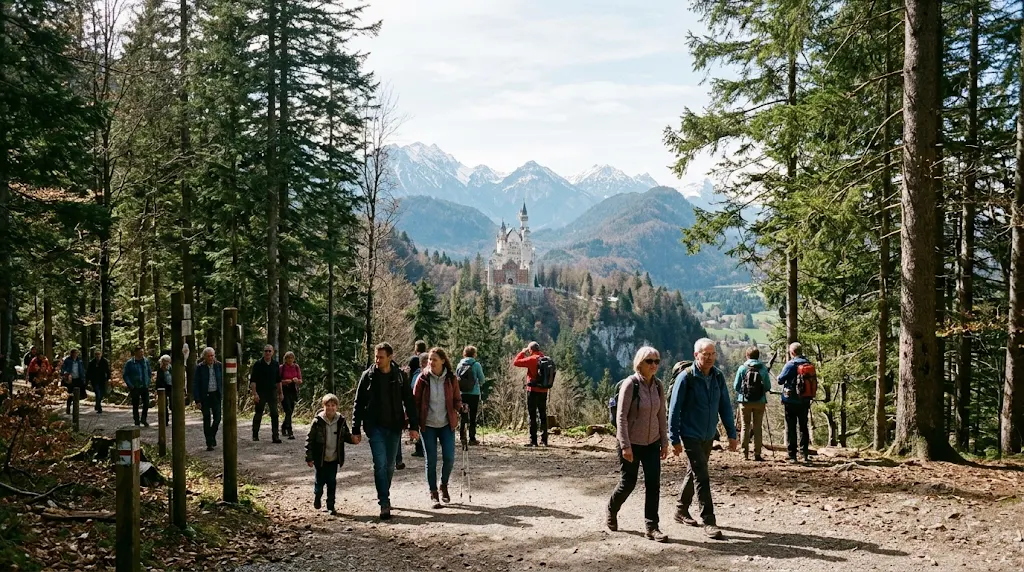
One of the best-known examples is Schloss Neuschwanstein, located in the village of Hohenschwangau. It is widely believed to have inspired Disney's Sleeping Beauty Castle.
The palace was commissioned by Ludwig II and is one of many elaborate architectural landmarks in Bavaria. Today, it remains among Germany's most visited tourist attractions.
2. Spend time in the natural environment
Approximately one-third of Germany is covered by woodland, providing plenty of opportunities to enjoy outdoor activities.
Options include:
- Forest bathing.
- Camping.
- Hiking.
- Mountain biking.
- Swimming.
- Birdwatching.
Whether you are looking for dramatic scenery, outdoor relaxation or a physically demanding activity, there are many natural destinations to explore.
3. Experience a traditional German sauna
German sauna culture is known for its relaxed approach to nudity. Unlike many beach environments, where swimwear is common, being naked is generally the accepted practice in traditional saunas.
Visitors usually bring towels to sit on rather than to wear.
Germany has more than 350 spa towns and resort destinations. One useful clue when identifying these places is the word Bad, which means bath and appears in the names of many spa towns.
4. Discover Germany's history
Germany's past can be explored through thousands of museums and historical attractions across the country.
There are activities for people with different historical interests. Anyone curious about East German life and Ostalgie, or nostalgia for the former East Germany, can visit Berlin's interactive DDR Museum to learn about the years of division.
People interested in Neanderthal history can also visit an attraction connected with the place where the discoveries began.
The country's Second World War history is another major subject explored through museums, memorials and historical sites.
5. Enjoy Germany's automotive attractions
Given Germany's international reputation for car manufacturing, it is unsurprising that automotive attractions are found throughout the country.
Car enthusiasts can visit the Porsche Museum in Stuttgart, one of several museums and experiences associated with famous automotive manufacturers.
For a more hands-on experience, the Nürburgring has attracted motorsport fans since 1927.
People who prefer a slower sightseeing experience can consider Berlin's Trabi Safari.
National and Regional Holidays in Germany
Germany provides nine official public holidays each year for everyone across the country. Depending on the regional holidays observed in an individual's federal state, the total number of days off may reach 13 annually.
Many national holidays are connected to Christian religious celebrations. Easter, Pentecost and Christmas each include two public holiday dates.
New Year's Eve and New Year's Day are also listed as holidays in the source.
One of Germany's most important national celebrations is the Day of German Unity, observed on 3 October. It commemorates the reunification of East and West Germany in 1990.
School holiday arrangements are determined by the individual federal states. Each region sets its own calendar, which generally includes breaks for:
- Autumn.
- Christmas.
- Easter.
- Summer.
Autumn, Christmas and Easter holidays usually last between one and three weeks. The summer break is longer, typically lasting six weeks.
Many schools also have a winter break in February. Some federal states provide an additional one- or two-week holiday around Pentecost, usually in May or June.
Challenging Common Stereotypes About Germans
If you are considering moving to Germany, you may have heard stories about people being overly serious, extremely strict about time and uninterested in humour.
You might imagine a lifestyle in which every activity is carefully scheduled and social events are treated like work appointments.
However, these impressions do not tell the whole story.
Here are some familiar stereotypes about German people and what lies behind them.
Do Germans Really Have No Sense of Humour?
Since the time of Mark Twain, jokes about German humour have often suggested that it is difficult to understand or simply does not exist.
In reality, this stereotype is far from accurate. German cabaret has a long tradition of using both satire and slapstick comedy.
Satire has frequently been used to make fun of politicians and public life, while slapstick has provided more physical comedy for audiences.
Today, it is also possible to find German sitcoms and stand-up performers. Henning Wehn is one of the best-known German comedians outside Germany, although he has lived in the United Kingdom for more than 20 years.
A suggestion for expats: Look for older episodes of the German television programme Der Tatortreiniger. Its main character works as a cleaner at crime scenes, with each episode presenting a different situation. The programme later inspired the popular British comedy series The Cleaner.
Another option is to attend the Cologne Comedy Festival (in German).
Are Germans Really Workaholics?
There is some truth behind the idea that Germany is a hardworking country, but the stereotype does not tell the entire story.
Germany has a strong industrial and economic output, high employment levels, an organised and productive workforce, and a professional culture that places importance on efficiency and planning.
However, many people are surprised to discover that German workers actually work fewer hours than workers in many other countries.
According to OECD data, Germany ranked last among 43 countries for annual hours worked per employee.
In 2021, the average German worker completed 1,349 working hours during the year. This was below:
- European Union average: 1,566 hours.
- OECD average: 1,716 hours.
- Mexico: 2,128 hours, the highest figure among the countries compared.
Are German People All Tall, Blonde and Blue-Eyed?
The traditional image of German people as tall, powerful-looking individuals with blonde or red hair and striking blue eyes has existed for centuries.
The Roman historian Tacitus wrote that Germanic people did not marry foreigners and were distinct from other nations.
According to author Christopher Krebs, the rediscovery of Tacitus's work during the 15th century contributed to the growth of German nationalism and helped establish an image of German identity that remained influential for generations.
Over the last century, however, this narrow image has been increasingly challenged, including by German historians.
Modern German society is diverse. German nationals today have a wide variety of hair colours, eye colours and skin tones.