Primary Education in Germany: Understanding School Options, and Admission Requirements
Explore Germany’s primary education system, including public, private and international schools, admission requirements, school fees, curricula and enrollment procedures for parents.
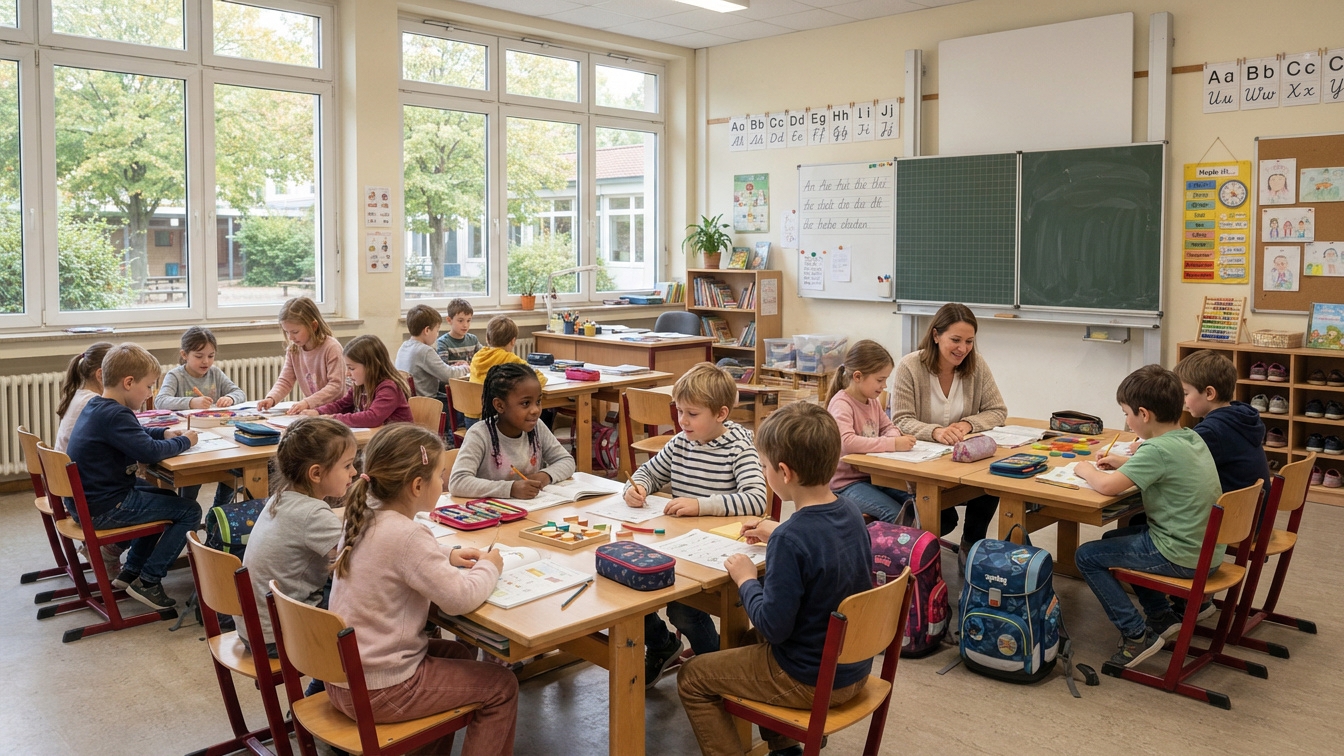
Germany offers different types of primary schools for parents who wish to enroll their children in the country's education system. Available options include government-funded public schools, privately operated schools that receive state financial support, and independent private institutions. These independent schools also include international and bilingual schools that provide education in different languages.
This guide explains the German primary education system, the admission requirements, and the differences between public and private schools. It covers the following areas:
- The structure of primary education in Germany
- Public (state) primary schools
- School curriculum and learning subjects
- Benefits and disadvantages of public primary schools
- How to apply to public primary schools
- Documents required for school registration
- Private primary schools in Germany
- Religious and denominational schools
- Waldorf and Montessori schools
- International primary schools
- Advantages and disadvantages of international schools
Understanding the Primary Education System in Germany
In Germany, school attendance is compulsory for children from the age of six. At this stage, children begin their primary education at an institution known as Grundschule. Primary education generally takes four years in most German federal states (Länder). However, children attending primary schools in Berlin and Brandenburg remain at this level for six years.
Homeschooling is not legally permitted in Germany. Parents are therefore required to register their children with an approved educational institution. Failure to comply with compulsory education laws can attract serious penalties, including substantial fines and, in some circumstances, imprisonment.
Parents can decide whether to enroll their children in public or private primary schools. Nevertheless, private education accounts for only approximately 5% of primary school enrollment in Germany. The percentage is relatively higher among expatriate families because public schools conduct their lessons exclusively in German, while international institutions provide education in other languages, particularly English. Some international schools also combine German and English instruction through bilingual programmes.
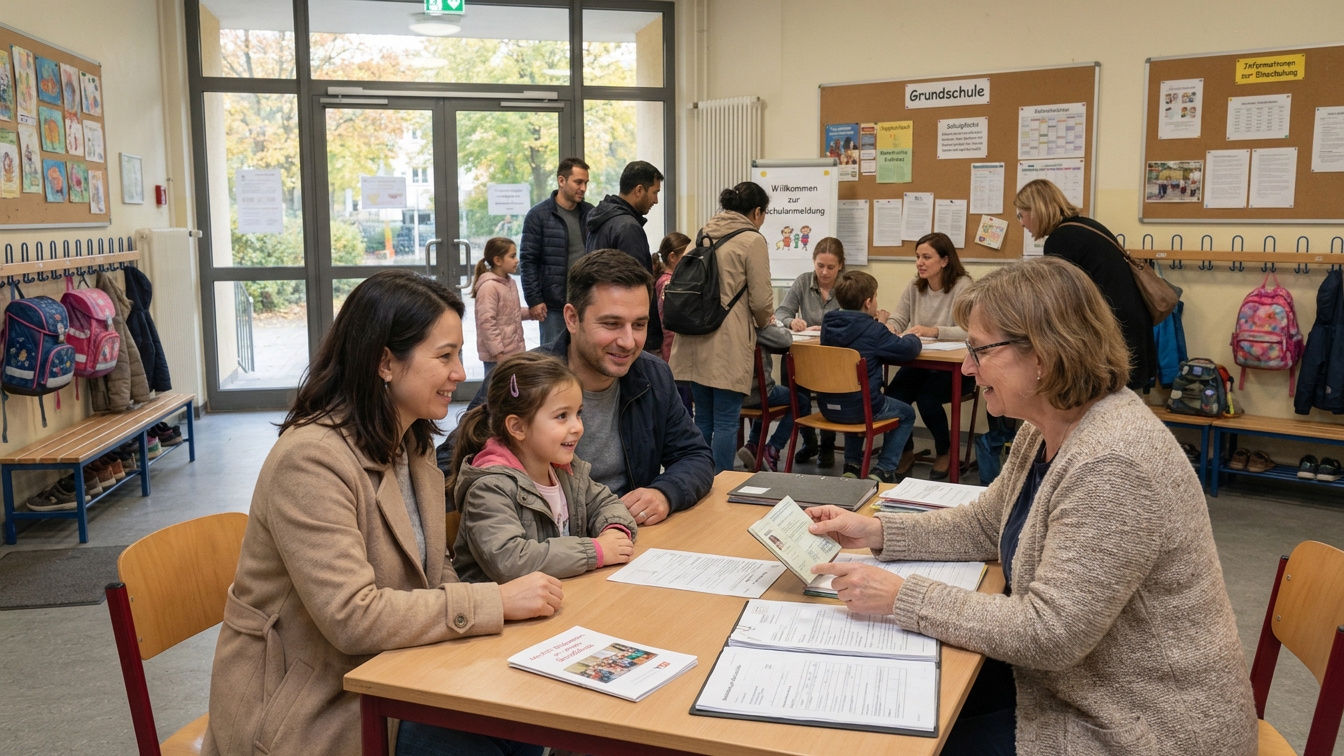
Public (State) Primary Schools in Germany
Germany has a large network of primary educational institutions, most of which are operated by the government. According to official figures published in 2022, the country had approximately 15,466 primary schools. Public institutions make up the majority of these schools, with almost 95% of German children receiving their primary education in government-run schools.
Attendance at public primary schools is free of charge, and these institutions generally provide a good standard of education.
Germany also has privately managed schools that receive financial assistance from the government. These include religious institutions and schools that adopt alternative teaching methods. Such schools normally receive public funding for every enrolled student.
Responsibility for education is shared across Germany's federal states. Each state determines its educational policies, teaching curriculum, and academic calendar, which means that school arrangements may differ depending on where a family lives.
How Primary School Grades Are Structured in Germany
Understanding the German primary school structure can be confusing for parents who are unfamiliar with the country's educational arrangements.
In most of Germany's 16 federal states, primary education covers Grades 1 to 4. However, children in Berlin and Brandenburg attend primary school through Grades 1 to 6.
In the other 14 states, Grades 5 and 6 form an orientation stage within secondary education. During this period, students, parents, and teachers work together to evaluate the child's academic performance, interests, and abilities before deciding on the most appropriate secondary education pathway.
The educational pathway selected at this stage is not necessarily permanent. Depending on the child's progress and performance, it may be possible to move from one secondary school stream to another.
For a more detailed explanation of the different educational pathways, consult the Guide to Secondary Schools in Germany.
German Federal States with the Best Primary Education Performance
The annual INSM Bildungsmonitor assesses and compares the performance of educational systems across Germany's federal states.
According to its 2021 assessment, the three highest-performing states in primary education were:
- Saxony
- Bavaria
- Hamburg
The states that recorded the lowest performance were:
- Bremen
- Brandenburg
- Saxony-Anhalt
For additional information about the assessment, visit the INSM Bildungsmonitor website.
Curriculum and Teaching Arrangements in German Public Primary Schools
Public primary schools in Germany generally provide between 20 and 30 hours of classroom instruction every week.
Lessons commonly begin between 08:00 and 09:00 in the morning, with the school day usually ending between 13:00 and 14:00. However, an increasing number of schools now provide extended school hours, allowing children to remain in school until later in the afternoon.
The academic calendar is not uniform throughout Germany because each federal state determines its own school term dates and holiday periods.
Generally, the academic year begins around the middle of August or early September and concludes towards the end of June or beginning of July.
Main School Holiday Periods in Germany
German primary school pupils enjoy several holiday periods during the academic year. These include:
- Autumn Holiday (Herbstferien): Usually lasts between one and two weeks and takes place around the middle of October.
- Christmas Holiday (Weihnachtsferien): Generally runs for two to three weeks around December and January.
- Easter Holiday (Osterferien): Usually lasts between two and three weeks during March or April.
- Summer Holiday (Sommerferien): Takes approximately six weeks and commonly falls between June and July.
Apart from these major school breaks, pupils also enjoy various national public holidays and religious celebrations. The dates may differ depending on the federal state.
Some German states additionally provide another holiday period lasting approximately one to two weeks in February.
Common Subjects Taught in German Primary Schools
Although the subjects offered may differ slightly from one federal state to another, German primary schools generally cover a wide range of academic and practical subjects.
The major subjects include:
- German Language: Helps children develop reading, writing, speaking, and communication abilities.
- Mathematics: Introduces pupils to basic calculations, numbers, measurements, and problem-solving.
- Science: Provides introductory knowledge about nature, the environment, and scientific concepts.
- Art: Encourages creativity through drawing, painting, and other artistic activities.
- Social Sciences: Introduces children to areas such as history, geography, and basic economics.
- Physical Education (PE): Promotes physical fitness, movement, and participation in sporting activities.
- Information Technology (IT): Introduces pupils to basic computer knowledge and digital skills.
- Social Studies: Helps children understand society, relationships, and their responsibilities within the community.
- Foreign Languages: Provides opportunities to learn languages other than German.
- Music: Develops musical appreciation through singing, listening, and practical activities.
- Religion or Ethics: Provides religious instruction or teaches ethical principles, depending on the school's arrangements.
Student Assessment and Academic Progress
Formal student assessments generally begin in Grade 2. Children are expected to achieve the minimum academic standards required for their respective classes. Pupils who fail to meet the necessary requirements may be required to repeat a school year.
German schools use a grading scale that runs from 1 to 6, with each number representing a particular level of academic achievement:
- Grade 1: Very good
- Grade 2: Good
- Grade 3: Satisfactory
- Grade 4: Adequate
- Grade 5: Poor
- Grade 6: Very poor
When children complete their primary education at Grundschule, teachers assess their academic strengths, abilities, and interests.
Based on this evaluation, teachers provide parents with an educational recommendation known as Übergangsempfehlung. This recommendation helps families determine the secondary school type that may be most suitable for their child.
After-School Programmes and Additional Activities
Many public primary schools also organize activities outside regular classroom lessons.
These programmes are designed to support children's academic development, social interaction, and physical well-being.
Common activities include:
- Afternoon clubs and extracurricular programmes.
- Homework assistance and supervised study sessions.
- Sports and physical activities.
- Other educational and recreational programmes.
Parents may be required to pay monthly or yearly charges for participation in some of these activities. They may also need to purchase the materials, equipment, or supplies required by the school.
However, families with limited financial resources may qualify for government assistance or subsidies to help cover some of these expenses.
Benefits and Limitations of Public Primary Schools in Germany
Public primary education has several advantages, particularly for families who want affordable schooling and opportunities for their children to integrate into German society.
Nevertheless, there are also certain limitations parents should consider before making an enrollment decision.
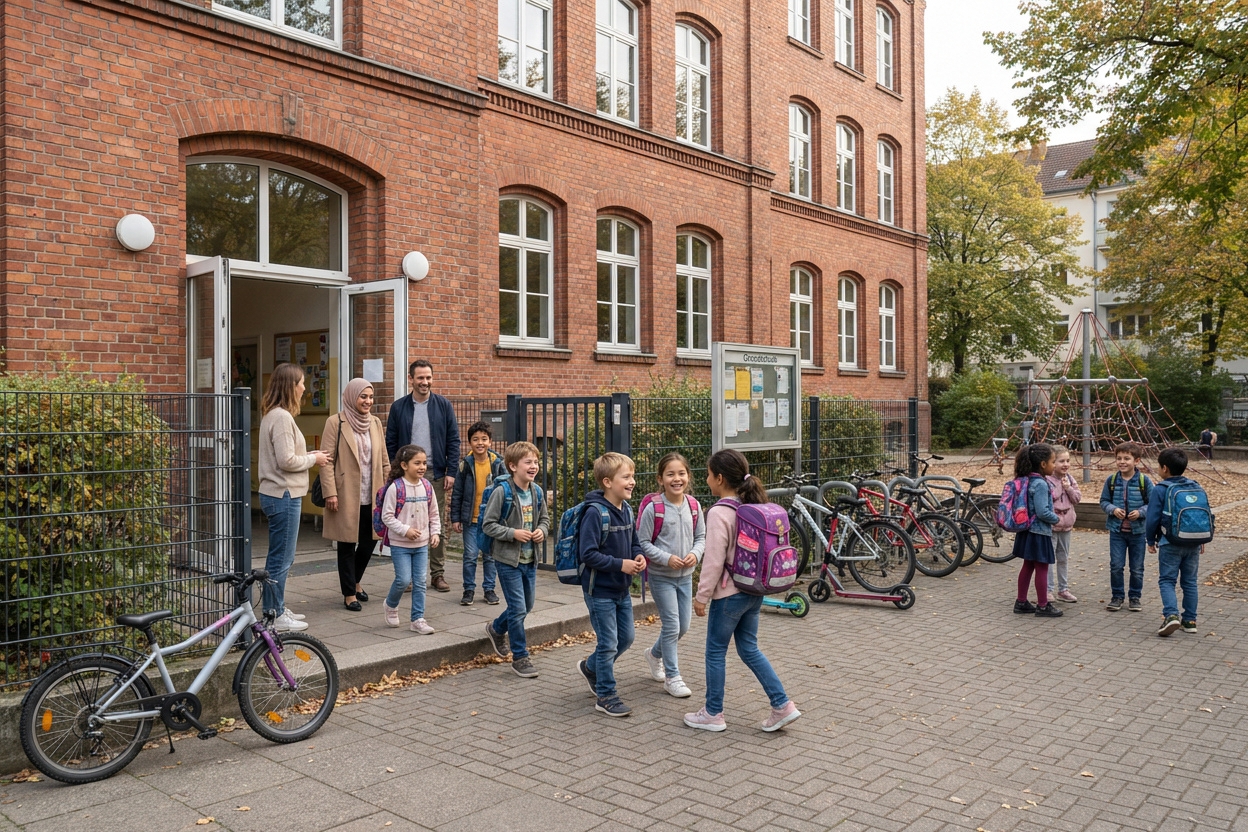
Advantages of Public Primary Schools
The major benefits include:
- No tuition fees: Public primary education is free, making it an affordable option for families. It is especially suitable for children who already understand German or are young enough to acquire the language easily.
- Good educational standards: Government schools generally provide quality education, although the standard of performance differs across the country's federal states.
- Cultural and social integration: Attending a local public school allows children to interact with German pupils, develop friendships, understand local traditions, and become more familiar with their surrounding communities.
Disadvantages of Public Primary Schools
Despite these benefits, government schools may not be suitable for every family.
Some of the challenges include:
- Language difficulties: Since lessons are conducted in German, older children who have little or no knowledge of the language may struggle to understand classroom instruction.
- Limited school selection: Parents are normally expected to enroll their children in the public school assigned to their residential catchment area. Moving a child to another school generally requires a valid reason.
- Limited school hours: Some schools close in the early afternoon. This can create childcare challenges for working parents who may need to make separate arrangements or pay for supervised after-school programmes.
- Fewer extracurricular opportunities: Compared with many private institutions, public schools may provide a smaller selection of extracurricular activities and additional learning opportunities.
Admission and Registration Process for Public Primary Schools in Germany
Parents who intend to enroll their children in German public primary schools should begin the registration process well ahead of the academic year.
In most cases, school enrollment begins approximately six to eleven months before the new school year starts.
The public school responsible for a family's residential catchment area will usually contact parents and invite them to complete the registration process.
Many schools also arrange open days around late September. These events give parents an opportunity to visit the school, understand its learning environment, and become familiar with the facilities before their children begin attending.
When Do Children Start Primary School?
Most children begin primary education during the autumn term of the year in which they turn six.
However, the official starting age may depend on the child's date of birth and the regulations established by the relevant federal state.
Some states operate school-entry cut-off dates, including 30 June. Under these arrangements, a child born later in the year may have to wait until the following academic year before becoming eligible for admission.
In certain situations, the child may be allowed to start earlier after completing an entry assessment known as Einschulungsuntersuchung.
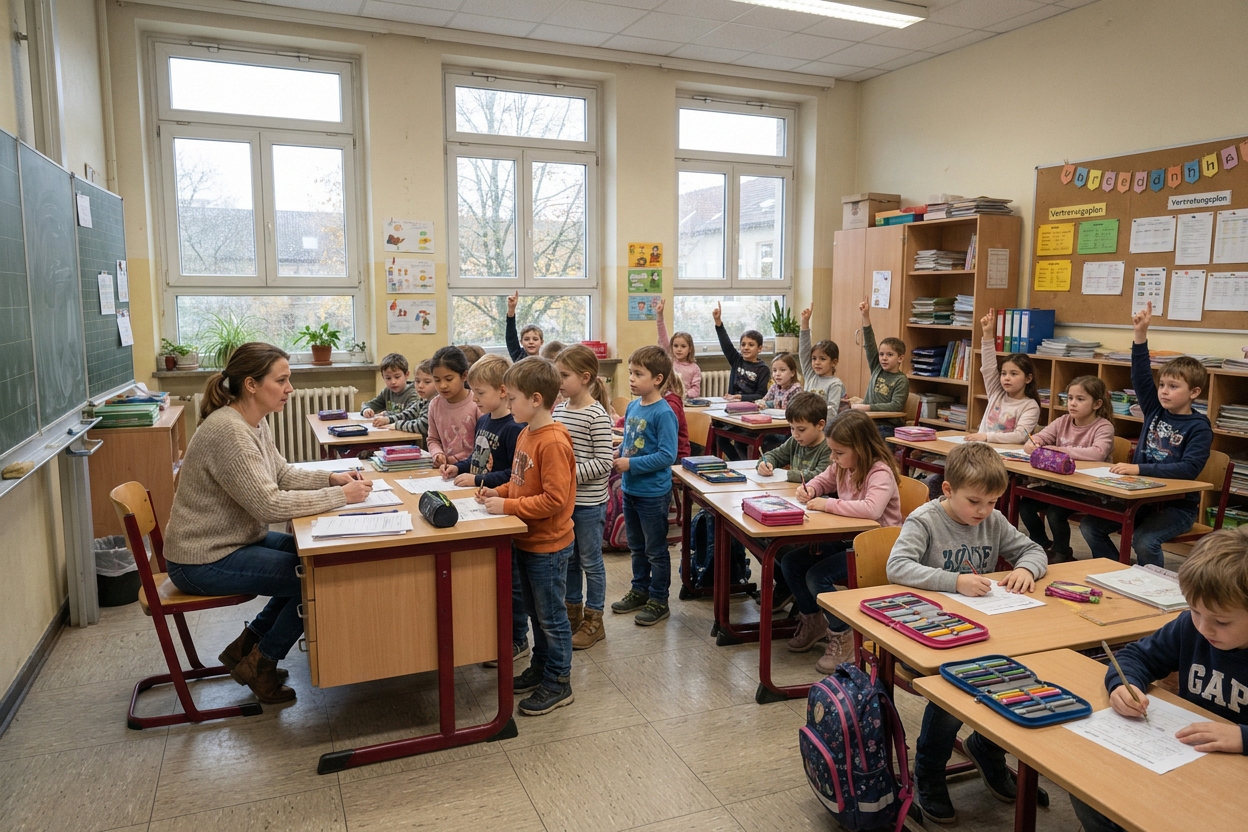
How to Submit a Primary School Application
The registration process normally begins when the designated local school sends parents an enrollment application form.
Parents must complete the form and submit it according to the registration procedures applicable in their state.
Depending on the local arrangements, the completed application may be returned directly to the school or submitted through the local citizens' registration office, known as Bürgeramt.
Documents Required for Primary School Registration in Germany
Parents are generally expected to provide certain personal documents when registering their children for primary education.
The commonly requested documents include:
- Birth Certificate: Used to confirm the child's date of birth and personal details.
- Passport: Serves as an official identification and travel document for the child.
- Proof of Residence: Confirms the family's residential address and helps establish the child's eligibility for a school within the designated catchment area.
Medical and School Readiness Examination
After the registration process, children are usually required to undergo a medical examination.
The purpose of this assessment is to establish whether the child is physically and developmentally ready to begin formal education.
The examination also helps identify any health or developmental concerns that might require additional assistance or support within the school environment.
Applying to a School Outside Your Residential Catchment Area
Parents who prefer to enroll their children in a different public school from the one assigned to their residential area must normally submit an additional application.
They may be required to demonstrate a reasonable connection to the area where the preferred school is located.
In most cases, the parent must first register the child at the originally assigned school before submitting a transfer request.
The application for a school change is known as Umschulungsantrag. It is usually submitted through the relevant local authority.
A Special German Tradition on the First Day of School
One interesting German school tradition involves presenting children with a large decorated paper cone called Schultüte when they begin primary education.
The cone is usually filled with sweets, small gifts, stationery, and other school supplies.
It is given to children to celebrate their first day of school and make the beginning of their educational journey exciting and memorable.
Read more about this cultural practice in Why Germans Give Their Kids Paper Cones on the First Day of School.
Private Primary Schools in Germany
Private primary education in Germany provides parents with alternatives to government-operated schools.
These institutions generally fall into three main categories:
- Religious or denominational schools.
- International schools.
- Alternative educational institutions.
Germany also has a small number of government-supported, non-religious community schools known as Gemeinschaftsschulen.
Further information about this type of school is available through the Baden-Württemberg Community School Information Portal.
In most German federal states, establishing a private primary school requires the institution to demonstrate that it serves a special educational purpose or pedagogical interest that is not already adequately provided by an existing public school in the locality.
Religious and Denominational Primary Schools
Religious primary schools represent one of the major categories of private education in Germany.
Many of these institutions receive financial support from the government and operate in ways that are broadly similar to public primary schools.
Their teaching programmes, academic requirements, and school calendars are generally aligned with the arrangements established for government schools within their respective federal states.
The major difference is their ownership and management structure. Rather than being administered by local government authorities, these schools are operated by religious organizations or institutions.
Government funding usually covers approximately two-thirds of the educational costs per pupil, while parents are responsible for paying the remaining amount through school fees.
Most religious primary schools in Germany are associated with either the Roman Catholic Church or the Lutheran Church.
Children do not necessarily have to belong to the religion represented by the school before gaining admission. However, pupils and their families are generally expected to respect the institution's religious beliefs, values, and traditions.
Religious education is also approached differently in these institutions. Lessons usually concentrate more on the particular religious tradition of the school, whereas public schools tend to provide broader religious education or, in some cases, ethics classes instead.
Waldorf schools are alternative educational institutions that have operated in Germany since 1919. Their establishment is associated with Rudolf Steiner, whose educational philosophy emphasizes creativity, artistic development, and the overall growth of children.
The teaching approach is influenced by a philosophy known as anthroposophy, which places importance on developing children's intellectual, creative, emotional, and practical abilities.
Unlike conventional schools, Waldorf institutions give considerable attention to artistic expression and practical learning alongside traditional academic subjects.
Germany has approximately 254 Waldorf schools, most of which receive some form of government financial support.
Although their educational programmes differ from those of conventional schools, their curriculum must still satisfy the educational standards established by the relevant state authorities.
Educational Structure of Waldorf Schools
Waldorf education covers different stages of a child's development, beginning with kindergarten and continuing through primary and secondary education.
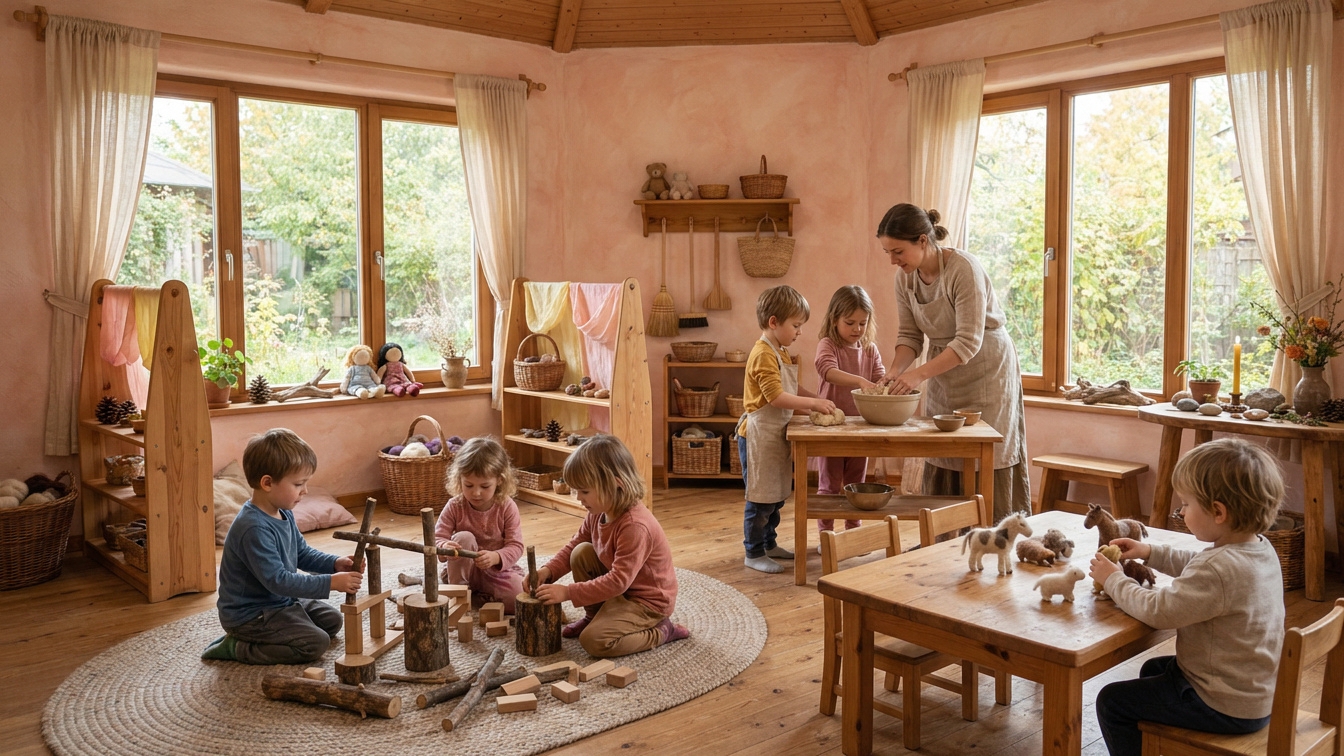
The educational structure is generally divided into three main stages:
- Lower Stage (Elementary Education): Grades 1–4.
- Intermediate Stage: Grades 5–8.
- High School Stage: Grades 9–12.
Teaching activities place significant emphasis on:
- Arts and crafts.
- Music and creative expression.
- Storytelling and imaginative learning.
- Mathematics.
- Science.
- History.
This approach is intended to combine conventional academic knowledge with practical experiences that encourage independent thinking and creativity.
School Fees at Waldorf Institutions
Waldorf schools generally agree on their fee arrangements with parents before enrollment.
The amount charged may be determined by the family's income or through a fixed financial contribution agreed upon between the school and the parents.
For more information about Waldorf education, visit the German Association of Waldorf Schools.
You can also consult the Waldorf World List for additional information about Waldorf institutions around the world.
For background on the philosophy behind this educational approach, see Anthroposophy – Britannica.
Montessori Primary Schools
Montessori schools are another important category of alternative educational institutions in Germany.
The country has approximately 270 Montessori schools, including Tanus International Montessori School (TIMS), which is situated in Frankfurt.
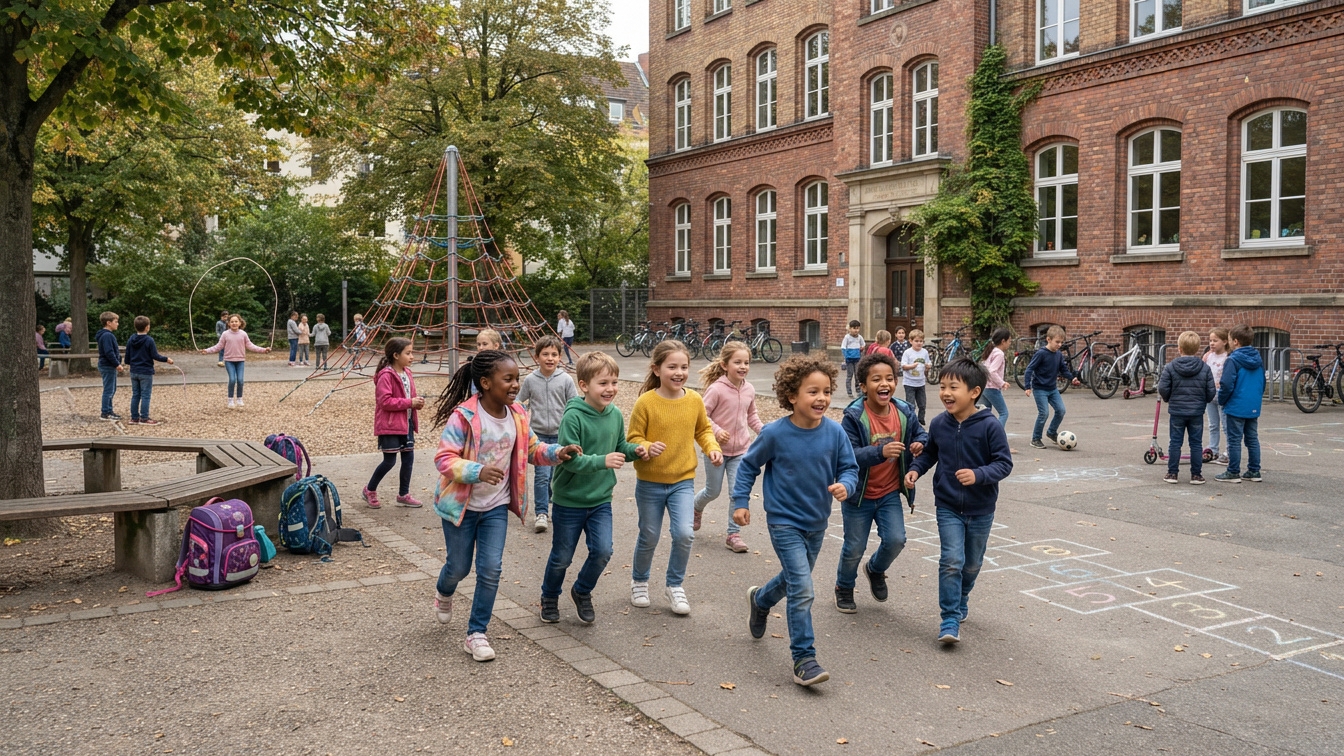
These schools follow an educational philosophy developed by Dr. Maria Montessori, based on the idea that children learn effectively when they are encouraged to explore their interests and participate actively in their own learning process.
Rather than relying entirely on direct classroom instruction, Montessori teachers take on a supportive role by guiding pupils as they discover, practise, and develop new skills.
Teaching Methods and Learning Environment
Montessori schools commonly provide education from early childhood through primary and secondary levels.
Their classrooms often accommodate children from different age groups, creating opportunities for pupils to learn from and interact with one another.
Some institutions also have multicultural learning environments and provide lessons in both English and German.
The Montessori approach emphasizes practical experiences, sensory learning, outdoor activities, and personal development.
Children are encouraged to express themselves, explore their surroundings, and develop independence through different learning activities.
Subjects commonly taught in Montessori schools include:
- Languages.
- Mathematics.
- Science.
- Social Studies.
- Art.
Montessori School Fees
The cost of attending a Montessori school depends largely on its funding arrangements.
Some institutions receive financial assistance from the government, while others operate independently without public subsidies.
As a result, tuition charges differ from one school to another. Many Montessori schools also calculate their fees according to the financial circumstances and income levels of individual families.
International Primary Schools in Germany
International schools provide another educational option for families living in Germany, particularly expatriates who want their children to continue learning in a familiar language or educational system.
Germany has more than 100 international schools, with most of them situated in major urban centres such as Berlin, Munich, and Frankfurt.
These cities attract significant numbers of international residents and expatriate families, creating demand for schools that offer education in different languages and follow internationally recognized curricula.
Many international institutions provide education from kindergarten through secondary school, accommodating children from approximately three to eighteen years of age.
Unlike most public schools, international schools are generally privately operated and provide academic programmes designed to meet both German and international educational requirements.
Learning Environment and Educational Standards
International schools are popular among expatriate families because they often provide a combination of quality teaching, smaller classroom populations, and a broad range of extracurricular programmes.
Some institutions also participate in international educational initiatives, including the Eco-Schools programme, which promotes environmental awareness and sustainable development among students.
For example, Munich International School provides practical environmental learning alongside conventional classroom education.
Its environmental activities expose pupils to important global issues through local projects and initiatives involving:
- Recycling and waste management.
- Protection of biodiversity.
- Water conservation.
- Energy efficiency.
This approach allows children to develop environmental awareness while gaining practical knowledge about sustainability.
More information about this programme is available through the Eco-Schools Project.
Languages and International Curriculum Options
Many international schools in Germany were established by educational organizations from the United Kingdom and the United States.
Consequently, English is the main language of instruction in a large number of these institutions. Some schools also combine English and German lessons through bilingual teaching programmes.
Parents can also find international schools that specialize in other languages, including:
- French.
- Italian.
- Spanish.
- Japanese.
Many international schools are affiliated with recognized educational organizations such as:
Approximately half of Germany's international schools offer the International Baccalaureate (IB) programme.
Some of these institutions also provide the International Primary Curriculum (IPC), which is designed to support children's learning through an internationally oriented educational framework.
Tuition Fees for International Primary Schools
Unlike government-operated schools, international schools generally do not receive public funding for their educational operations.
As a result, their tuition fees are considerably higher than those charged by public institutions.
The estimated annual cost of primary education at an international school in Germany ranges from €8,000 to €14,000.
However, actual charges vary significantly depending on the school, its location, educational facilities, and academic programmes.
Some institutions provide financial assistance through scholarships or fee reductions for families who cannot afford the full tuition amount.
Parents should contact individual schools to confirm the applicable charges and available financial support.
Admission Requirements for International Schools
The application process for international schools is not standardized across Germany.
Each institution establishes its own admission procedures, eligibility conditions, and documentation requirements.
Parents are therefore advised to contact their preferred schools directly to obtain accurate information about the application process.
Another important consideration is the limited availability of places. Many international schools receive applications from a large number of families, making admission competitive.
For this reason, parents should submit applications as early as possible, preferably several months before the intended academic session begins.
Advantages and Disadvantages of International Primary Schools
International schools provide several educational benefits, especially for families who relocate to Germany from other countries.
However, their higher costs and limited exposure to German-language instruction may present challenges.
Advantages of International Primary Schools
Some of the major benefits include:
- Continuity in education: Children who move to Germany after beginning their education elsewhere can continue studying through a familiar curriculum and, in many cases, their first language.
- Smaller class sizes: A lower number of pupils in classrooms can allow teachers to provide more individual attention and support to students.
- More extracurricular opportunities: International schools often organize a wider range of activities outside regular classroom lessons, helping children develop additional interests and skills.
- Access to internationally recognized qualifications: Their academic programmes can prepare pupils for further education and qualifications such as the International Baccalaureate (IB) and International General Certificate of Secondary Education (IGCSE).
- Multicultural learning environment: Children have opportunities to interact with classmates and teachers from different nationalities, backgrounds, and cultures. This helps them develop international awareness and communication skills.
Disadvantages of International Primary Schools
Despite their benefits, international schools also have certain drawbacks that parents should evaluate before enrolling their children.
These include:
- Expensive tuition fees: Most international schools operate without government financial assistance, which means parents are responsible for paying relatively high annual school fees.
- Reduced integration into German society: Children who attend international schools may have fewer opportunities to interact with local German communities compared with pupils in public schools.
- Limited development of German-language skills: Since most international schools teach primarily in English or another foreign language, pupils may have fewer opportunities to develop their German proficiency.
- Competitive admission requirements: Some international schools have limited enrollment capacity and receive more applications than they can accommodate. Consequently, parents may need to apply much earlier and satisfy additional admission conditions.