Is healthcare free in Italy? Costs, coverage, and access
Discover how Italy’s healthcare system works, who qualifies for free or low-cost medical services, what healthcare costs to expect, and how expats can access public and private health insurance.
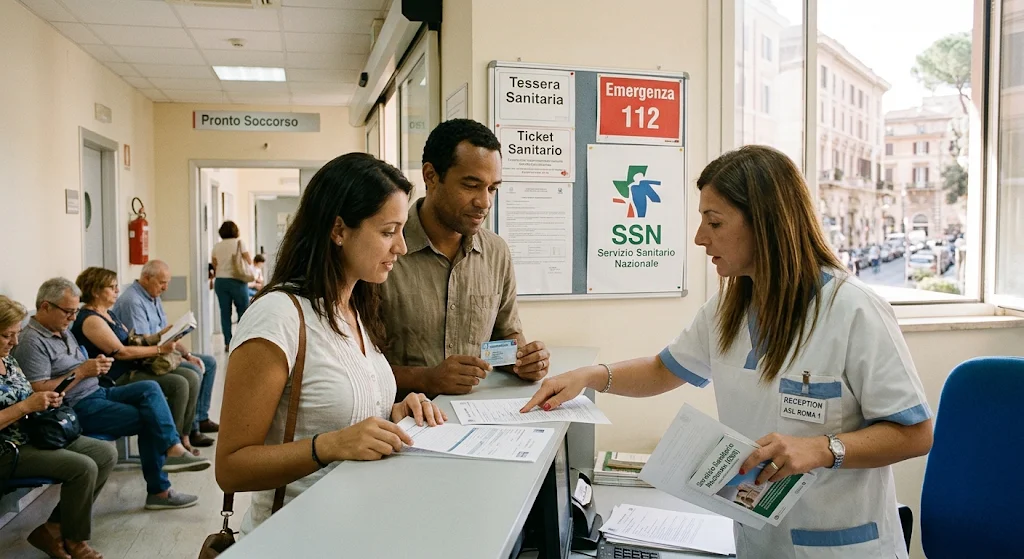
Italy has a publicly financed healthcare service called the Servizio Sanitario Nazionale (SSN). The system is supported by tax revenue and gives eligible residents access to a wide range of essential medical services at little or no cost.
However, healthcare in Italy is not completely free for everyone. Whether you can use the public system and how much you may need to pay depend on your residence status, whether you have registered with the SSN, and the kind of medical care you require.
For people moving to Italy, private health insurance can also be a helpful option. It may provide protection while you are waiting to become eligible for or complete registration with the SSN, or offer an alternative if you prefer quicker access to medical attention.
Is Medical Care Free in Italy?
The straightforward answer is no. Italy has a public healthcare system financed through taxation, but this does not mean that every treatment and medical service is provided entirely free of charge.
After registering correctly with the SSN, you can access many essential healthcare services without having to cover their full cost yourself. Some treatments are available free at the point of use, while others require you to pay a contribution.
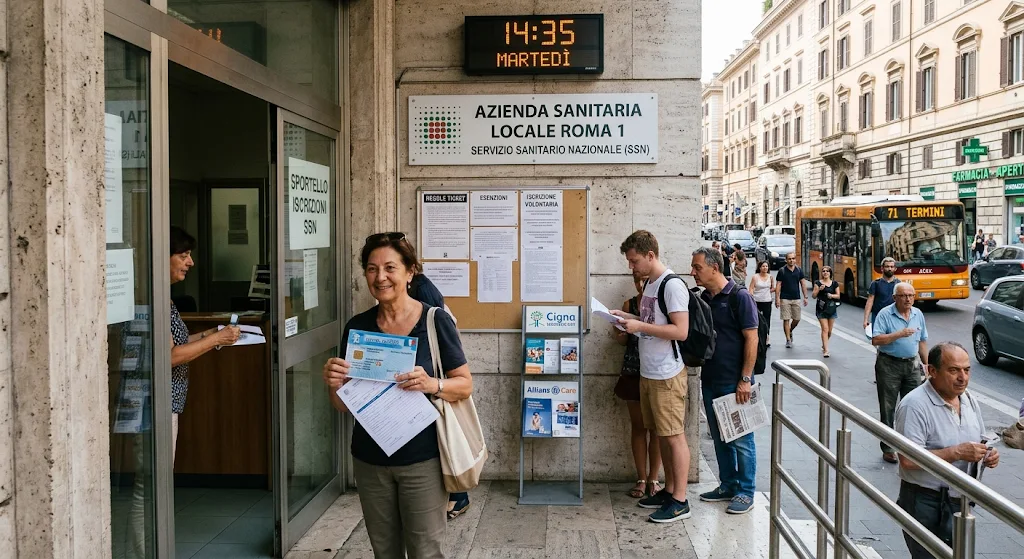
For expats living in Italy, medical expenses generally fit into three main groups:
- Free or subsidised healthcare: This category includes appointments with your family doctor (GP), hospital care, selected vaccinations and public health prevention programmes.
- Healthcare with co-payments: You may need to pay a ticket sanitario for specialist consultations, diagnostic tests, certain medicines and some emergency department visits that are not classified as urgent.
- Private medical treatment: Appointments with private specialists, most routine dental treatment for adults and elective procedures are usually paid for separately.
It is worth remembering that healthcare rules, waiting periods and co-payment charges are not necessarily uniform throughout Italy. They can vary between regions and the local healthcare authorities, known as Azienda Sanitaria Locale (ASL).
Which Medical Services Are Free or Subsidised in Italy?
Once you have registered with the Servizio Sanitario Nazionale (SSN), you may be entitled to a range of essential healthcare services either free of charge or at significantly reduced rates.
These commonly include:
- Appointments with your registered family doctor, known as a medico di base.
- Hospital services considered medically necessary, including inpatient care.
- Emergency treatment provided through pronto soccorso, the Italian hospital emergency department.
- Many standard vaccinations and government-supported immunisation programmes.
- Selected cancer screening services and preventive medical programmes.
- Essential maternity care and certain treatments connected with pregnancy.
- Some necessary prescription medicines and follow-up treatments, depending on your eligibility and exemption status.
Which Healthcare Services May Still Cost Money?
Being eligible for Italy's public healthcare system does not mean that every medical service will be provided without charge. You may still have to pay for certain treatments and appointments.
Examples include:
- Specialist appointments and diagnostic tests for which a ticket sanitario applies.
- Certain prescription medicines that are subject to regional co-payment charges.
- Most ordinary dental procedures for adults, as these are not part of standard public healthcare coverage.
- Elective operations and treatments that are not considered medically essential.
- Private consultations and hospital services provided outside the public healthcare system.
The final amount you pay will depend on the treatment you receive, whether you qualify for an exemption and the region in which you access the service. Before arranging an appointment, it is sensible to ask your local health authority to confirm the applicable charges.
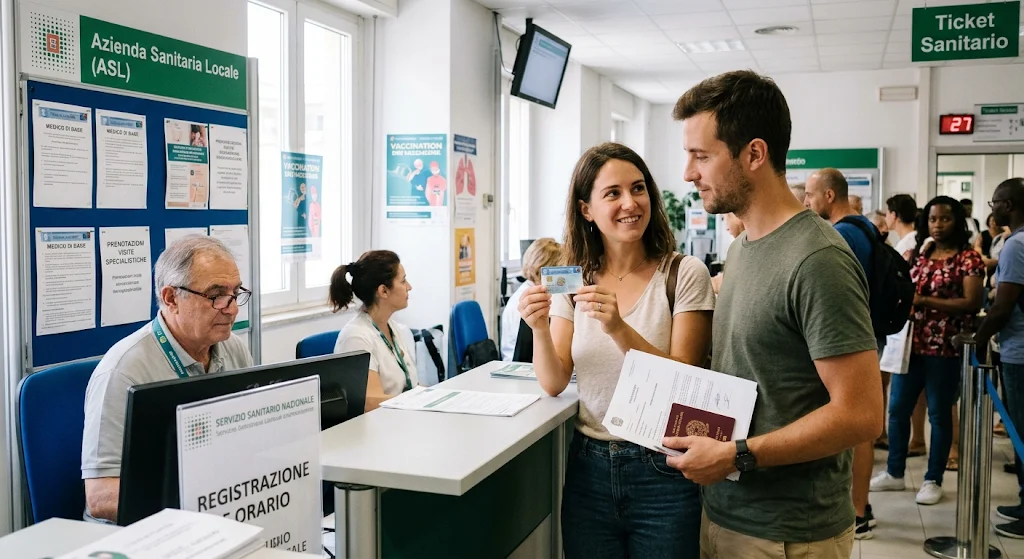
Who qualifies for public healthcare in Italy?
Access to Italy's public healthcare system depends largely on your legal residency status and registration requirements.
Italian citizens and many foreign nationals who legally reside in the country can qualify for SSN coverage. However, the registration process differs depending on employment, residency permits, and individual circumstances.
For example, an EU citizen relocating to Milan for employment may qualify for compulsory SSN registration through their work status. Meanwhile, a non-EU national moving to Rome may need private health insurance while completing their visa and residency formalities.
The following groups may qualify through different registration routes:
- Employees and self-employed residents: Many legally resident workers qualify for compulsory registration with the SSN.
- Students and non-working residents: Those with eligible residency status may register voluntarily by paying the required annual contribution.
- Retirees: Some retirees can access public healthcare through an S1 certificate or voluntary registration, depending on their circumstances.
- EU and UK visitors: Temporary visitors may access certain state healthcare services using an EHIC or GHIC card, subject to applicable rules.
- Short-stay tourists and non-EU visitors: They generally rely on travel insurance, private medical coverage, or out-of-pocket payments for non-emergency treatment.
Who qualifies for compulsory SSN registration?
Compulsory registration is available to individuals whose employment or legal residency status automatically gives them access to Italy's public healthcare system.
You may qualify if you fall into any of these categories:
- Italian citizens.
- Foreign nationals legally residing in Italy for qualifying employment.
- Eligible self-employed foreign residents.
- Dependent family members of individuals who qualify for compulsory registration.
- Certain protected groups, including people covered under specific asylum-related provisions.
Who can register voluntarily?
Not every foreign resident automatically qualifies for compulsory SSN registration. However, some individuals can access public healthcare by registering voluntarily and paying an annual contribution.
This option may be available to:
- International students with qualifying long-term residency status.
- Some retired foreign nationals who do not have another recognised healthcare entitlement.
- Non-working residents who meet the relevant eligibility requirements.
- Certain family-based residents.
- Individuals with eligible residency permits who do not qualify for compulsory registration.
The applicable contribution and documentation requirements depend on your circumstances and local ASL regulations.
Who needs private health insurance before accessing public healthcare?
Private health insurance can provide temporary medical coverage while you complete the administrative requirements for public healthcare registration.
It may be particularly useful for:
- Non-EU nationals arriving in Italy who need insurance for visa or residency purposes.
- Tourists and short-term visitors who are not registered with the SSN.
- Foreign residents whose public healthcare eligibility is still being processed.
- Expats who prefer private medical services while waiting for public registration.
- Individuals who want additional healthcare coverage beyond what the public system provides.
Short-term visitors should remember that they generally cannot access the SSN in the same way as registered residents. Private insurance or direct payment may therefore be necessary for non-emergency medical treatment.
What does the SSN cover?
Once you meet the eligibility requirements and complete your registration, Italy's public healthcare system provides access to a wide range of essential medical services.
Most routine healthcare begins with your registered family doctor, who can refer you to specialists, diagnostic facilities, and hospitals when necessary.
Healthcare services covered by the SSN
The public healthcare system generally includes:
- Primary healthcare consultations with your registered family doctor (medico di base).
- Referrals to specialist doctors and diagnostic services.
- Medically necessary hospital admissions and inpatient treatment.
- Emergency medical assistance.
- Selected preventive health programmes and medical screenings.
- Essential maternity services and various child healthcare services.
- Subsidised prescription medications, depending on the medicine and applicable eligibility rules.
- Treatment at public hospitals and accredited private hospitals operating within the public healthcare system.
Healthcare services with limited or no public coverage
Although the SSN provides extensive medical support, it does not cover every treatment or guarantee unrestricted access to all healthcare providers.
Some services may be excluded or require additional payments, including:
- Most routine dental treatments for adults.
- Consultations with private specialists outside the public healthcare system.
- Cosmetic procedures and certain elective treatments.
- Non-essential or comfort-based medical services.
- Faster appointments obtained through private healthcare providers.
- Certain treatments that require referrals or additional administrative approval.
How much does healthcare cost in practice?
Healthcare in Italy is generally more affordable through the SSN than through private medical providers. However, the actual amount you pay depends on your healthcare needs, registration status, and eligibility for exemptions.
Understanding ticket sanitario and healthcare exemptions
A ticket sanitario is a co-payment that patients may be required to make for certain services provided through the public healthcare system.
According to the general rules, these payments commonly apply to:
- Specialist medical consultations.
- Diagnostic examinations and laboratory tests.
- Certain non-emergency emergency room visits classified as codice bianco.
Outpatient specialist services generally have a national maximum co-payment of €36.15 per prescription, although regional tariffs and additional rules may differ.
Some individuals are eligible for exemptions that reduce or completely remove these charges.
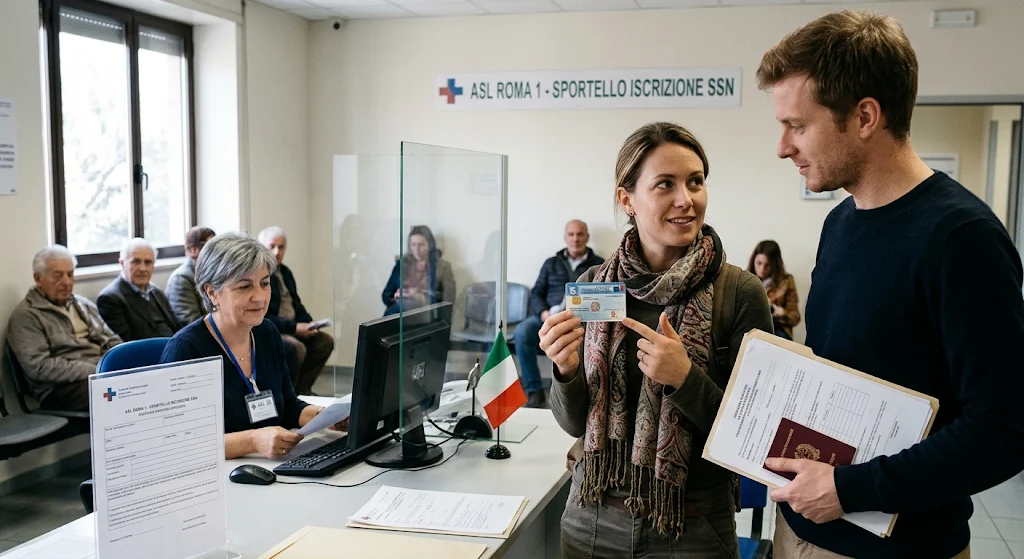
Situations That May Qualify for Healthcare Exemptions
Common groups that may be eligible for exemptions include:
- People with low incomes who satisfy the relevant age and household criteria.
- Pregnant women accessing eligible maternity-related healthcare.
- Individuals with officially recognised chronic illnesses.
- People diagnosed with specific rare medical conditions.
- Individuals with an officially recognised disability.
- Children and older people who meet the applicable income conditions.
Exemption criteria can differ according to personal circumstances and regional rules. Contact your local ASL or the Italian Ministry of Health to confirm whether you qualify.
Comparing Public and Private Medical Expenses
The amount you pay for healthcare in Italy depends largely on whether you use the public system or choose private treatment.
- Public primary care: Consultations with a GP are generally free for people registered with the SSN.
- Public specialist appointments and diagnostic tests: These may require subsidised co-payments. The amount depends on the service and whether you qualify for an exemption.
- Private medical services: You will generally be responsible for the full cost of consultations and treatment unless your private insurance policy covers the expense.
How Can Expats Obtain Healthcare in Italy?
Foreign residents who qualify for Italy's public healthcare system must complete the relevant registration procedure before accessing services as registered SSN members.
The process generally involves contacting the local health authority, providing the required paperwork and receiving a health card as confirmation of your registration.
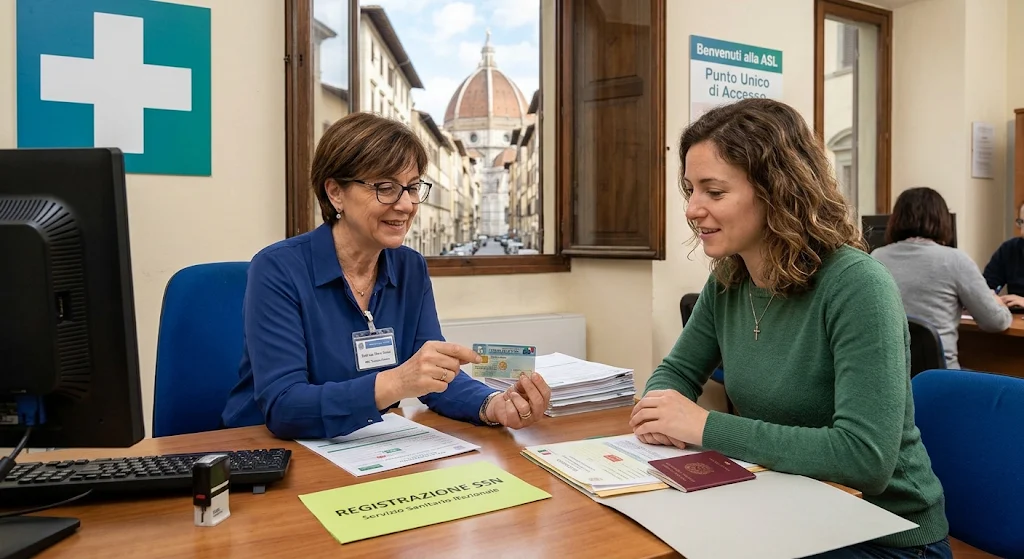
Registering with the ASL and Getting Your Tessera Sanitaria
Your local public healthcare authority is known as the Azienda Sanitaria Locale (ASL). It manages healthcare registration and related services within your area.
After completing registration, you can receive the Tessera Sanitaria, Italy's national health card. This card makes it easier to access the public healthcare services for which you are eligible.
Follow these steps:
- Collect your supporting documents: Prepare your passport or other identification, Italian tax identification number (codice fiscale), proof of address and relevant residence documents. These may include your residence certificate or residence permit.
- Find the ASL office responsible for your area: Consult the official directory provided by the Ministry of Health to identify your local health authority.
- Apply for SSN membership: Submit the required documents and request either compulsory or voluntary registration, depending on the category under which you qualify.
- Ask for your health card: Confirm when your Tessera Sanitaria is expected to arrive and whether the ASL can provide temporary proof of registration while you wait.
Document requirements and application processing times are not necessarily the same across Italy. It is advisable to contact your local ASL before attending to check the latest instructions.
Selecting a GP and Getting Referred to a Specialist
Once your SSN registration has been completed, you will generally need to choose a family doctor, known in Italy as a medico di base.
Your GP is usually your first contact for ordinary healthcare needs. When necessary, they can also refer you to specialist doctors, hospitals and diagnostic facilities.
Referrals are an important feature of the Italian public healthcare system. They help organise patient care and manage the costs associated with treatment.
Useful steps when choosing and using a GP:
- Select a family doctor who is currently accepting patients.
- Check how to book consultations and whether the doctor can communicate in English.
- Ask your GP for a referral when you need to see a specialist or undergo diagnostic testing.
- Contact your local ASL if your preferred doctor is unavailable or has reached the maximum number of patients they can accept.
- Find out which out-of-hours medical services operate locally for urgent healthcare needs.
- Call 112 if you need emergency assistance.
For ordinary medical care, learning how to find and register with a doctor in Italy can make it considerably easier to navigate the healthcare system.
When Is Private Health Insurance Worth Considering?
Once you are properly registered, Italy's public healthcare system can cover many routine medical needs. However, private health insurance may be a useful additional option for expats who want greater flexibility or have not yet secured access to public healthcare.
Private cover can help with medical expenses during a transition between residency arrangements. Depending on the policy, it may also provide access to private hospitals and specialists, potentially with shorter waiting times.
If you are exploring international health insurance, Cigna Healthcare and Allianz Care are two providers you may wish to compare.
Situations Where Cigna Healthcare Could Benefit Expats in Italy
Cigna Healthcare provides international medical insurance plans for individuals who want health coverage while residing outside their home country.
Its plans may be worth exploring if:
- You need international medical insurance while your registration with the SSN is still being processed.
- Your lifestyle involves frequent international travel or moving between different countries.
- You would like access to a broader selection of hospitals, clinics and healthcare professionals.
- You prefer customer assistance available in multiple languages.
- You require medical protection outside Italy as well, depending on the geographical coverage included in your chosen policy.
When Allianz Care Could Be a Suitable Option for Expats in Italy
Allianz Care offers international health insurance solutions for individuals and families who live abroad.
It may be an appropriate option if:
- You want the option of receiving treatment through private healthcare providers.
- Having a wider choice of doctors, hospitals and other medical facilities is important to you.
- You are looking for an insurance plan that can cover your family members.
- You value international assistance and customer support in different languages.
- You need healthcare protection that may also apply outside Italy, subject to the terms and geographical limits of your policy.
Choosing Health Insurance That Offers Good Value
Before purchasing an international medical insurance plan, take time to compare the following features:
- Waiting periods: Find out whether you must wait for a specified period before you can claim for particular treatments or medical services.
- Deductibles and co-payments: Establish how much you will need to contribute yourself before the insurer pays eligible medical expenses.
- Direct payment arrangements: Check whether the insurance company settles bills directly with hospitals and other participating providers, or whether you must pay first and request reimbursement afterwards.
- Exclusions in the policy: Read the terms carefully to identify medical conditions, treatments and services that the insurer does not cover.
- Area of protection: Decide whether you need insurance limited to Italy, coverage across Europe, or protection in countries worldwide.
- Insurance premiums: Compare the monthly or yearly price of each policy with the benefits and level of protection it provides.
What Difficulties Might Expats Encounter?
Italy has a well-established public healthcare system, but accessing medical services can sometimes be challenging for people who have moved there from another country.
Common obstacles include dealing with administrative requirements, communicating across language differences and waiting for certain medical appointments.
Healthcare Waiting Times, Communication Barriers and Regional Variations
The experience of using healthcare services in Italy can vary considerably from one location to another. For example, arranging an appointment or finding an available medical professional in Milan may be quite different from doing so in Naples or a smaller Italian town.
Some of the difficulties foreign residents may experience include:
- Extended appointment waiting periods: Getting an appointment with a public-sector specialist or arranging certain diagnostic tests may take considerable time, particularly when healthcare services are experiencing high demand.
- Language difficulties: You may not always find medical professionals who speak English, especially in smaller communities and outside private healthcare facilities in major cities.
- Differences between regions: Healthcare administration, the availability of medical services and the fees patients are expected to contribute can differ across Italy's regions.
- Delays with administrative procedures: Completing your residency documentation, enrolling in the SSN and receiving your Italian health card may take some time.
- Fewer options when choosing providers: People relying on public healthcare may have less flexibility when selecting a specialist or arranging an appointment with a preferred medical professional.
Because of these challenges, some expats decide to use private healthcare. It may help them arrange consultations sooner, communicate more comfortably with healthcare professionals or enjoy greater freedom when choosing where and by whom they receive treatment.