A Guide to Luxembourg’s Education System
A practical overview of Luxembourg’s education system, explaining school cycles, age groups, languages, enrolment requirements, school schedules, childcare and learning support for children and families.
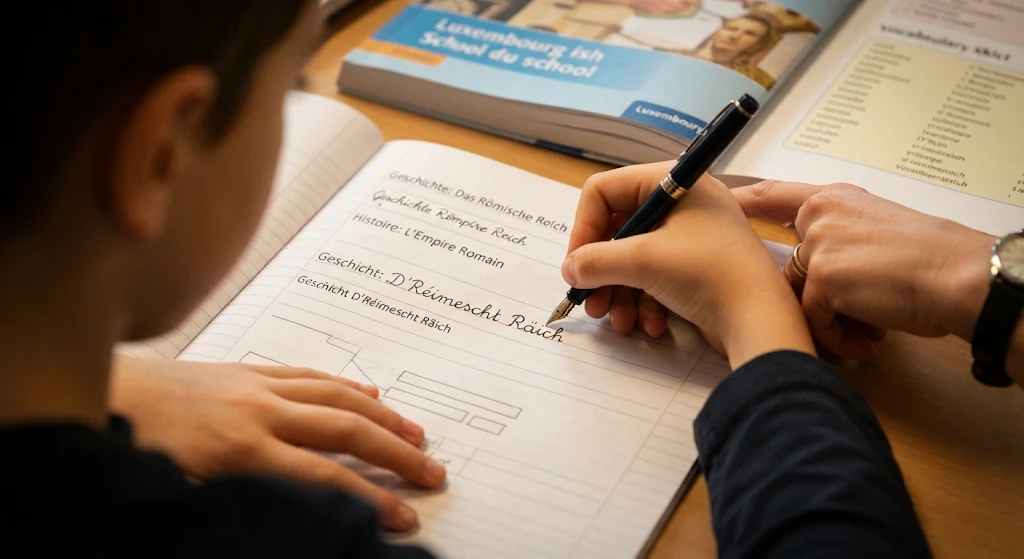
Navigating Luxembourg’s education system may seem overwhelming, particularly for families who face language difficulties. Fortunately, parents can select from a variety of national and international schools when deciding where to enroll their children.
Most schools in Luxembourg are publicly funded and provide education free of charge. School attendance is compulsory for children between the ages of 4 and 16. Almost all schools operate in a multilingual environment, with French, German, Luxembourgish and, in some cases, English being used. This guide explains the different stages of fundamental education, which covers children from 3 to 11 years old, and secondary education, generally for students aged 12 to 17 or 18.
Fundamental Education
Known in Luxembourg as enseignement fondamental, fundamental education brings together pre-school and primary education. It is divided into four cycles, or grade levels, which children normally enter at around three or four years of age and complete by the age of 11.
The four cycles are organised according to the following age groups:
- Cycle 1: Children aged 3 to 5
- Cycle 2: Children aged 6 to 7
- Cycle 3: Children aged 8 to 9
- Cycle 4: Children aged 10 to 11
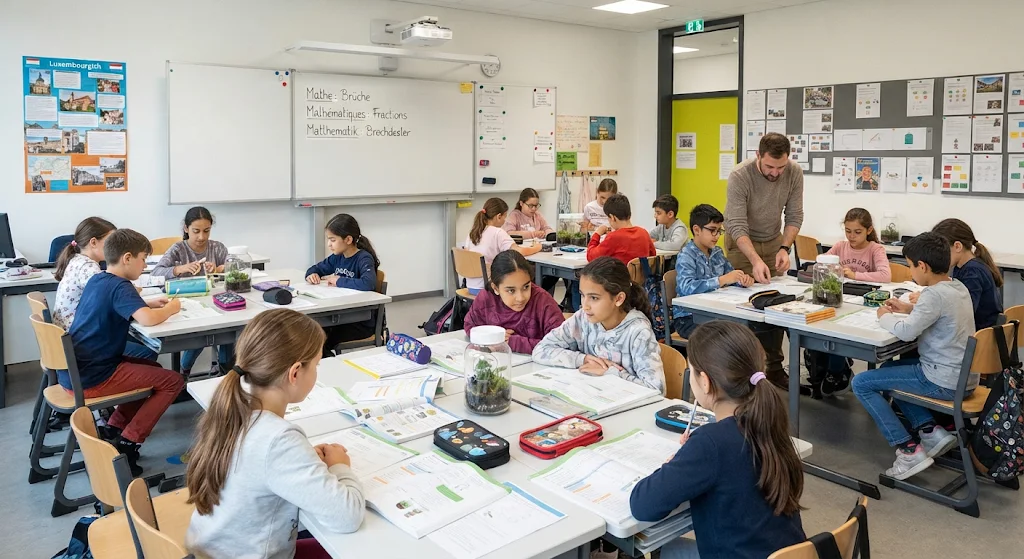
Luxembourg Education: Cycle 1
Cycle 1 covers early childhood education. It starts with an optional year, followed by two years of compulsory pre-school education.
During these pre-school years, much of the learning is centred on developing children's social abilities and introducing them to Luxembourgish as a language of everyday communication. This goes beyond simply learning a few basic Luxembourgish expressions.
As children progress, they are gradually introduced to subjects and activities involving logical thinking and basic mathematical reasoning, sensory development, health and the human body, as well as cultural and social values.
Cycle 1 lessons generally take place on Mondays, Wednesdays and Fridays, from 8:00 to 16:00, and on Tuesdays and Thursdays, from 8:00 to 11:45. Children usually return home for lunch. However, when both parents are working, lunch can be arranged at a nearby Maison Relais (also called a Foyer du Jour), a daycare facility located close to the school.
The academic year normally starts on 15 September and finishes on 15 July.
Although the first year of Cycle 1 is optional, regular attendance becomes important once a child has started school. The following two pre-school years are compulsory for children who turn four before 1 September.
Registration generally opens in August. Families who relocate to Luxembourg later in the year can arrange admission for the next school quarter. Parents are normally expected to register their child at least three months before the beginning of the school year.
To complete the registration process, parents should contact the education department of their local municipality, known as the Service de l’Enseignement. The required documents include the family's residence certificates, the child's birth certificate and a completed registration form.
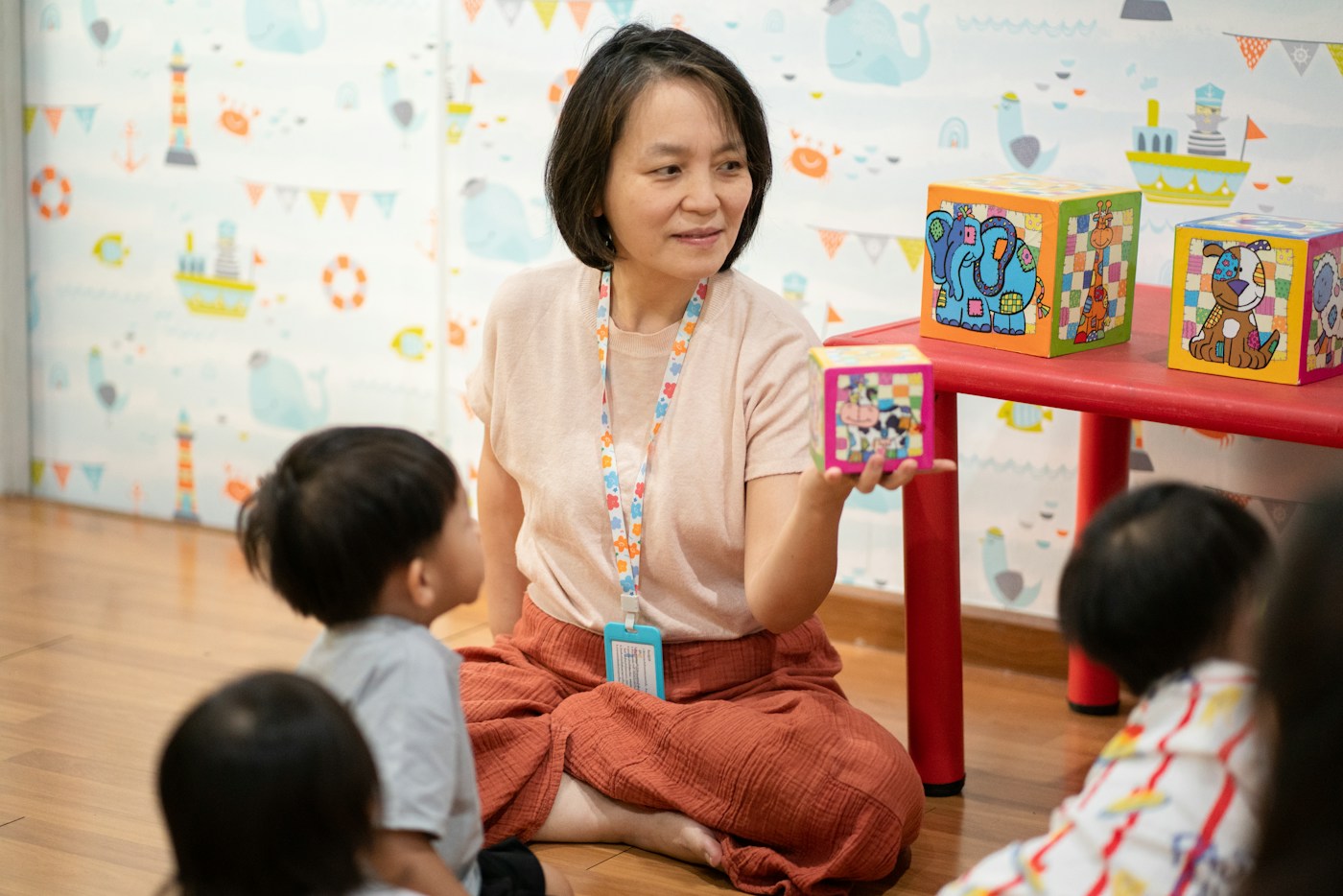
Luxembourg Education: Cycles 2 to 4
Cycles 2, 3 and 4 make up primary or elementary education. Each cycle runs for two years. Before moving on to the next cycle, pupils are expected to demonstrate that they have achieved a defined set of essential learning competencies.
For children up to the age of six, learning activities concentrate on developing their ability to pay attention and strengthening motor skills through games and puzzles. Basic arithmetic and letter recognition are also introduced.
From the age of six onwards, the curriculum places greater emphasis on reading and writing, alongside language learning. Pupils study German, French and Luxembourgish. Schools also follow the same textbooks for mathematics, science, natural sciences and history.
Other subjects offered include music, culture, community life and behaviour. Art lessons and recreational activities are also incorporated into the school programme.
Some schools provide optional after-school classes, known as controlled studies, which allow pupils to explore particular subjects in greater depth. In addition, students receive two hours of instruction dedicated either to religious education or to moral and social education.
The Maison Relais also provides childcare before and after normal school hours, with various activities organised for children.
As with Cycle 1, the school year usually runs from 15 September to 15 July. Public school transport is provided free of charge throughout Luxembourg.
The usual timetable is Monday, Wednesday and Friday, from 8:00 to 16:00, with a lunch break between 12:00 and 14:00. On Tuesdays and Thursdays, classes generally take place from 8:00 to 12:00.
Cycles 2 to 4 are offered by public, private and international schools across Luxembourg. The country has slightly more than 150 fundamental schools.
Parents can register their children through the municipal secretary's office or the education service responsible for the relevant school district, depending on where they live. Registration requires the family's registration certificate, the child's birth certificate and a completed registration form.
As with Cycle 1, parents can also request a school transfer by submitting a written application.
Children may be allowed to progress through a cycle ahead of schedule or spend additional time completing it. Individual learning assistance is also available for pupils who experience learning difficulties or have specific educational needs.