Understanding the Education System in Spain
A comprehensive guide to Spain’s education system, covering early childhood education, primary and secondary schooling, public and private schools, international qualifications, graduation pathways, financial assistance, language support, special educational needs, school transfers, parental involvement, and homeschooling.
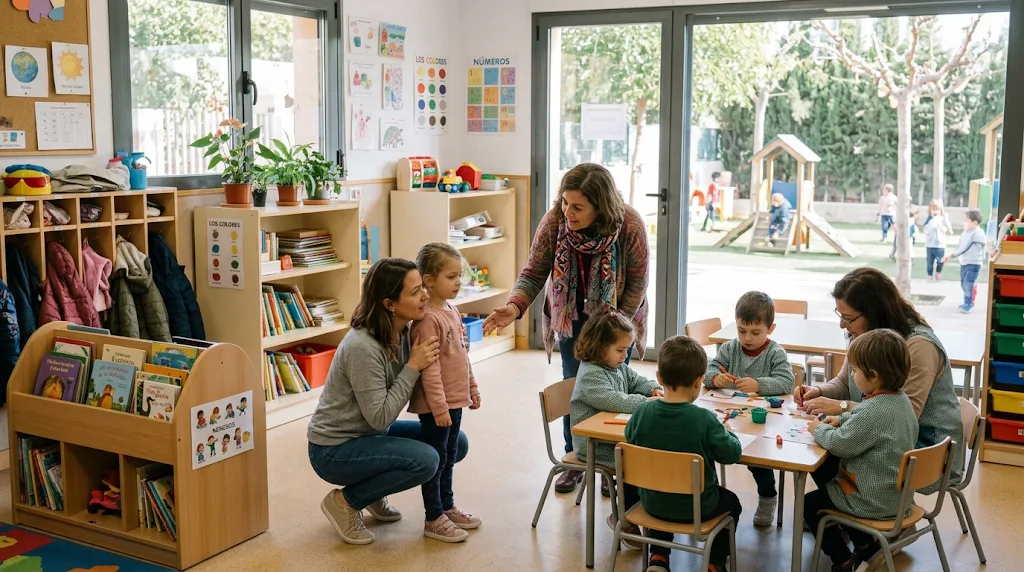
Discover how schooling works in Spain, from early childhood education through to university, and learn about the financial assistance and educational support that may be available to international families.
Getting familiar with Spain’s education system can feel challenging, particularly if you or your children are not fluent in Spanish. This guide explains the different stages of education, from preschool to university, and outlines the financial aid and other forms of assistance that expat parents may be able to access.
If you are interested in improving your language skills, you can also explore this resource on learning Spanish.
How education works in Spain: an introduction
The standard of education in Spain is relatively good, which is encouraging for families moving to the country. Spain achieves a score of 491 in reading literacy, mathematics, and science, compared with the OECD average of 486.
People in Spain can also expect to spend almost 18 years in education between the ages of 5 and 39. This is higher than the OECD average of 17.2 years.
The country's schools are regulated by the Ministry of Education and Vocational Training (Ministerio de Educación y Formación Profesional). In practice, however, the ministry works closely with Spain's autonomous communities (Comunidades Autónomas). These regional authorities distribute funding, provide curriculum guidance, and supervise educational standards.
Spanish schools are generally organised into three categories according to how they are funded:
- State schools (colegios públicos): Schools financed and operated by the government.
- Government-subsidised private schools (colegios concertados): Privately managed institutions that receive public funding.
- Independent private schools (colegios privados): Schools funded through private sources, including international schools.
The Spanish education system is divided into four main stages:
- Early childhood education (Escuela Infantil): From birth to 6 years old.
- Primary education (Educación Primaria): From 6 to 12 years old.
- Compulsory secondary education (Educación Secundaria Obligatoria – ESO): From 12 to 16 years old.
- University preparation (Bachillerato) or vocational education (formación profesional): Generally from 15 to 18 years old.
Education is compulsory in Spain only between the ages of 6 and 16, covering primary education and ESO. After completing this stage, young people can decide whether to continue studying at university or pursue vocational training.
In recent years, Spanish authorities have also been developing vocational education programmes to help tackle the country's high unemployment rate.
Early childhood and preschool learning in Spain
Although early childhood education (Educación Infantil) is optional, nearly every child in Spain attends it.
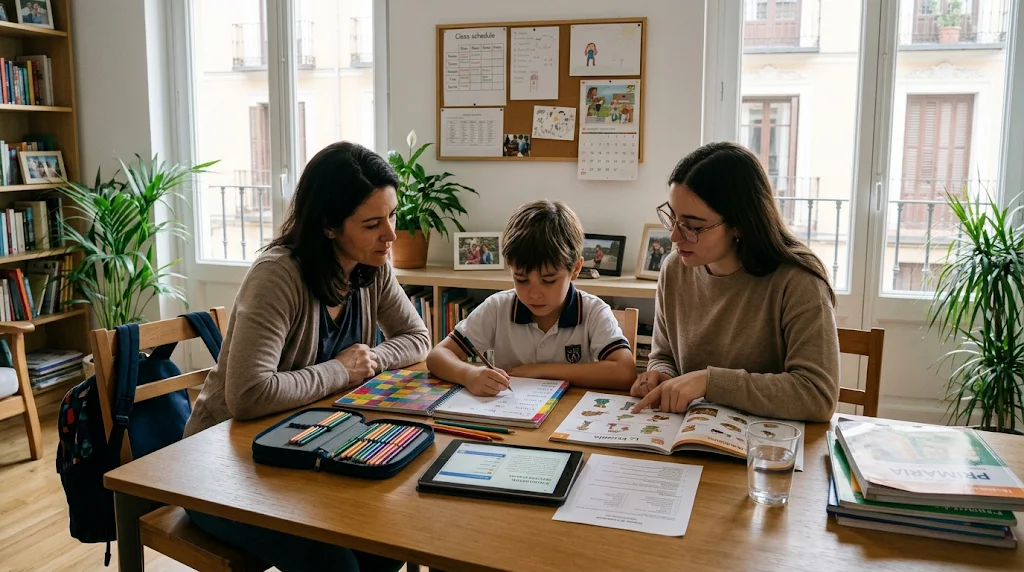
This stage is divided into two parts:
- First cycle (primer ciclo): For children from birth until they turn three. It is generally provided by nursery centres (guarderías).
- Second cycle (segundo ciclo): For children aged three to five. This takes place in preschool centres (escuelas infantiles).
The educational department of each autonomous community is responsible for these institutions.
Related resource:
- Childcare in Spain — Living
Children can start attending a guardería when they are only a few months old. These facilities mainly provide an affordable childcare arrangement for families.
Households on lower incomes, or families who already have other children, may qualify for financial assistance with nursery enrolment fees.
Once children reach the age of three, attendance at public preschools is free.
For further details, consult our guides to childcare and to daycare and preschools in Spain.
Primary schooling in Spain
How primary education is organised
Primary education (Educación Primaria) is compulsory and covers the ages of 6 to 12.
The autonomous communities (Comunidades Autónomas) oversee primary education and aim to make sure that every child has access to a free place at a primary school in their local area.
Throughout primary school, pupils complete both ongoing assessments and formal evaluations to measure their academic development. Parents receive updates about their children's progress, and at the end of each academic year they are given a report showing the results achieved in every subject.
Children are assessed in mathematics and language at the end of their third year. A further assessment takes place at the end of the sixth year, covering mathematics and language as well as science and technology.
Repeating a school year is possible, but it is intended as a last resort. A pupil can repeat a year only once during each educational stage.
Government-funded primary schools
Public primary schools in Spain do not charge tuition fees. Nevertheless, families may still have to pay for textbooks, stationery, and other materials their children need.
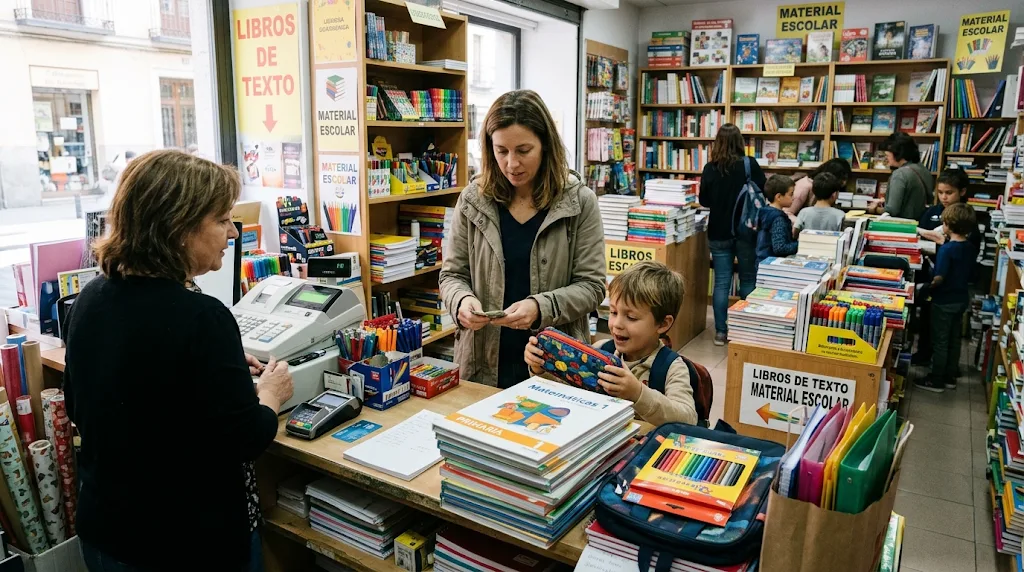
Schools have considerable independence in deciding how to deliver the curriculum. For this reason, it is sensible to investigate the academic performance of the local schools you are considering before making a choice.
Every primary school must teach the main compulsory subjects, which include:
- Natural sciences
- Social sciences
- Spanish language and literature
- Mathematics
- A first foreign language
These subjects must account for at least 50% of classroom teaching time.
The remaining time can be used for additional subjects, including other languages. This is particularly relevant in regions such as Galicia, Catalonia, the Basque Country, and Valencia, where schools may also teach their respective co-official languages.
Although the autonomous communities can issue educational guidance, individual schools and teachers generally have considerable freedom to decide which teaching approaches they use.
Parents are allowed to express a preference about which school their child attends, but their choice is subject to available places and local admission rules.
Children are normally allocated a place at the school closest to their home. If a school receives more applications than it has spaces, remaining places are assigned through a points-based selection process.
The criteria may include:
- Whether the child already has brothers or sisters attending the school.
- How close the school is to the family home.
- The distance between the school and the parents' workplaces.
- The family's income.
- Whether the child has a disability.
Privately operated primary schools
Although public education is the choice for most children in Spain, approximately 32% of pupils attend private or semi-private schools.
These institutions charge fees, and the amount depends considerably on the child's age and the type of school.
The main categories of private primary schools in Spain include:
- Government-subsidised private schools (colegios concertados): These receive partial financial support from the Spanish government and must comply with the standards established by the national authorities. At least 25% of their pupils must be Spanish. Before enrolling your child, check whether the school requires payment of any fees.
- Fully private schools (colegios privados): These institutions rely entirely on fees for their funding. Some charge approximately €300 per year, while others may cost as much as €10,000 or €30,000 for boarding students. Certain schools provide alternative qualifications, including the International Baccalaureate (IB).
- Schools based on alternative educational philosophies: These include institutions following Montessori, Waldorf-Steiner, and Reggio Emilia teaching approaches.
- International religious schools: Most have a Christian background, although Jewish schools are also available.
Some private schools in Spain also provide residential boarding arrangements and support for children with special educational needs (SEN). These facilities may be particularly useful for families whose circumstances require additional educational or residential services.
Related resource:
- International schools in Spain — Education
Spain also has 281 international schools across 28 cities. The largest concentrations are in:
- Madrid: 56 international schools
- Barcelona: 47 international schools
International schools are especially popular with expatriate families who expect to stay in Spain temporarily. Examples include embassy employees and people working for non-governmental organisations (NGOs).
Secondary-level education in Spain
Secondary schooling in Spain has two main parts: compulsory secondary education, known as Educación Secundaria Obligatoria (ESO), and the optional stage that follows it, which includes Bachillerato or vocational training.
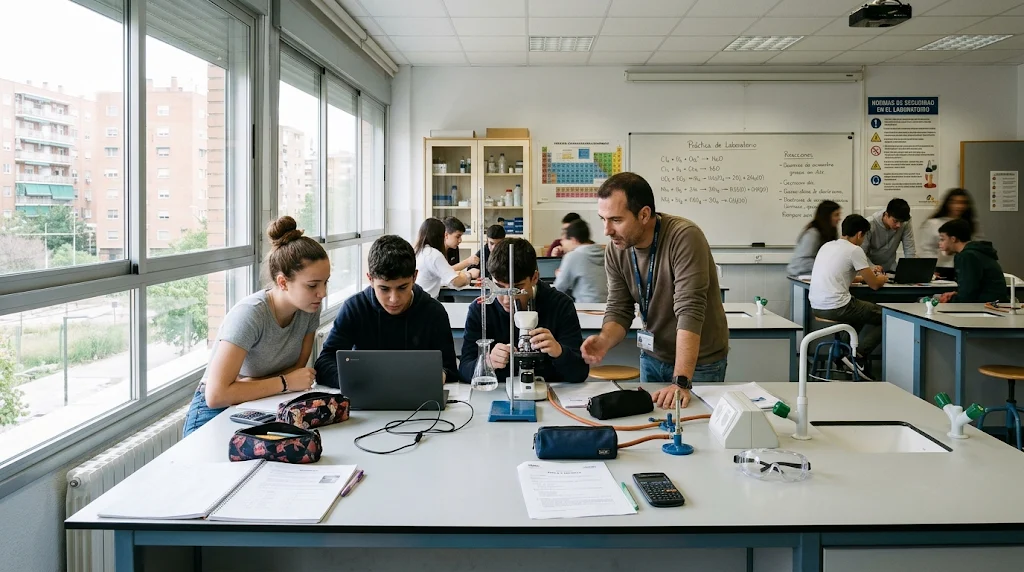
ESO is mandatory, while Bachillerato, which commonly prepares students for university, is optional.
The compulsory secondary stage (ESO)
Children in Spain must remain in education until they turn 16.
Between the ages of 12 and 16, most pupils attend a secondary school known as an Instituto.
The four years of compulsory secondary education (cursos) are organised into two stages (ciclos):
- The first stage covers the first, second, and third years.
- The second stage consists of the fourth year.
During the first stage, pupils may repeat up to two school years. However, they can repeat the fourth year only if they have not already repeated any of the earlier years.
After successfully completing compulsory secondary education, students receive an official certificate called the Título de Graduado en Educación Secundaria Obligatoria. This confirms that they have completed the compulsory lower-secondary stage.
Students who do not pass their subjects instead receive a report documenting the length of time they attended school and their results in each subject.
Continuing education through Bachillerato
After obtaining their ESO qualification, students can choose to study Bachillerato, which prepares them for university entry.
Many pupils complete this programme at the same institution where they attended compulsory secondary school.
Students who hold either of the following qualifications may also be eligible to enter Bachillerato:
- Sports Technician Certificate (Técnico Deportivo).
- Plastic Arts and Design Technician Certificate (Técnico de Artes Plásticas y Diseño).
Bachillerato is a two-year programme designed to prepare students for university entrance examinations.
Students study compulsory core subjects and combine them with four additional subjects selected according to their interests and chosen pathway.
Those who choose vocational education must also complete the common core subjects, alongside subjects focused on practical applications and business-related knowledge.
Public secondary schools in Spain
Public secondary education is free, although families may still need to purchase textbooks and other study materials.
While Spain's secondary education performance is not as strong as its primary education results, the proportion of students successfully completing upper-secondary education has improved in recent years.
At public secondary schools, pupils take compulsory subjects such as:
- Mathematics
- Science
- Spanish
- A first foreign language
They also study a selection of other specialised and optional subjects, which may include:
- Business
- Culture
- Music
- Religion or ethics
- Physical education
- A second foreign language
In autonomous communities with another official language, such as Catalonia, Galicia, Valencia, and the Basque Country, schools may teach certain subjects in that language or include it as an additional subject.
The Ministry of Education and Vocational Training (MEFP) establishes the basic national curriculum. Regional education authorities then develop it further to reflect their local requirements.
Individual schools can adapt the curriculum to their pupils' needs, while teachers have the freedom to decide how lessons are delivered.
Private secondary schools and other alternatives
Spain has several types of secondary schools beyond fully independent private institutions. These include:
- Government-subsidised private schools (colegios concertados): These schools receive public funding and follow the same curriculum as public schools. They must also satisfy the relevant educational standards and inspection requirements.
- International schools: These can be worth considering if your family expects to live in Spain for only a limited period. Some provide bilingual education, while others teach using the curriculum and language of another country. Options include schools offering instruction in English, French, German, Italian, and Swedish.
- Alternative-method schools: Families looking for a different approach to education can explore Montessori, Waldorf-Steiner, and Reggio Emilia schools. Some of these institutions also provide ESO and Bachillerato programmes.
- Religious schools: Catholicism is the main religious tradition in Spain. Approximately 15% of schools are Catholic, representing 58% of subsidised private schools.
- Boarding schools: These can suit children who live a considerable distance from their preferred school. Although Spanish boarding schools often provide a high standard of education, the fees can be substantial. For example, a boarding place at an international school may cost more than €30,000 annually.
International qualifications available in Spain
A major benefit of choosing an international school in Spain is the opportunity for children to study towards qualifications that are accepted by educational institutions around the world.
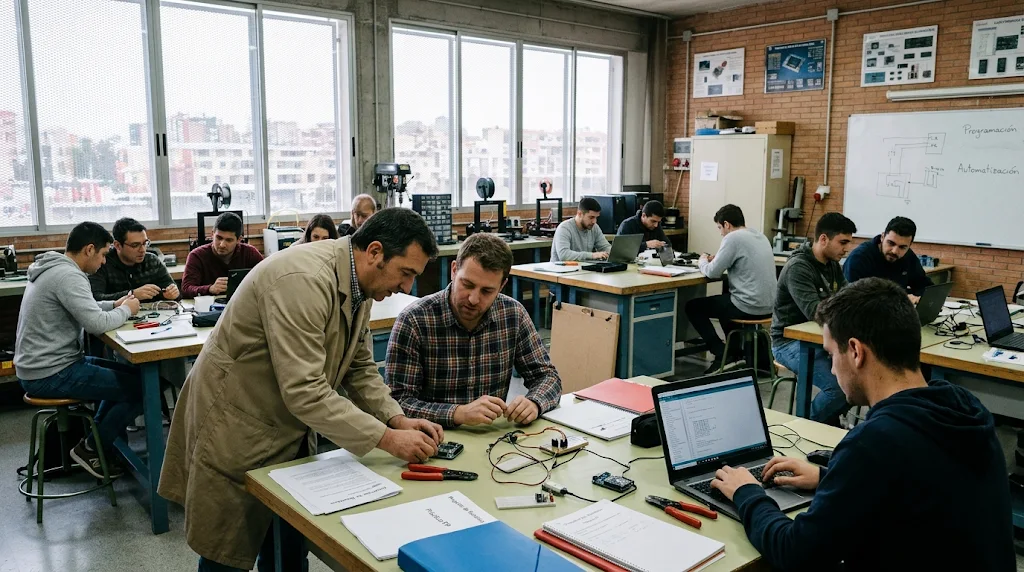
Barcelona High School
Barcelona High School is an American international school based in Barcelona, Spain. It teaches the US curriculum and awards the High School Diploma. It is also the only school offering the AP programme.
The school describes itself as a Social Wellness School and uses a student-centred learning approach to help prepare pupils for an international future.
Go to website
The International Baccalaureate (IB) has become increasingly popular in Spain over recent years.
Although private and international schools are still the main providers of IB programmes, a growing number of public and government-subsidised private schools have also introduced them.
The IB is now treated in the same way as Spanish high school qualifications when students apply to universities in Spain. It is also recognised internationally.
Some schools additionally offer qualifications designed for particular national education systems. One example is the American Advanced Placement (AP) programme.
AP gives secondary-school students the opportunity to study university-level material and sit examinations in subjects ranging from calculus to literature.
It can help students demonstrate that they are prepared for higher education, strengthen applications to leading academic institutions, and potentially earn university credits at US colleges.
Barcelona High School is the College Board's designated AP examination centre for Europe.
Completing school and graduating in Spain
When pupils finish compulsory education, they are awarded the Título de Graduado en Educación Secundaria Obligatoria (GESO).
Provided they pass mathematics and Spanish, or the relevant co-official language, students may graduate with up to two of their selected subjects still outstanding.
After receiving this qualification, they can choose between two main routes:
- Continue with Bachillerato.
- Enter vocational training.
Students who complete Bachillerato can sit the Spanish University Admission Tests, known as Evaluación de Acceso a la Universidad (EvAU/EBAU).
These examinations are also commonly called Selectividad. They are organised by Spanish public universities and assess subjects covered during Bachillerato.
There is also a progression route for students who complete basic vocational training. They can move on to intermediate vocational education and obtain a technician qualification.
After that, they may either:
- Continue into higher-level vocational training.
- Choose to study Bachillerato.
Grants, financial assistance, and scholarships in Spain
The Spanish Ministry of Education provides different types of financial assistance for families with children under the age of 18.
Support can take several forms, including direct payments, grants towards school supplies and travel, and tax relief.
For example, households with annual earnings below €12,313 may qualify for an allowance of €341 per child each year.
Additional financial support is available for births and adoptions, particularly for large families and families with multiple births.
Other assistance is directed towards:
- Single-parent households.
- Parents living with chronic illnesses.
- Families with children who have disabilities.
The amount of financial help available to families with disabled children depends on the assessed level of disability.
There is also assistance towards particular education-related expenses, including school fees, transport, and meals. This may be available for children with disabilities, behavioural disorders, and autism.
To qualify for this support, a child must:
- Be older than two years.
- Hold a certificate confirming that additional assistance is required.
The certificate can be obtained through a Centre for Disability Assessment and Guidance (Centro de Valoración y Orientación de Discapacitados).
Learning and language assistance for international pupils in Spain
Spain has expanded its support for children who are learning Spanish as an additional language.
Alongside extra assistance during ordinary lessons, some schools provide separate classes to help pupils learn Spanish or the relevant regional language.
These sessions may take place in a dedicated language classroom known as an Aula Temporal de Adaptación Lingüística (ATAL).
Certain schools also encourage international pupils to maintain and develop their native language outside regular school hours.
Spain also participates in several initiatives and programmes designed to encourage bilingual and multilingual education. These include:
- Bilingual Education Programme (PEB): Established by the British Council, this initiative supports schools in Spain that provide bilingual and bicultural education.
- Bachibac: A joint initiative involving the French and Spanish education ministries. It allows students to work towards both the French Baccalauréat and the Spanish Bachillerato.
- International Baccalaureate Organization: Provides support for pupils following the IB curriculum.
- Instituto Camões: Runs the Portuguese Language and Culture Programme, which teaches Portuguese culture and supports students learning the language.
- Arabic language and Moroccan culture programme: Developed by the Spanish and Moroccan governments, this initiative helps pupils of Moroccan origin adapt to Spanish society while learning Arabic and Moroccan culture. Spanish pupils can also participate.
Beyond these programmes, several organisations help expatriates and other learners develop their language skills.
One example is the Instituto Cervantes, which promotes Spanish language learning internationally and provides teaching for people of different ages.
Assistance for pupils with special educational needs (SEN)
Spanish schools generally aim to include all children in mainstream education. However, additional support is available for pupils with special educational needs, referred to in Spanish as Necesidades Educativas Especiales (NEE).
For example, families may be able to obtain grants to cover the cost of additional educational assistance. To qualify, the child must undergo an assessment at a local Centro de Valoración de Discapacitados.
Where a pupil needs to attend a specialised school, their development may be reviewed periodically to determine whether they can eventually return to mainstream education.
Schools also provide support for pupils' mental well-being. This may include counselling intended to strengthen self-esteem and develop thinking skills.
If a child requires specialist therapy, school staff can refer them to an external professional.
Several Spanish organisations work to improve awareness of special educational needs and provide assistance to affected children and their families.
These include:
- National Association of Centres for Special Education (ANCEE): Works to improve the quality of education available to pupils with special educational needs.
- Madrilenian Association of People with Special Educational Needs (AMPNEE): Based in Madrid, this organisation promotes the rights of people with different abilities.
Transferring your child to another school in Spain
Families may need to move their children to a different school if they relocate to another city or discover that their current school is not the right fit.
Changing schools is possible in Spain, although many parents prefer to arrange the transfer at the end of a school term or academic year.
The procedure is broadly similar to the original school enrolment process. However, you may also be asked to provide evidence of your new address or submit a report from your child's current school.
For an accurate list of the documents required, contact the education department of the autonomous community where you live.
How parents can participate in Spanish schools
Joining a Parent Teacher Association (Asociación de Madres y Padres de Alumnos) is one of the main ways parents can become involved in their children's education.
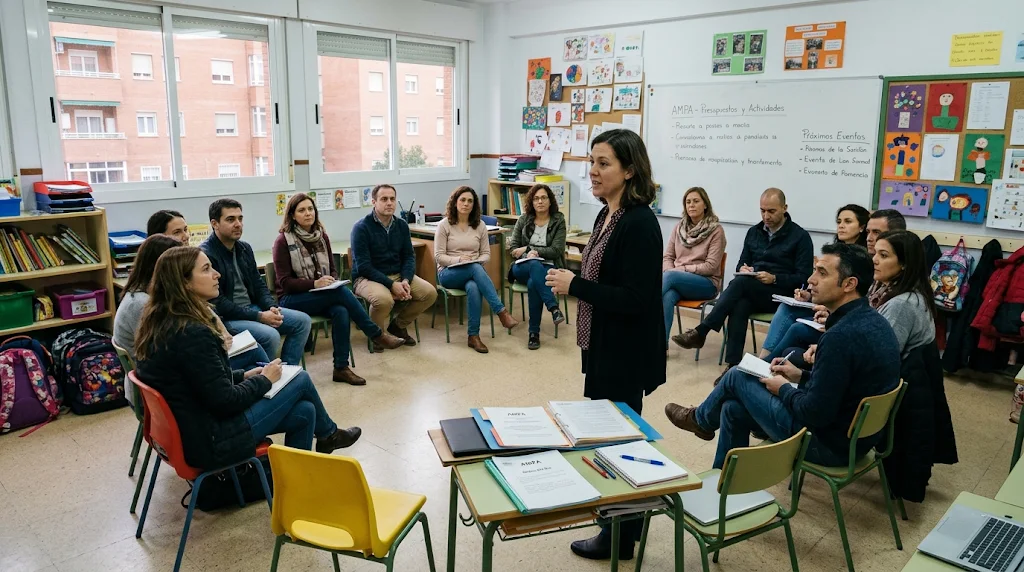
These organisations are commonly known as AMPAS. They work with schools on decisions, projects, and activities that affect the school community.
Their responsibilities may include:
- Requesting financial resources for school activities.
- Organising events and other programmes.
- Providing feedback and representing parents' views.
- Helping arrange transport.
The exact role of an AMPA can differ depending on the autonomous community.
Each association is managed by a board known as the Junta Directiva.
Parents who want to take a more active role in school activities can stand for one of the available positions. The school organises elections for the Junta Directiva and arranges a general assembly where members discuss and approve budgets.
Home education in Spain
Homeschooling is legally possible in Spain, but putting it into practice can be complicated.
Spanish law requires children to attend school between the ages of 6 and 16. Parents whose children do not attend an educational institution may face fines imposed by the Ministry of Education.
Home education is also a subject of considerable debate in Spain.
Parents who are determined to explore this approach can seek further guidance from the Association for Free Education (Asociación por la Libre Educación – ALE).
Useful organisations and information sources
The following organisations and resources can help families understand education in Spain, access official information, and find additional support:
- Ministry of Education and Vocational Training: Provides updates, announcements, and information about the Spanish education system.
- Eurydice: Offers detailed information about education in Spain and other countries participating in the Erasmus+ programme.
- Instituto Cervantes: Supplies guidance and learning resources for people who want to study Spanish at any age.
- British Council in Spain: Helps British residents in Spain maintain connections with their country of origin while becoming part of their new community.
- profeNEE Asociaciones: Provides information about national and regional organisations offering support for children with special educational needs in Spain.